

?? Courtesy: Prof Osama N Kashlan, Dubai, UAE Endoscopic Cervical Spine Surgery: 1. Learning Curve & Prerequisites Progression Pathway: Begin with lumbar transforaminal and interlaminar microdiscectomies. Attain proficiency in lumbar canal stenosis decompression (unilateral laminotomy for bilateral decompression [ULBD]) over 40 to 50 cases before transitioning to the cervical spine. Initial Cervical Procedures: Posterior […]
-Spine, Pelvis & Neurology
Low Back Pain
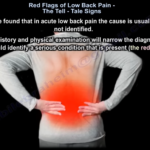
Courtesy: Prof Nabil Ebraheim, University of Toledo, Ohio, USA Importance of Identifying Red Flags A detailed history and careful physical examination are essential. Red flags are warning signs that may indicate a serious underlying condition. In the absence of red flags, acute low back pain is usually treated conservatively. Management of Uncomplicated Acute Low Back […]
Failed Back Surgery Syndrome
Courtesy Dr. Ram Chadhha, Dr Ashok Shyam, Ortho TV Failed Back Surgery Syndrome (FBSS) Introduction Failed Back Surgery Syndrome (FBSS) refers to persistent or recurrent pain following spinal surgery. It is a recognized and challenging condition in spine surgery practice. FBSS represents a complex interaction of: Anatomical factors Surgical factors Psychological factors Functional disability […]
Lumbar Degenerative Disease
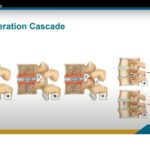
Courtesy Dr. Ram Chaddha, Dr Ashok Shyam, Ortho TV Low Back Pain & Lumbar Disc Disease – Myths, Realities, and Management Introduction Low back pain is one of the most common conditions encountered in orthopedic practice. Nearly 80% of individuals experience low back pain at some point in life. Common causes include: Lumbar disc […]
High-Grade Spondylolisthesis
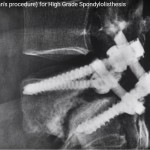
Courtesy Dr. Alexander Gibson, Dr Ashok Shyam, Ortho TV High-Grade Spondylolisthesis – Surgical Principles and Management Introduction High-grade spondylolisthesis is a complex spinal disorder characterized by significant anterior translation of one vertebra over another, most commonly at the lumbosacral junction. Management is technically demanding because of: Distorted anatomy Difficult instrumentation High biomechanical stress Neurological […]
Sacroiliac Joint fusion
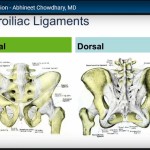
Courtesy: Dr Hamid R Abbasi, Dr Ashok Shyam, Ortho TV Sacroiliac Joint Dysfunction – High-Yield Review Introduction Sacroiliac (SI) joint dysfunction is an important and frequently underdiagnosed cause of low back pain. Recognition of SI joint pathology dates back to the early 1900s, yet it continues to be overlooked in many patients with persistent […]
Low Back Pain , Disc Herniation
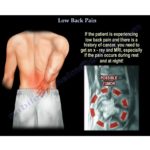
Courtesy: Prof Nabil Ebraheim, University of Toledo, Ohio, USA Lumbar Disc Herniation – High-Yield Review Introduction Lumbar disc herniation is one of the most common causes of: Low back pain Radiculopathy Sciatica Most herniations occur in the lower lumbar spine and may compress adjacent nerve roots, leading to neurological symptoms. Basic Anatomy Components of […]
Lesions Of The Sciatic Nerve & Its Branches
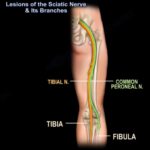
Courtesy: Prof Nabil Ebraheim, University of Toledo, Ohio, USA Sciatic Nerve Lesions and Clinical Relevance Introduction The sciatic nerve is the largest nerve in the human body and is of major clinical importance in orthopaedics, trauma, spine surgery, and hip surgery. Sciatic nerve pathology may result from: Trauma Compression Surgical injury Spinal disorders Extra-spinal […]
Sacroiliac Joint Dysfunction
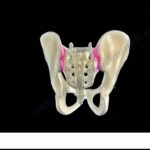
Courtesy: Prof Nabil Ebraheim, University of Toledo, Ohio, USA
Neck Pain, Cervical Disc Herniation & Radiculopathy

Courtesy: Prof Nabil Ebraheim, University of Toledo, Ohio, USA Cervical Disc Herniation and Radiculopathy Introduction Cervical disc herniation is a common cause of neck pain and upper limb radiculopathy. Herniated disc material compresses a cervical nerve root, leading to characteristic motor, sensory, and reflex abnormalities. Accurate diagnosis depends on correlating: Dermatome Myotome Reflex changes […]
Is It Hip Pain or Spine Pain, Which One is Causing the Pain?

Courtesy: Prof Nabil Ebraheim, University of Toledo, Ohio, USA Hip Pain vs Sciatica (Spine Pathology) Introduction Hip disorders and lumbar spine disorders frequently coexist and often produce overlapping symptoms. This overlap can lead to: Misdiagnosis Delayed treatment Inappropriate surgery A careful clinical assessment is essential to determine whether symptoms arise primarily from the hip, […]
The Painful Sacroiliac Joint, Why it Hurts?

Courtesy: Prof Nabil Ebraheim, University of Toledo, Ohio, USA Sacroiliac (SI) Joint Dysfunction Introduction Sacroiliac joint dysfunction is an important and frequently overlooked cause of low back pain. It is increasingly recognized as a major contributor to: Chronic low back pain Persistent pain after lumbar fusion Failed back syndrome Because symptoms often mimic lumbar […]
Cervical Spine Myelopathy & Radiculopathy
Courtesy: Prof Nabil Ebraheim, University of Toledo, Ohio, USA Cervical Myelopathy vs Cervical Radiculopathy Introduction Cervical spine pathology may produce either: Cervical myelopathy (spinal cord compression) Cervical radiculopathy (nerve root compression) Differentiating the two is critical because cervical myelopathy is a neurological emergency that may require urgent surgical treatment. Part 1: Cervical Myelopathy Definition […]
Neck Pain, Cervical Disc Herniation & Radiculopathy

Courtesy: Prof Nabil Ebraheim, University of Toledo, Ohio, USA Cervical Disc Herniation and Radiculopathy Introduction Cervical disc herniation occurs when disc material compresses a cervical nerve root, producing radiculopathy. Typical manifestations include: Neck pain Radiating arm pain Sensory symptoms Weakness Reflex abnormalities Common Levels The most commonly affected levels are: C6–C7 C5–C6 These account […]
Complicated Low Back Pain.
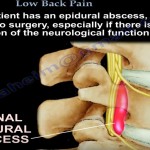
Courtesy: Prof Nabil Ebraheim, University of Toledo, Ohio, USA Complicated Low Back Pain – Clinical Overview Introduction Low back pain is one of the most common clinical complaints encountered in medical practice. Most cases are: Non-specific Self-limiting Multifactorial However, some patients present with red flags or serious underlying pathology that require urgent evaluation and […]