

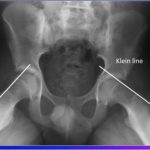
Important X-ray Lines & Angles in Developmental dysplasia of the hip Lines Hilgenreiner line Perkin line Shenton line Angles / Measurements Acetabular index Center-edge (CE) angle of Wiberg Migration percentage (Reimers index) Femoral neck anteversion angle
-Paediatric Orthopaedics
Bones that trick you: Fracture Mimics
Courtesy: Prof Shital Parikh MD, Cincinnati Childeren’s Hospital, Philadelphia, PN Part 1: Fracture Mimickers in Children 1. Irregular Ossification – A Common Trap Pediatric ossification centers are irregular and may mimic fractures. The elbow is particularly challenging due to multiple ossification centers. Familiarity with: Order of appearance Timing of fusion Normal variantsis essential to avoid […]
Slipped Capital femoral epiphysis
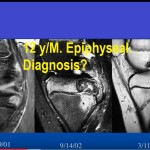
Courtesy – Dr Sanjeev Madan, Dr Ashok Shyam, Ortho TV Slipped Capital Femoral Epiphysis (SCFE) Introduction Slipped capital femoral epiphysis (SCFE) is one of the most common hip disorders in adolescents. Despite its name, SCFE is technically a misnomer because: The femoral head remains within the acetabulum The metaphysis and femoral shaft displace relative […]
Osteochondritis Dissecans of Capitellum
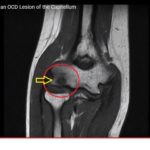
Courtesy Dr Takuro Wada , Dr Ashok Shyam, Ortho TV Osteochondritis Dissecans of the Capitellum Introduction Osteochondritis dissecans (OCD) of the capitellum is a condition affecting the: Articular cartilage Subchondral bone of the capitellum in the elbow. It is most commonly seen in: Adolescent throwing athletes particularly those involved in repetitive overhead sports. Early […]
DDH- Screening, Diagnosis & Management

Courtesy Dr Kishore Mulpuri , Dr Ashok Shyam, Ortho TV Developmental Dysplasia of the Hip (DDH) Introduction Developmental dysplasia of the hip (DDH) represents a spectrum of abnormalities involving abnormal development of the hip joint. The spectrum ranges from: Mild acetabular dysplasia Hip instability Subluxation Complete dislocation Early diagnosis and appropriate management are […]
Adolescent Fractures, Why Are They Different?

Courtesy: Dr. Alvin Crawford, Dr Ashok Shyam, Ortho TV Adolescent Orthopedics – Key Concepts and Clinical Principles Introduction Adolescent orthopedics represents a unique transitional phase between pediatric and adult musculoskeletal care. During adolescence: Rapid skeletal growth occurs Hormonal changes influence bone and soft tissue physiology Injury patterns evolve as physes begin to close Sports […]
Physeal Bars: How to Suspect, Diagnose & Manage
Courtesy: Dr Ashok Shyam, Dr. Shital Parikh, Ortho TV Physeal Bar (Growth Arrest) Introduction A physeal bar, also known as growth arrest, occurs when a bony bridge forms across the growth plate (physis), leading to partial or complete cessation of growth. Because longitudinal bone growth occurs through the physis, damage to this structure can […]
Congenital Pseudarthrosis of Tibia

Courtesy: Mr Michael Uglow FRCSOrth, Paley’s Orthopaedic Institute, UAE Congenital Pseudarthrosis of the Tibia (CPT) Introduction Congenital pseudarthrosis of the tibia (CPT) is a rare pediatric condition characterized by: Anterolateral bowing of the tibia Progressive weakening of bone Pathological fracture Failure of fracture healing leading to pseudarthrosis The condition is challenging because it involves […]
Contemporary Management of Osteogenesis Imperfecta
Courtesy: Michael Uglow, FRCS Orth, UK OVERVIEW Osteogenesis imperfecta is a genetic disorder of connective tissue. It is commonly known as brittle bone disease. The disorder is characterized by bone fragility and recurrent fractures. The underlying defect involves type I collagen, which constitutes approximately 90 percent of total body collagen. CLINICAL FEATURES Bone fragility with […]
Blount’s Disease
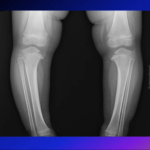
Courtesy: Amr Abdelgawad, Maimonaides Medical Centre, Brooklyn, New York
Coxa Vara in Children
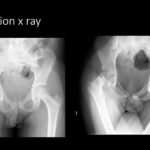
Courtesy: Prof Hitesh Shah, Professor of Paediatric Orthopaedics, KMC Manipal, India Coxa Vara in Children Introduction Coxa vara is a pediatric hip deformity characterized by a decreased femoral neck-shaft angle. The condition alters: Hip biomechanics Abductor function Limb alignment If progressive, it can lead to gait abnormalities, limb shortening, and long-term hip dysfunction. Normal […]
Slipped Capital Femoral Epiphysis
Courtesy: Amr Abdelgawad, Maimonaides Medical Centre, Brooklyn, New York, USA Slipped Capital Femoral Epiphysis (SCFE) Introduction Slipped capital femoral epiphysis (SCFE) is one of the most common hip disorders affecting adolescents. It involves: Displacement of the proximal femoral metaphysis relative to the epiphysis Importantly, the femoral head remains within the acetabulum, making the term […]
Managing Chronic Non Specific Complex MSK Pain in Children

Courtesy: Alwyn Abraham, MB ChB, FRCS, Head of Trauma Services, University of Leicester, Leicester, UK Chronic Non-Specific Musculoskeletal Pain in Children Introduction Chronic musculoskeletal (MSK) pain is a common presentation in pediatric orthopedic practice. In many children, pain occurs without a clearly identifiable structural abnormality on imaging or physical examination. These conditions can be […]
Cerebral Palsy and Hip Manifestations
Courtesy: Sean Tabaie, MD, FAAOS, George Washington University, Washington DC, USA Cerebral Palsy and Hip Involvement Introduction Cerebral palsy (CP) is one of the most common causes of childhood physical disability and frequently affects the musculoskeletal system. Hip involvement is a major source of: Pain Functional limitation Difficulty with sitting and hygiene Reduced quality […]
Congenital deformities of the Upper Limb

Courtesy: Dr Rishi Dhir, FRCS Tr and Orth, Consultant Upper Limb Surgeon, Princess Alexandra Hopsital, Harlow, UK INITIAL EVALUATION History Detailed history of presenting deformity. Antenatal history: Maternal illness Drug exposure Radiation exposure Determine whether the anomaly is: Isolated Part of a syndrome Reason for presentation: Functional limitation Cosmetic concern Associated systemic illness CLINICAL ASSESSMENT […]