
Courtesy: Dr Ashok Shyam, Dr. Shital Parikh, Ortho TV
Physeal Bar (Growth Arrest)
Introduction
A physeal bar, also known as growth arrest, occurs when a bony bridge forms across the growth plate (physis), leading to partial or complete cessation of growth.
Because longitudinal bone growth occurs through the physis, damage to this structure can result in:
- Angular deformity
- Limb length discrepancy
- Joint distortion
Early recognition and treatment are critical to minimizing long-term deformity.
Historical Background
The physiology of the growth plate was first described by:
- John Hunter
who recognized that:
- Bone growth occurs at the physis
This concept remains fundamental to pediatric orthopedics.
Consequences of Physeal Disturbance
Damage to the growth plate may lead to:
- Premature physeal closure
- Growth restriction
- Progressive deformity
The severity depends on:
- Size of the physeal injury
- Remaining growth potential
- Location of the affected physis
Factors Affecting Outcome
Several factors influence prognosis and deformity progression.
Location of the Physis
Certain physes contribute significantly to limb growth and are therefore high risk.
Important high-risk physes include:
- Around the knee
- Distal ulna
Type of Injury
The severity and pattern of physeal damage strongly affect outcome.
Higher-grade injuries are more likely to produce:
- Bone bridge formation
- Growth arrest
Skeletal Maturity
Younger children with substantial growth remaining are at greater risk for:
- Progressive deformity
- Limb length discrepancy
Etiology
Common causes of physeal bar formation include:
- Trauma
- Infection
- Vascular insult
- Tumors
Trauma is the most common cause.
Types of Physeal Problems
Loss of Physis
In some cases, the physis may initially appear normal but later undergo:
- Premature closure
This can be difficult to identify early.
Physeal Arrest
A physeal arrest occurs when:
- Bone bridge formation develops across the growth plate
This restricts growth and may produce deformity.
Park-Harris Growth Lines
Park-Harris lines are useful indicators of growth behavior.
Parallel Lines
Parallel growth arrest lines suggest:
- Symmetrical and normal growth recovery
Converging Lines
Converging lines indicate:
- Physeal tethering
- Location of a physeal bar
These findings help localize growth arrest.
Imaging Evaluation
Plain Radiographs
X-rays are the initial imaging modality and help evaluate:
- Angular deformity
- Limb alignment
- Growth disturbance
CT Scan
CT is particularly useful for:
- Identifying bony bridges
- Defining the size and shape of the physeal bar
It provides excellent osseous detail.
MRI
MRI is especially valuable because it evaluates:
- Cartilage
- Remaining physis
- Soft tissue anatomy
MRI is considered the best modality for:
- Physeal bar mapping
MRI Mapping
MRI mapping helps determine:
- Exact location of the bar
- Percentage of physeal involvement
This information is essential for surgical planning.
Clinical Assessment
Comprehensive evaluation should include:
- Full-length standing radiographs
- Limb alignment assessment
- Scanogram for limb length discrepancy
- Skeletal age estimation
Careful follow-up is important.
Types of Physeal Bars
Central Bar
A central physeal bar commonly causes:
- Limb shortening
with relatively less angular deformity.
Peripheral Bar
Peripheral bars usually produce:
- Angular deformity
because one side of the physis continues growing.
Linear Bar
Linear bars are commonly associated with:
- Traumatic injuries
and may produce combined shortening and angulation.
Management Principles
Treatment depends primarily on:
- Remaining growth
- Size of the bar
- Severity of deformity
Management Algorithm
More Than 2 Years of Growth Remaining
Bar Involving Less Than 30% of the Physis
- Physeal bar resection is generally recommended
Bar Involving More Than 30% of the Physis
- Epiphysiodesis may be preferred
because successful resection becomes less likely.
Angular Deformity Management
Deformity Greater Than 20°
Management often requires:
- Osteotomy
- Combined with bar resection
Deformity Less Than 20°
Less severe deformity may be treated with:
- Guided growth techniques
Less Than 2 Years of Growth Remaining
Observation may be appropriate because:
- Limited growth remains
- Progression risk is lower
Physeal Bar Resection Technique
Surgical Technique
Typical steps include:
- Guide pin placement
- Reaming of the bar
- Removal of the bone bridge
Arthroscopic visualization may improve accuracy.
Interposition Materials
After resection, interposition material is commonly inserted to prevent recurrence.
Common options include:
- Fat graft
- Bone cement
Special Consideration: Distal Radius
The distal radius has relatively limited remaining growth potential.
Untreated arrest may result in:
- Relative ulnar overgrowth
- Ulnar impingement
Careful monitoring is essential.
Osteotomy
Corrective osteotomy may be required for:
- Established angular deformity
- Joint malalignment
The procedure aims to restore:
- Mechanical alignment
- Joint orientation
Prevention of Physeal Bars
Preventive strategies are extremely important.
Key Preventive Measures
Important principles include:
- Avoid repeated manipulations
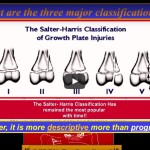
- Achieve anatomical reduction in Salter-Harris III and IV injuries
- Remove interposed periosteum
- Protect the physis during surgery
Early appropriate management reduces the risk of growth arrest.
Complications
Potential complications include:
- Recurrent bar formation
- Persistent deformity
- Limb length discrepancy
- Joint incongruity
- Secondary osteoarthritis
Long-term follow-up is necessary until skeletal maturity.
Key Clinical Pearls
- Growth arrest may lead to shortening, angulation, or joint deformity.
- Trauma is the most common cause of physeal bars.
- Parallel Park-Harris lines indicate normal growth.
- Converging lines suggest physeal tethering.
- MRI is best for physeal bar mapping.
- Bars involving less than 30% of the physis are better candidates for resection.
- Peripheral bars typically cause angular deformity.
- Prevention through careful fracture management is critical.
Final Take-Home Message
Physeal bars are important causes of growth disturbance in children and adolescents.
Successful management depends on:
- Early diagnosis
- Accurate imaging assessment
- Understanding remaining growth potential
MRI mapping plays a major role in surgical planning, while prevention through meticulous treatment of physeal injuries remains the most effective strategy.

Leave a Reply