
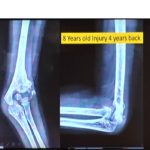
Courtesy: Taral Nagda, Paediatric Orthopaedic Surgeon, Saifee Hospital, Mumbai
-Paediatric Trauma
Radial neck fractures in Children
Courtesy: Dr Taral Nagda, Paediatric Orthopaedic Surgeon, Saifee Hospital, Mumbai
The Enigmatic Elbow and TRASH Lesions
Courtesy: Sandeep Patwardhan, Ashok Shyam, Sancheti Institute, Pune and IORG, OrthoTV TRASH Lesions of the Elbow in Children Definition TRASH = “The Radiographic Appearance Seemed Harmless.” A swollen, painful pediatric elbow with a seemingly normal or minimally abnormal X-ray may actually have a significant occult injury. Why They Are Important These injuries are commonly […]
Radial neck fractures in children
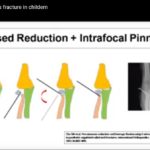
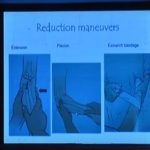
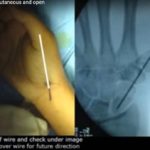
Courtesy: Dr PN Gupta, Govt Medical College, Chandigarh Radial Neck Fractures in Children Treatment Options Closed reduction. Percutaneous reduction and fixation. Intramedullary reduction and fixation (Metaizeau technique). Open reduction as the final option. Principles of Closed Reduction Most radial neck fractures are displaced posterolaterally. Apply varus stress at the elbow. Apply thumb pressure over […]
Traumatic Neonatal Distal Femoral Physeal Injury
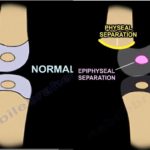
Courtesy: Prof Nabil Ebraheim, University of Toledo, Ohio, USA Neonatal distal femoral physeal injury Definition A rare birth injury involving: Separation of the distal femoral physis Equivalent to: Salter-Harris classification Type I injury Epidemiology Rare in neonates Comparison with Other Physeal Injuries More common sites: Distal humerus Less common: Distal femur Etiology Primary Cause: […]
Acute Lateral condyle fractures in Children
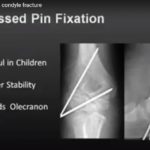
Lateral condyle of humerus fracture Classification of the Lateral Condyle Fracture Milch – morphology Weiss – displacement Song – displacement and stability Milch Type 1 • Fracture exits LATERAL to trochlear groove Stable Milch Type 2 • Fracture exits MEDIALLY into trochlear groove • Unstable Milch – modified • Uses the capitello-trochlear sulcus as landmark […]
Tips and Tricks in Supracondylar fracture treatment
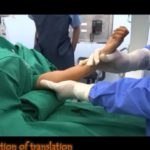
Courtesy: Dr Taral Nagda, Consultant Paediatric Orthopaedic Surgeon, Bombay Hospital, Jupiter Hospital, Mumbai, India
Fractures About The Pediatric Elbow That Are Often “Unappreciated”
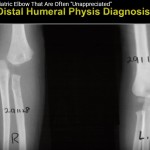
Courtesy: Kaye Wilkins MD Lynn Staheli MD www.global-help.org Unappreciated Fractures Around the Pediatric Elbow Why “Unappreciated” rather than “Missed”? “Missed fracture” may imply negligence. “Unappreciated fracture” acknowledges the genuine diagnostic difficulty created by pediatric anatomy. Why Pediatric Elbow Fractures Are Difficult to Diagnose 1. Children are not miniature adults Multiple physes. Multiple ossification centers. […]
Physeal Injuries in Children

EPIDEMIOLOGY Physeal injuries account for approximately 21 percent of all paediatric fractures (average of six large series). Distribution by Location Phalanges: 37 percent Distal radius: 18 percent Distal tibia: 11 percent Distal fibula: 7 percent Metacarpals: 6 percent Distal femur: uncommon but high risk for growth arrest WHY PHYSEAL INJURIES OCCUR Key contributing factors include: […]
Fractures of the Foot in Children
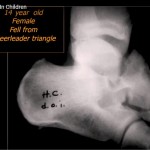
Courtesy: Kaye Wilkins MD, Prof Lynn Staheli MD www.global-help.org Pediatric Foot Fractures and Dislocations Overview Pediatric foot fractures Rare because the immature foot is highly flexible. Thick cartilage absorbs impact forces. Forces are often transmitted proximally to the ankle, tibia, or knee rather than causing foot fractures. Minor Foot Fractures Metatarsal base fractures Usually […]
Ankle fractures in Children

Courtesy: Kaye Wilkins, Lynn Staheli , www.global-help.org Pediatric Ankle Fractures (Distal Tibia & Fibula) Key Concept In children physis is weaker than ligaments So injuries occur through growth plate (physeal fractures) rather than ligament tears Hence: better called “Fractures around the ankle in the skeletally immature” Classification Not very useful: Salter-Harris classification (limited value for […]
Fractures Of the Tibia in Children
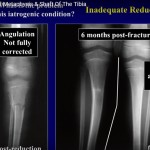
Courtesy: Kaye Wilkins MD, Lynn Staheli MD Pediatric Tibial Fractures Proximal Tibial Metaphyseal Fracture Key complication Progressive valgus deformity (Cozen phenomenon). Cause Biological overgrowth is the most common cause. Increased vascularity produces greater medial than lateral growth. Not always related to inadequate reduction. Fibular tether theory is no longer accepted. Clinical features Valgus deformity […]
Fractures Of The Shoulder Girdle in Children

Courtesy: Kaye Wilkins MD, Prof Lynn Staheli MD Sternoclavicular Injuries Key concept Usually represent Salter Harris Type I or II physeal injuries of the medial clavicle rather than true sternoclavicular dislocations. Medial clavicular physis is the last epiphysis to ossify and fuse at 20 to 25 years. Ligaments are stronger than the physis, so failure […]
Fractures of the Femur neck in children
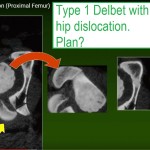
Courtesy: Kaye Wilkins MD, Prof Lynn Staheli MD, www.global-help.org Pediatric Hip Fractures (Proximal Femur Fractures) Overview Rare injuries in children, accounting for less than 1% of pediatric fractures Usually caused by high-energy trauma Associated with significant complications, especially avascular necrosis (AVN) Pediatric vs Adult Femoral Neck Fractures Feature Pediatric Adult Incidence Rare Common Mechanism […]
Fractures of the Femoral Shaft in Children
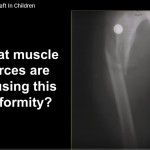
Courtesy: Kaye Wilkins MD, Prof Lynn Staheli MD 1. Deforming Forces Proximal Fragment Flexion + external rotation Due to iliopsoas muscle Abduction (varus tendency) Due to hip abductors Distal Fragment Shortening Due to: Hamstrings Quadriceps Key Concept Both muscle groups are biarticular – strong deforming forces 2. Age-Wise Incidence Peak 1: 2–5 Years Mechanism: […]