
Courtesy: Kaye Wilkins MD, Lynn Staheli MD
Pediatric Tibial Fractures
Proximal Tibial Metaphyseal Fracture
Key complication
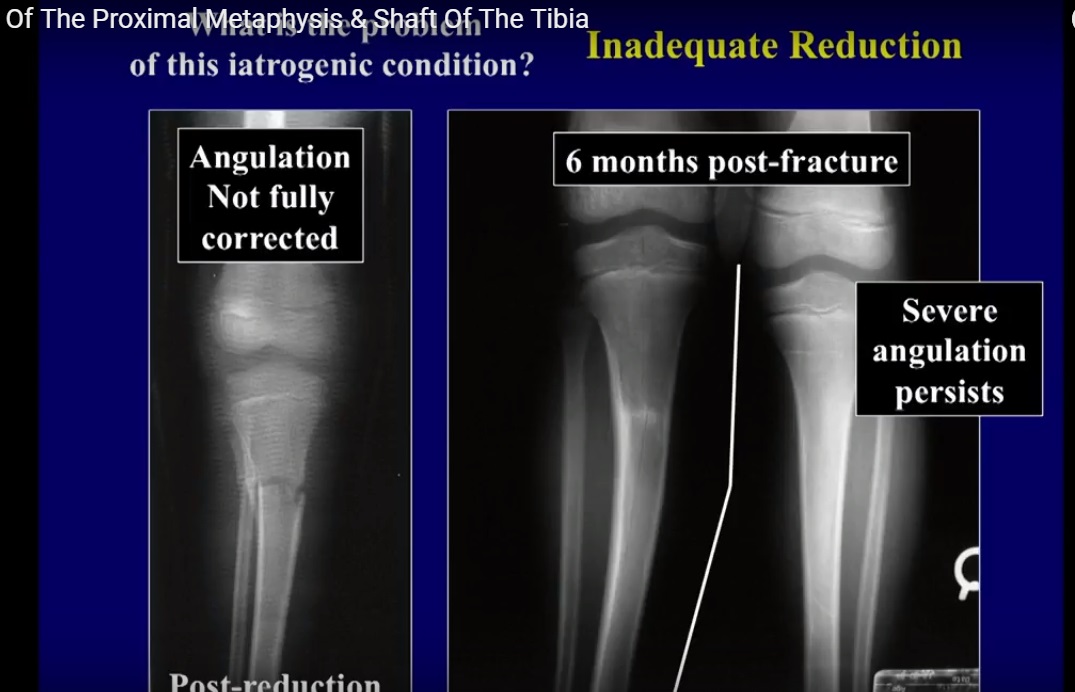
- Progressive valgus deformity (Cozen phenomenon).
Cause
- Biological overgrowth is the most common cause.
- Increased vascularity produces greater medial than lateral growth.
- Not always related to inadequate reduction.
- Fibular tether theory is no longer accepted.
Clinical features
- Valgus deformity appears months after injury.
- Maximum deformity develops during the first year.
- Limb overgrowth may reach approximately 1 cm.
- Harris growth arrest lines may demonstrate asymmetric growth.
Counseling
- Inform parents that temporary valgus deformity may develop during healing.
Natural history
- Valgus increases during the first year.
- Stabilizes by the second year.
- Most cases gradually correct with growth.
Treatment
Initial management
- Closed reduction and long leg cast.
- Apply a varus mold.
Established deformity
- Avoid early corrective osteotomy because recurrence is common.
- Observation is appropriate in most patients.
- Persistent deformity in older children may require guided growth using staples or an 8 plate.
Tibial Shaft Fractures
Assessment
- Evaluate soft tissue injury.
- Assess patient age and growth potential.
- Determine fracture pattern.
- Assess acceptable deformity.
Fracture patterns
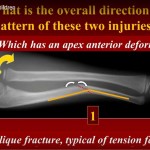
Isolated tibial shaft fracture
- Usually spiral or oblique.
- Commonly caused by twisting injuries.
Tibia and fibula fracture
- Usually transverse.
- Commonly caused by bending forces.
Oblique fractures
- Higher risk of shortening.
Stress fractures
- Usually managed conservatively.
Deforming Forces
Isolated tibial fracture
- Varus angulation.
- Rotational deformity.
Both bone fractures
- Valgus deformity.
Oblique fractures
- Gastrosoleus muscle pull causes shortening.
Acceptable Alignment
Children younger than 8 years
- Angulation up to 10 degrees is acceptable.
- Greater remodeling potential.
Children older than 8 years
- Minimal angulation should be accepted.
Shortening
- Less than 1 cm is generally acceptable.
Conservative Management
Indications
- Most pediatric tibial fractures.
Technique
- Closed reduction and long leg cast.
Important principles
- Apply varus molding to prevent valgus deformity.
- Flex the knee and plantarflex the ankle to reduce gastrosoleus pull in oblique fractures.
- Repeat radiographs after 1 week.
Cast Modifications
- Cast wedging may correct residual angulation.
- Bayonet apposition is acceptable if limb length and alignment are maintained.
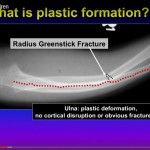
Plastic Deformation
Features
- Common in children.
Treatment
- Gradual correction under general anesthesia.
- Three point bending technique.
Operative Management
Indications
- Open fractures.
- Compartment syndrome.
- Polytrauma.
- Unstable fractures.
- Failure of conservative treatment.
Methods
Percutaneous pinning
- Temporary stabilization.
Elastic intramedullary nails
- Most commonly used surgical technique.
- Avoid physeal injury.
External fixation
- Indicated for open fractures.
- Indicated for compartment syndrome.
- Indicated for severe soft tissue injury.
- Indicated for bone loss.
Plate fixation
- Rarely required.
- Reserved for severe comminution or when rigid fixation is necessary.
Special Situations
Bone loss
- Bone transport using the Ilizarov technique.
Compartment syndrome
- Fasciotomy with external fixation.
Polytrauma
- Elastic intramedullary nailing is usually preferred.
Exam Pearls
- Proximal tibial metaphyseal fractures commonly lead to Cozen valgus deformity.
- Always counsel parents regarding possible valgus overgrowth.
- Avoid early corrective osteotomy for Cozen phenomenon.
- Most pediatric tibial fractures are treated conservatively.
- Oblique fractures have a higher risk of shortening.
- Isolated tibial fractures tend to develop varus deformity.
- Combined tibia and fibula fractures tend to develop valgus deformity.
- External fixation is indicated for open fractures and compartment syndrome.
Leave a Reply