
Courtesy: Kaye Wilkins MD, Prof Lynn Staheli MD
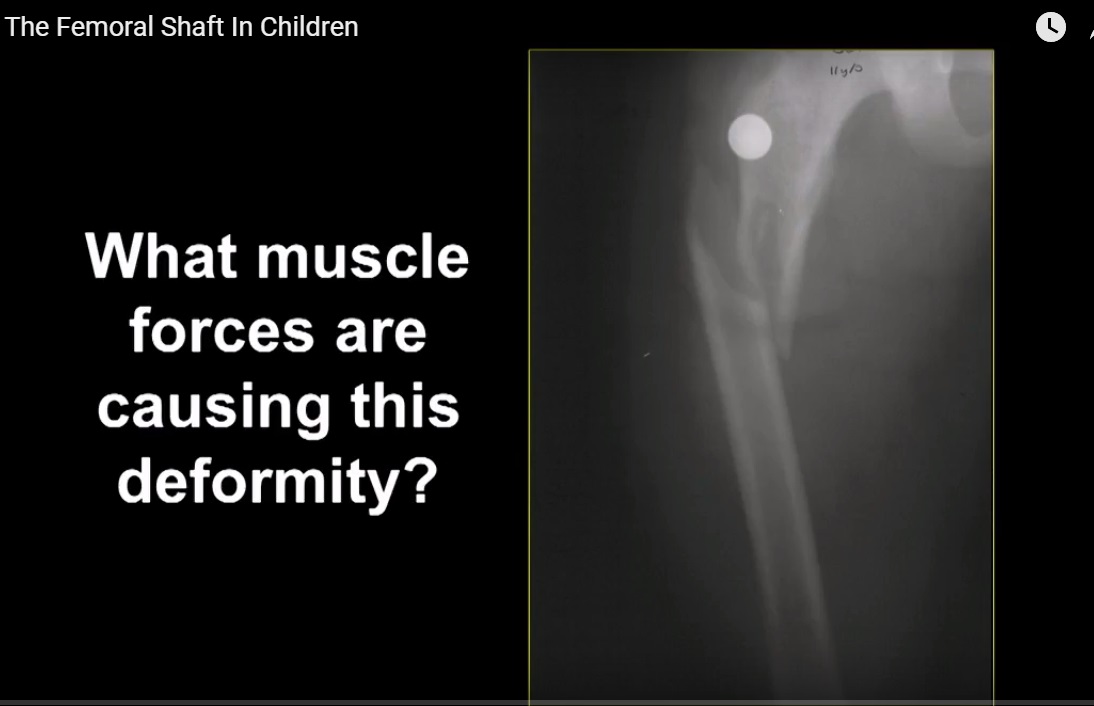
1. Deforming Forces
Proximal Fragment
- Flexion + external rotation
- Due to iliopsoas muscle
- Abduction (varus tendency)
- Due to hip abductors
Distal Fragment
- Shortening
- Due to:
- Hamstrings
- Quadriceps
- Due to:
Key Concept
- Both muscle groups are biarticular – strong deforming forces
2. Age-Wise Incidence
Peak 1: 2–5 Years
- Mechanism:
- Low-energy trauma
- Twisting injuries
Fracture Pattern
- Spiral fractures
Peak 2: Adolescents
- Mechanism:
- High-energy trauma
Common Causes
- Road traffic accidents
- Sports injuries
3. Non-Accidental Injury (Child Abuse)
When to Suspect
- Pre-walking child
- Spiral femur fracture
- Multiple fractures
- Excessive callus formation (delayed presentation)
Confirmation Clues
- Multiple fractures
- Periosteal reaction on follow-up
4. Treatment Principles
Key Principle
- Treatment is age-dependent
A. Infants (<1 Year)
Preferred Option
- Pavlik harness
Other Options
- Immediate hip spica (less common)
- Bryant’s traction (obsolete)
Advantages of Pavlik Harness
- No anesthesia required
- Easy hygiene
- Allows parent–child bonding
Disadvantages
- Less rigid stabilization
- Initial muscle spasm
B. Young Children (1–5 Years)
Gold Standard
- Immediate hip spica
Indications
- Stable fracture
- Shortening <2 cm
Contraindications
- High-energy injury
- Shortening >2–3 cm
Spica Position (Very Important)
- Hip flexion: 30–40°
- Hip abduction + external rotation
- Knee flexion: ~30°
Purpose
- Relaxes:
- Iliopsoas
- Hamstrings
- Quadriceps
Warning
- Anatomical position – leads to:
- External rotation deformity
- Angulation
- Shortening
Complications of Spica
- Shortening
- Malalignment
- Requires close follow-up
C. Children (5–10 Years)
Gold Standard
- Flexible intramedullary nails (TENS)
Other Options
- Traction (rare)
- External fixation (selected cases)
Flexible Nails (TENS)
Principle
- Elastic nails – 3-point fixation
Benefits
- Stability
- Controlled micromotion
Indications
- Transverse fractures
- Short oblique fractures
- Spiral fractures (with cortical contact)
Not Suitable For
- Comminuted fractures
- Length-unstable fractures
Technique Points
- Nails must be:
- Pre-bent
Insertion
- Retrograde (most common)
- Antegrade (selected cases)
Post-Fixation Check
- Length
- Alignment
- Rotation (clinical assessment critical)
Complications
- Shortening
- Nail migration
- Skin irritation
Preventing Shortening
- Add:
- End caps
- Third nail
- External fixator (if needed)
D. Adolescents (>10–12 Years)
Options
- Rigid intramedullary nail (lateral entry)
- Submuscular plating
Avoid
- Piriformis entry nail
- Risk of avascular necrosis (AVN)
5. Traction (Now Rare)
Types
- Skin traction (<7 kg)
- Skeletal traction
Disadvantages
- Prolonged hospital stay
- Muscle wasting
- Skin complications
- Requires continuous monitoring
6. Special Situations
Indications for External Fixator
- Open fractures
- Polytrauma
- Length-unstable fractures
- Failed fixation
Submuscular Plating
- Preferred for:
- Proximal fractures
- Length-unstable fractures
Key Exam Points
- <1 year – Pavlik harness
- 1–5 years – Hip spica
- 5–10 years – TENS nails
-
10 years – IM nail (lateral entry)
High-Yield Concepts
- Proximal fragment:
- Flexion + external rotation (iliopsoas)
- Shortening:
- Due to hamstrings + quadriceps
- Spiral fracture in infant:
- Suspect non-accidental injury
- Incorrect spica position:
- Leads to deformity
- Length-unstable fractures:
- Not suitable for TENS
Final Message
- Pediatric femoral shaft fractures require:
- Age-based management
- Proper technique
- Careful follow-up
to ensure optimal alignment and growth outcomes
Leave a Reply