

Courtesy: Prof Nabil Ebraheim, University of Toledo, Ohio, USA HAWKIN’S SIGN FOR SHOULDER IMPINGEMENT The examiner places the arm of the patient at 90degrees of shoulder flexion with elbow flexed to 90degrees, and applies an internal rotation force with the other hand. The test is positive if the patient experiences shoulder pain with this maneuver. […]
-Examination
Sulcus Sign for Shoulder Instability
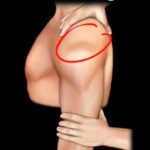
Courtesy: Prof Nabil Ebraheim, University of Toledo, Ohio, USA Sulcus Sign Purpose The Sulcus sign is a clinical sign suggestive of: Inferior glenohumeral instability / subluxation It indicates laxity of the shoulder. Technique Patient should be relaxed. Arm is kept by the side. Examiner grasps the distal humerus. Apply gentle downward traction to the arm. […]
Gower’s Sign
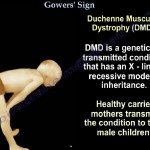
Courtesy: Prof Nabil Ebraheim, University of Toledo, Ohio, USA Gowers Sign Definition Gowers sign describes a patient who uses the hands and arms to “walk up” the thighs/body in order to rise from the floor and achieve a standing position. Mechanism It occurs due to weakness of the proximal lower-limb muscles, particularly: Gluteal muscles […]
Drop Arm sign in Rotator Cuff Disease
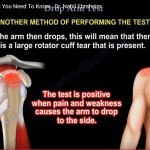
Courtesy: Prof Nabil Ebraheim, University of Toledo, Ohio, USA Drop Arm Sign Purpose The Drop Arm sign is used to assess for a: Rotator cuff tear Technique Place the patient’s arm in an abducted position. Ask the patient to lower the arm. Normal Rotator Cuff The patient can: Smoothly and controllably lower the arm from […]
Clonus Sign for Cervical Myelopathy
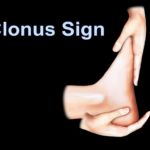
? Clonus Sign for cervical myelopathy The Clonus Sign is involuntary, sustained, rhythmic beating movements of the ankle with firm, passive stretch of the achilles tendon gastrocnemius complex. This clonus is associated with an upper motor neuron lesion. Courtesy: Prof Nabil Ebraheim, University of Toledo, Ohio, USA
Thompson Test for Achilles tendon tear
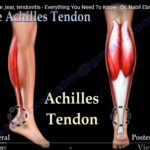
Courtesy: Prof Nabil Ebraheim, University of Toledo, Ohio, USA Thompson Test Purpose The Thompson test is a physical examination maneuver used to assess the: Integrity of the Achilles tendon Patient Position Patient lies prone. Feet are allowed to hang over the edge of the examination table. Technique Examiner squeezes the calf muscles of the […]
Hip Pain Vs Sciatica
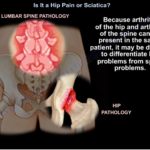
? Courtesy: Prof Nabil Ebraheim, University of Toledo, Ohio, USA Hip and Spine Pathology: Challenges in Diagnosis 1. Hip and spine pathologies can present with similar symptoms, making diagnosis challenging. 2. Both conditions can coexist in the same patient, requiring careful evaluation to determine the primary source of pain. Clinical Presentation 1. Hip Pain: […]
Elbow Clinical Examination
Courtesy: Nader Paksima and NewYOrkOrtho Clinical Examination of the Elbow Overview A systematic elbow examination performed after taking the history. The examination proceeds through: Observation – Range of motion -Palpation/landmarks – Muscle testing – Nerve examination – Stability testing – Specific provocative tests. Observation Both elbows should be fully exposed and compared simultaneously. Look for: […]
Spine Exam, Neck & Upper Extremity
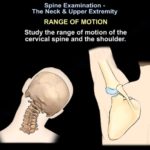
Courtesy: Prof Nabil Ebraheim, University of Toledo, Ohio, USA Cervical Spine & Upper Extremity Examination Overview The cervical spine examination follows the usual orthopaedic sequence: Inspection – Palpation – Range of motion – Strength – Neurovascular examination – Specific tests – Gait The aim is not only to identify cervical pathology, but also to […]
Physical Exam of the Lower Spine & Lower Extremity
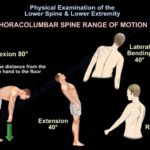
Courtesy: Prof Nabil Ebraheim, University of Toledo, Ohio, USA Physical Examination of the Lower Spine and Lower Extremity Overview The examination follows the usual orthopaedic sequence: Inspection – Palpation – Range of motion – Muscle strength – Provocative/special tests -Thorough neurovascular examination The neurological component should assess motor, sensory, reflexes, and upper motor neuron […]
Clinical Examination of Hand- Ulnar Nerve
Courtesy: Dr Terrence Jose Jerome, FRCS. Editor, Journal of Hand and MicroSurgery Clinical Examination of Ulnar Nerve Palsy / Claw Hand Overview The lecture is centered on the clinical examination of ulnar nerve palsy, especially how to: Identify the cause and level of lesion Differentiate high vs low ulnar palsy Distinguish isolated ulnar palsy […]
Physical Exam of the Lower Spine
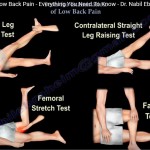
Courtesy: Prof Nabil Ebraheim, University of Toledo, Ohio, USA Sequence of Examination Gait Inspection Palpation Movements Measurements Special tests Neurological examination 1. Gait Assessment Observe the patient walking normally and while turning. Shuffling gait Slap foot gait Broad-based or halting gait Antalgic gait Trendelenburg gait High-stepping gait Hemiplegic or circumduction gait 2. Inspection Inspection should […]
Examination Of L4 Nerve Root
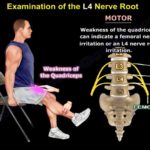
Courtesy: Prof Nabil Ebraheim, University of Toledo, Ohio, USA L4 Nerve Root Examination Overview Examination of any nerve root has three components: Sensory examination – Motor examination – Reflex examination For L4, emphasizes: Sensation: medial side of the foot Motor: mainly tibialis anterior for ankle dorsiflexion; quadriceps can also reflect L4 function Reflex: patellar […]
Examination Of L5 Nerve Root
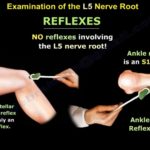
Courtesy: Prof Nabil Ebraheim, University of Toledo, Ohio, USA L5 Nerve Root Examination Overview Examination of any nerve root has three components: Sensory examination – Motor examination – Reflex examination For L5, : Sensory: dorsum/top of the foot Motor: great-toe extension, toe extension, hip abduction, medial hamstrings Reflex: no commonly used specific reflex Sensory […]
Timed Up and Go TUG Test
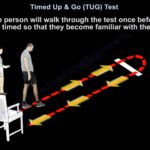
Courtesy: Prof Nabil Ebraheim, University of Toledo, Ohio, USA Timed Up and Go (TUG) Test Overview & Objectives Definition: A standardized functional test evaluating dynamic balance and mobility. Primary Applications: Assessment of functional mobility (rising, ambulating, turning, transfers). Fall-risk screening, particularly in geriatric populations. Direct observation of transitional movements: chair rise, forward gait, turning, […]