• Skip to main content
  • Skip to secondary menu
  • Skip to primary sidebar
OrthopaedicPrinciples.com

OrthopaedicPrinciples.com

Integrating Principles and Evidence

Integrating Principles and Evidence

  • Home
  • Editorial Board
  • Our Books
    • Evidence Based Orthopaedic Principles
  • Courses
  • Exams
  • Reviews
  • Live Program
  • Contact

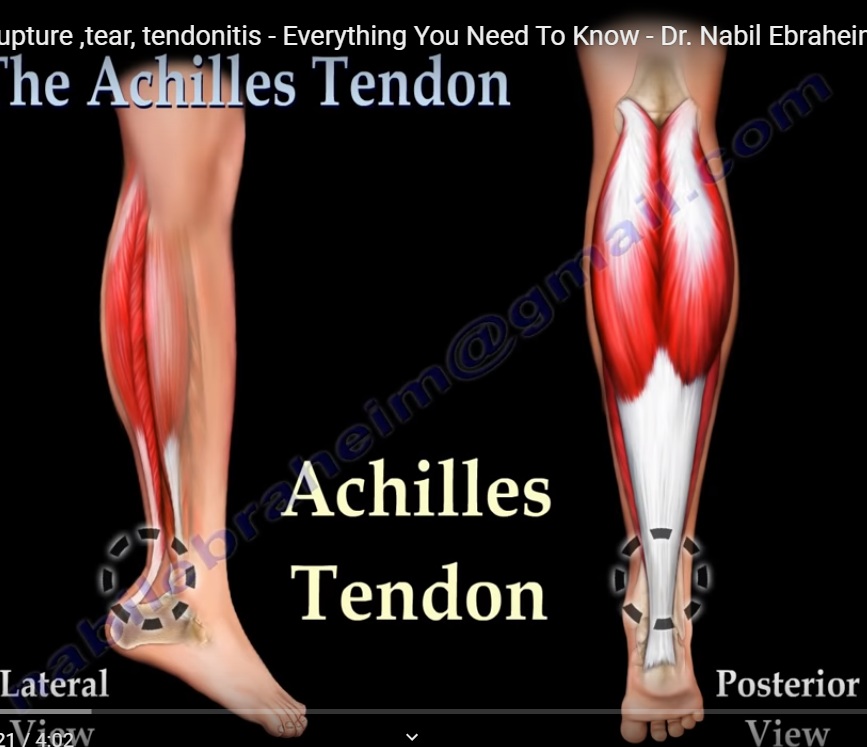
Thompson Test for Achilles tendon tear

Courtesy: Prof Nabil Ebraheim, University of Toledo, Ohio, USA


Thompson Test

Purpose

The Thompson test is a physical examination maneuver used to assess the:

Integrity of the Achilles tendon

Patient Position

  • Patient lies prone.
  • Feet are allowed to hang over the edge of the examination table.

Technique

  1. Examiner squeezes the calf muscles of the affected leg.
  2. Observe movement of the foot.
  3. Compare with the opposite side.

Normal Test

Squeezing the calf produces:

Plantar flexion of the foot

This indicates an intact Achilles tendon.

Positive Thompson Test

A positive test is:

Absence of plantar flexion when the calf is squeezed

This indicates an Achilles tendon tear/rupture.

One-line Viva Answer

Thompson test assesses Achilles tendon integrity: with the patient prone and the foot hanging over the table, squeezing the calf normally produces plantar flexion; absence of plantar flexion indicates Achilles tendon rupture.

Quick Recall

Prone – foot over edge  -squeeze calf – no plantar flexion = Achilles tendon rupture.
Post Views: 1,660

Related Posts

  • Hook test and Distal Biceps tendon Tear

    Courtesy: Prof Nabil Ebraheim, University of Toledo, Ohio, USA

  • Subscapularis Tendon Tear

  • Achilles Tendon Ruptures

    Courtesy: International Foot and Ankle Symposium, Chennai

Reader Interactions

Leave a Reply

Your email address will not be published. Required fields are marked *

Primary Sidebar

Follow Us

instagram slideshare

Categories

  • -Applied Anatomy
  • -Approaches
  • -Basic Sciences
  • -Cartilage & Meniscus
  • -Classifications
  • -Examination
  • -Foot and Ankle
  • -Foot and Ankle Trauma
  • -FRCS(Tr and Orth) tutorials
  • -Gait
  • -Hand and Wrist
  • -Hand and Wrist Trauma
  • -Hand Infections
  • -Hip and Knee
  • -Hip Preservation
  • -Infections
  • -Joint Reconstruction
  • -Knee Arthroplasty
  • -Knee Preservation
  • -Metabolic Disorders
  • -Oncology
  • -OrthoBiologics
  • -OrthoPlastic
  • -Paediatric Orthopaedics
  • -Paediatric Trauma
  • -Patellofemoral Joint
  • -Pelvis
  • -Peripheral Nerves
  • -Principles
  • -Principles of Surgery
  • -Radiology
  • -Rheumatology
  • -Shoulder and Elbow
  • -Shoulder and Elbow Arthroplasty
  • -Spine Deformity
  • -Spine Oncology
  • -Spine Trauma
  • -Spine, Pelvis & Neurology
  • -Sports Ankle and Foot
  • -Sports Elbow
  • -Sports Knee
  • -Sports Medicine
  • -Sports Medicine Hip
  • -Sports Shoulder
  • -Sports Wrist
  • -Statistics
  • -Technical Tip
  • -Technology in Orth
  • -Trauma
  • -Trauma (Upper Limb)
  • -Trauma Life Support
  • -Trauma Reconstruction
  • Book Shelf
  • Book Shelf Medical
  • Careers
  • Case Studies and Free Papers
  • DNB Ortho
  • Evidence Based Orthopaedic Principles
  • Evidence Based Orthopaedics
  • Exam Corner
  • Fellowships
  • Guest Editor
  • Guest Reviews
  • Image Quiz
  • Instructional Course Lectures
  • Journal Club
  • MCQs
  • Meetings and Courses
  • MS Ortho
  • Multimedia
  • News and Blog
  • Plaster Techniques
  • Podcasts
  • Public Health
  • Rehabilitation
  • Research
  • Shorts and Reels
Copyright@orthopaedicprinciples.com. All right rerserved.