
Courtesy: Jordi Sanchez-Ballester, FRCSOrth, Liverpool, UK End-Stage Ankle Arthritis: Arthrodesis vs Total Ankle Replacement Overview End-stage ankle arthritis is a relatively uncommon condition compared to hip and knee arthritis, but it can cause significant disability. Objectives Review epidemiology Understand surgical options Compare: Ankle arthrodesis (fusion) Total ankle replacement (TAR) Evaluate current evidence and […]
Metastatic Disease of the Cervical Spine
Courtesy: Vassileios Igoumenou MD, Chief Medical Officer, Spine Center, medius Klinik, Nürtingen, Germany
Sulcus Sign for Shoulder Instability
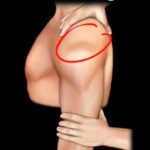
Courtesy: Prof Nabil Ebraheim, University of Toledo, Ohio, USA Sulcus Sign Purpose The Sulcus sign is a clinical sign suggestive of: Inferior glenohumeral instability / subluxation It indicates laxity of the shoulder. Technique Patient should be relaxed. Arm is kept by the side. Examiner grasps the distal humerus. Apply gentle downward traction to the arm. […]
Achilles Tendon Ruptures
Courtesy: Manuel Santos Carvalho MD, Porto, Portugal Anatomy The Achilles tendon is the largest and strongest tendon in the human body. It is formed by the confluence of the gastrocnemius and soleus tendons. The soleus contribution is relatively short, ranging from 3 to 11 centimeters. The gastrocnemius contributes the major portion, ranging from 11 […]
Distal Biceps Tendon Injuries
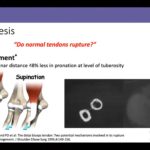
Epidemiology Relatively uncommon (~10% of all biceps ruptures) Typically affects: Men Age 40–50 years Dominant arm Much less common than proximal (shoulder) biceps rupture Mechanism of Injury Usually a single traumatic event Classic scenario: Elbow flexed Sudden eccentric load (forced extension) Patients often report: “Pop” sensation Immediate pain Risk Factors Smoking (major risk) Anabolic […]
Radial Head Replacement

Courtesy: Mr Lee van Rensburg, FRCSOrth Cambridge University Surgeon,
High Ankle Sprains

Courtesy: Dr Mette Andersen, Tromso, Norway High Ankle Sprains (Syndesmotic Injuries): Evaluation & Management Overview High ankle sprains involve injury to the distal tibiofibular syndesmosis and are frequently missed. Clinical Importance Missed diagnosis may lead to: Delayed return to sport Chronic instability Soft tissue impingement Post-traumatic osteoarthritis Nearly 80% of ankle osteoarthritis is post-traumatic […]
Glenoid Reconstruction Options in Shoulder Arthroplasty
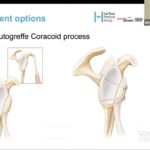
Courtesy: Alexander Ladermann, Zurich, Switzerland
Knee Cartilage Regeneration

Courtesy: Prof Paul Lee FRCSOrth, London What is Articular Cartilage? • It is the smooth, white tissue that covers the ends of bones where they come together to form joints • It is a hyaline cartilage and is almost 1- 5mm thick • Ability to withstand good amount of pressure • It is composed of […]
Arthroscopic Biceps Tenodesis
Courtesy: Dr Abhinav Gulihar FRCSOrth, London, UK
Associated Acetabular Fractures

Courtesy: Prof Cyril Mauffrey, FRCSOrth, Denver
Metastatic Disease to Acetabulum

Courtesy: Alexander Christ MD,Assistant Professor, UCLA, Los Angeles Overview of the Webinar Educational session focusing on surgical and non?surgical management of metastatic disease affecting the acetabulum. Discussion centered on evolving treatment strategies, reconstruction techniques, and multidisciplinary care for patients with metastatic bone disease. Background of the Presenter Orthopedic oncologist specializing in tumors and tumor?related conditions […]
Scapholunate Instability: Evidence-based Management
Courtesy: Dr. Ahlam Arnaout, MD, Paris France Key Insight Despite extensive research, there is no universally accepted optimal treatment, reflecting the complexity of wrist biomechanics Historical Understanding of SLI Focus on Scapholunate Interosseous Ligament (SLIL) The SLIL was traditionally considered the primary stabilizer. Components of SLIL Dorsal portion — Strongest, main stabilizer Volar portion — […]
UnderVastus Approach in TKR

Courtesy: Hiranka Takafumi MD, Takatsuki General Hospital, Japan
Recurrent Posterior Shoulder Instability
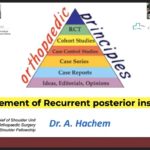
Courtesy: Abdulilah Hachem, Barcelona, Spain