
Courtesy: Prof Olga Savvidou, Athens University, Greece
ScapuloThoracic Orientation during Pre-Op planning in Reverse Shoulder Arthroplasty

Courtesy: Philipp Moroder MD, Zurich, Switzerland
Patellar Instability in Adolescents and MPFL Reconstruction

Courtesy: Shital Parikh MD, Professor, Cincinatti Childrens Hospital, USA
FRCS Orth Exam- Knee Arthroplasty
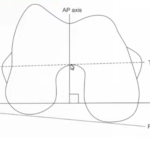
Courtesy: Zaid al Rab, FOunder, OrthoPass
Intramedullary Nailing in Proximal Humerus fractures

Courtesy: Michell Ruiz, MD Past President, Mexican Shoulder and ELbow Society
Collateral Ligament Injuries in TKR

Courtesy: Dr PrabhuDev Prasad Purudappa, Boston University School of Medicine, Boston, MA, USA
PatelloFemoral Instability: A SemiDynamic Technique

Courtesy: Dr Claudia Arias, Lima, Peru
Endoscopic FHL Transfer for Achilles Tendon Ruptures

Courtesy: Gustavo Lucar MD, Barcelona, Spain
ACL and ALL Reconstruction: Techniques and Indications

Courtesy: Achilleas Boutsiadis MD, Athens, Greece
TrapezioMetacarpal Joint Arthroplasty
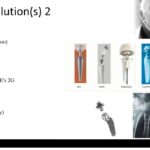
Courtesy: Mahdi Siala MD, Nice, France Trapeziometacarpal (TMC) Dual Mobility Arthroplasty Introduction Trapeziometacarpal (TMC) arthroplasty has evolved significantly with the development of dual mobility prosthetic systems for thumb carpometacarpal (CMC) arthritis. This approach aims to improve: Stability Range of motion Recovery time Functional outcomes Modern dual mobility implants are inspired by hip arthroplasty concepts […]
The Athlete’s Shoulder: Structured Approach
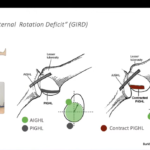
Courtesy: Prof Knut Beitzel, Cologne, Germany
Distal Humerus Fractures
Courtesy: Pierluigi DiFelice,MD, Balearic Islands, Spain
Kerboull Cage Reconstruction in Total Hip Replacement

Courtesy: Emmanuel Gibon MD, Asst Professor, University of Pennsylvania, Neil Sheth MD
SpinoPelvic Principles in Total Hip Replacement

Courtesy: Russel Bodner MD, Illinois, USA
Pilon Fractures

Courtesy: Jamal al Asiri, FRCSC, FACS McMaster University and Hamilton Health, Ontario, Canada PILON FRACTURES History • Described in 1911 by Etienne destot • Pilon = pestle • High complication rate with early total care • Managed conservatively early-mid 1900 • Ruedi-Allgower principles: 1969 Pilon fracture classification systems 1. Reudi-allgower classification (1979) 2. AO classification […]