

Courtesy: Dr Adeeba Albadran, MD Assistant Professor, Princess Nourah Bint Abdulrahman University, Riyadh, Saudi Arabia
Acetabular Reconstruction in Revision THR
Courtesy: Leandro Alves dOliviera, Brazil
Endoscopic Pelvic Fracture Surgery

Courtesy: Koroush Kabir MD, Wuppertal, Germany
Femoral Fractures in Children
Courtesy: Nirav Pandya MD, Associate Professor, UCSF, SanFrancisco, California Pediatric Femoral Fractures Proximal Femur Fractures (Femoral Neck) Epidemiology Rare in children. Usually result from high energy trauma such as road traffic accidents or falls from height. Always evaluate for associated injuries. Always exclude pathological lesions such as bone cysts. Blood supply The medial circumflex […]
ACL Revision Principles
Courtesy: Wolf Petersen MD, Martin Luther Krankenhaus, Berlin, Germany
Lisfranc Injuries
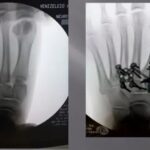
Courtesy: Ioannis Stavrakakis MD, Crete, Greece Introduction A Lisfranc injury involves the tarsometatarsal (TMT) joint complex of the midfoot. These injuries range from subtle ligament sprains to severe fracture dislocations and are frequently missed, leading to chronic pain, instability, and post traumatic arthritis. The injury is named after Jacques Lisfranc de St. Martin, who […]
Achilles Tendon Rupture
Courtesy: Lyndon Mason, FRCSOrth, Liverpool, UK Achilles Tendon Rupture – Key Orthopaedic Principles Introduction The Achilles tendon is formed by: Gastrocnemius Soleus (Together called triceps surae) Insertion Calcaneal tuberosity Fiber Orientation Tendon fibers rotate before insertion Medial gastrocnemius fibers insert more posteriorly Clinical Note Medial gastrocnemius release can improve tightness Blood Supply Segmental Supply […]
Neurogenic Thoracic Outlet Syndrome
Courtesy: Freek Hollman MD, Venlo, Netherlands
Proximal Biceps Tendon Rupture
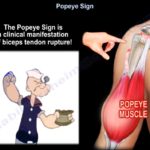
?? Courtesy: Prof Nabil Ebraheim, University of Toledo, Ohio, USA Popeye sign: is seen in tear of long head of biceps tendon – may you look like popeye after he eats his spinach. Popeye sign – clinical manifestation of biceps tendon rupture It is not a serious injury and patient doesn’t need surgery. Case 1 […]
Unplanned Excision of Soft Tissue Sarcomas
Courtesy: Juan Pretell MD, Chief of Orthopaedic Oncology, Miami Cancer Institute, Florida, USA Unplanned Excision of Soft Tissue Sarcomas Overview Unplanned excision refers to removal of a soft tissue tumor: Without appropriate imaging Without biopsy Without oncologic planning Without intention to achieve tumor-free margins This usually occurs when a sarcoma is mistaken for a benign […]
AO Classification of Femoral Head Fractures
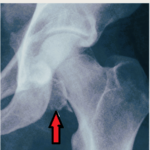
AO Classification for Femoral Head fractures: 31 C (3=Femur, 1=Proximal femur, C=femoral head) Femoral head Split fractures are classified by AO/OTA as 31C1 and subdivided into: 31C1.1 – Avulsion of ligamentum teres 31C1.2 – Infrafoveal split fracture 31C1.3 – Suprafoveal split fracture Femoral head Depression fractures are classified by AO/OTA as 31C2 and subdivided into: […]
Indications and ContraIndications of Unicompartmental Knee Replacement
Courtesy: Mr Fahad Hossain, Walsall NHS Healthcare, UK Overview Both unicompartmental knee arthroplasty and high tibial osteotomy preserve bone stock and native soft tissues when compared to total knee arthroplasty. Both procedures provide more physiological knee kinematics and improved native proprioception relative to total knee arthroplasty. General Indications High Tibial Osteotomy Preferred in patients younger […]
From MIS to mis: Evolution of Calcaneal Fracture Management

Courtesy: Alan Yan MD, Asst Professor, University of South Dakota, US
Posterolateral Corner Reconstruction ( LaPrade Vs Arciero)
Courtesy: James Bailey MD, Santa Barbara, California
Posterolateral Tibial Plateau Fractures
Courtesy: Prof Karl Heinz Frosch, Hamburg, Germany