
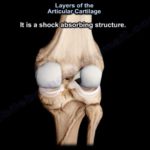
Courtesy: Dr A Gomoll, Ashok Shyam TV, Ortho Clinical Context First-time patellar dislocators traditionally require surgery only when a loose body is present. However, many patients present with: Cartilage defects on magnetic resonance imaging. No loose body. Unclear indication for surgery. Key question:When should patellofemoral cartilage defects be treated surgically? Incidence of Patellofemoral Cartilage Defects […]
Medial meniscus root repair
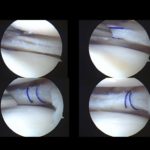
Courtesy: Dr Strickland, Ashok Shyam TV, Ortho Changing Perspective Repair of medial meniscus root tears has gained momentum only in the last several years. Historically, many of these tears—especially in middle-aged patients—were treated nonoperatively or with meniscectomy. These are sometimes referred to as “underserved tears” because they were frequently missed or undertreated. The key questions: […]
Templating in THR
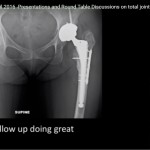
Templating in Total Hip Arthroplasty 1. Why Template? Preoperative templating helps to plan and restore: Hip biomechanics Hip center Femoral offset Leg length Acetabular cup position Femoral stem position Implant size It is particularly useful in patients with unusual anatomy, such as: Developmental dysplasia Protrusio Abnormal femoral neck angles Proximal femoral deformity Templating also helps […]
Hip Imaging Radiograph and MRI
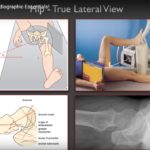
Courtesy: Dr T Vail, Ashok Shyam TV, Ortho Imaging of the Hip 1. Why Hip Imaging Matters Hip imaging is not simply about identifying pathology. It helps us understand: Hip morphology Hip biomechanics Relationship between the femur and pelvis Leg length Femoral offset Acetabular coverage Cartilage and labral pathology Femoroacetabular impingement Wear and osteolysis The […]
Cementless THR

Courtesy: Dr D Padgett, Ashok Shyam TV, Ortho Limitations of Cemented Fixation Cement fatigue fractures may: Lead to implant loosening Contribute to particle-induced osteolysis Certain patient groups historically performed poorly with cemented fixation: Heavy, highly active males Ideal goal: Direct bone–implant fixation Avoidance of an intermediary cement layer Elimination of a second mechanical interface Biologic […]
Current Trends in Hemi Arthroplasty
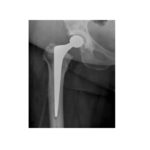
Courtesy: Dr Suryanaraya, Ashok Shyam TV, Ortho Hemiarthroplasty vs Total Hip Arthroplasty in the Elderly Ongoing debate in displaced femoral neck fractures: Internal fixation vs hemiarthroplasty vs THA. Considerations: Functional outcome Morbidity and mortality Revision risk Historical Failures of Early Hemiarthroplasty Primary Causes of Early Failure Metallurgical failure Fixation failure Cartilage degeneration over time Design-Related […]
Hip-Alternate Bearing Ceramic
Courtesy: Dr C Ranawat, Ashok Shyam TV, Ortho
Osteolysis in TKR
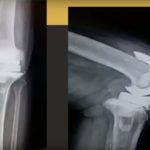
Courtesy: Dr Ranawat, Ashok Shyam TV, Ortho Background Osteolysis remains a significant long-term complication in total knee arthroplasty (TKA). Strongly associated with: Polyethylene wear debris Modular implant designs Historically uncommon in: Fixed-bearing, monoblock all-polyethylene tibial components. Historical Perspective All-Polyethylene Fixed-Bearing Knees Single-unit tibial component. Long-term data (up to 20+ years): Minimal to no osteolysis reported. […]
Painful and Stiff Knee

Courtesy: Dr T Vail, Ashok Shyam TV, Ortho Stiff and Painful Knee After Total Knee Replacement 1. Basic Concept Total knee replacement works well in the vast majority of patients, but the small proportion with persistent problems can require substantial clinical attention. The typical scenario is a knee that: Looks satisfactory radiographically Does not feel […]
Mobile Bearing TKR
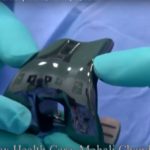
Courtesy: Dr Maniar, Ashok Shyam TV, Ortho Why Consider a Mobile-Bearing Knee? Primary concern: Polyethylene wear: At the articular surface At the undersurface (backside wear) Fixed-bearing knees have demonstrated: Significant articular wear. Undersurface micromotion leading to wear debris. Associated osteolysis and revision in mid-term follow-up. Problem 1: Articular Surface Wear Contact Stress Principle Contact stress […]
Cruciate Retaining TKR
Courtesy: Dr A Reddy, Ashok Shyam TV, Ortho Introduction Focus: Cruciate-retaining (CR) total knee arthroplasty. Personal practice preference: ~99% of primary TKAs performed as CR knees. Used even in severe deformities. Transition from posterior-stabilized (PS) to CR: Smaller knee sizes. Thinner femoral condyles. Concerns regarding box cuts in smaller bone stock. Why Choose Cruciate Retaining? […]
Early TKR Failure-Common Mistake
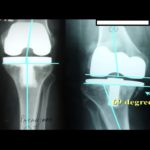
Courtesy: Dr C Ranawat, Ashok Shyam TV, Ortho Foundational Premise We can always improve surgical outcomes. Most complications occur because of preventable errors. Understanding common technical mistakes helps reduce failures. Common Causes of Surgical Errors 1. Poor Exposure Limited visualization leads to “guesswork.” Small-incision approaches may: Compromise rotational alignment. Leave retained cement (especially posterolateral corner). […]
Arthrofibrosis

Courtesy: Dr C Ranawat, Ashok Shyam TV, Ortho Introduction Arthrofibrosis is an uncommon but frustrating complication after total knee arthroplasty (TKA). Incidence: < 2% following primary TKA. Defined as: Functional impairment with restricted knee motion. Important distinction: Not all stiff knees are arthrofibrotic. Definition of a Stiff Knee Knee flexion < 75° generally considered stiff. […]
Advances & Techniques in Joint Replacement Surgery
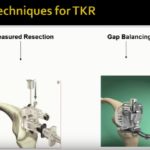
Courtesy: Dr C Ranawat, Ashok Shyam TV, Ortho Case 1: Young, Active Patient with Varus & Flexion Deformity Patient Profile Age: 56 years Weight: 250 lbs Long-standing post-traumatic deformity 15° varus + 15° flexion contracture Previously active tennis player Key Considerations Young, high-demand patient. Long life expectancy ? risk of polyethylene wear. Need durable fixation. […]
Radiographic Criteria for Optimum TKR

Courtesy: Dr S Macdonald, Ashok Shyam TV, Ortho Don’t Forget Pre-Operative Evaluation Before analyzing a painful postoperative knee, always revisit: Was TKA truly indicated? Was there clear bone-on-bone osteoarthritis? Could pain have originated elsewhere (e.g., hip)? Key Clinical Lesson Mild radiographic knee arthritis + severe hip arthritis ? knee replacement will not solve the pain. […]