
Courtesy: Dr T Vail, Ashok Shyam TV, Ortho
Stiff and Painful Knee After Total Knee Replacement
1. Basic Concept
Total knee replacement works well in the vast majority of patients, but the small proportion with persistent problems can require substantial clinical attention.
The typical scenario is a knee that:
- Looks satisfactory radiographically
- Does not feel right to the patient
- Feels stiff or swollen
- Has inadequate flexion
- May have crepitation
- May feel unstable
- May have pain
Possible causes include:
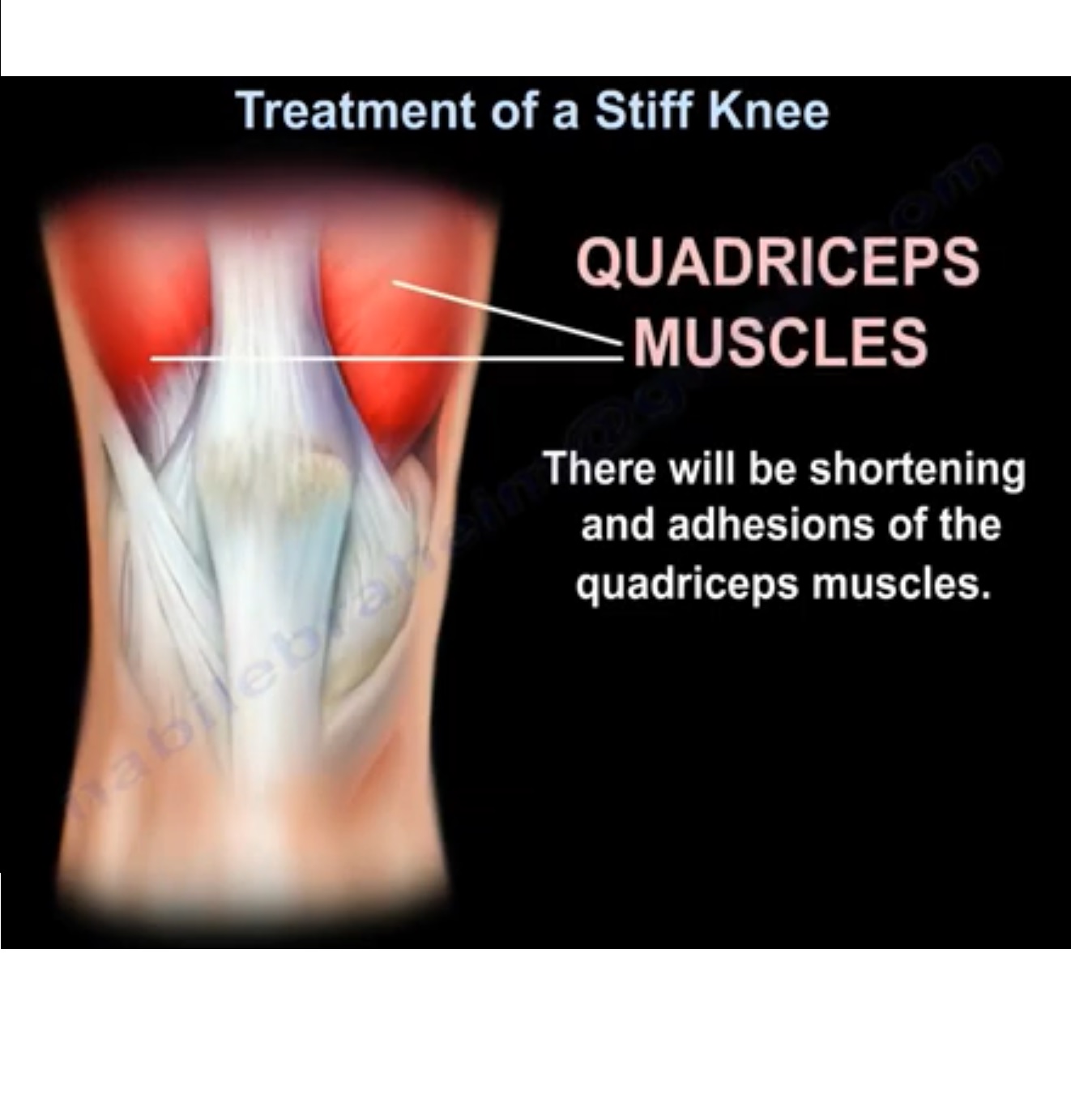
- Scar tissue
- Arthrofibrosis
- Patellar clunk
- Synovial or scar tissue growing into the intercondylar area
- Implant-related problems
- Infection
Pain and stiffness are important contributors to patient dissatisfaction after TKA.
2. Functional Range of Motion
Approximate knee flexion requirements mentioned in the lecture:
| Activity | Flexion required |
|---|---|
| Normal ambulation | 40–55° |
| Climbing stairs | ~85° |
| Getting out of a low chair | More than 85° |
| Kneeling | Greater flexion required |
Therefore, the goal is not simply to obtain a particular numerical range but to achieve functional motion appropriate for the patient’s activities.
3. Stiffness Is a Final Common Pathway
A very important concept is:
Stiffness is a final common pathway rather than a diagnosis by itself.
Multiple different problems can eventually present as the same clinical picture of pain and stiffness.
Possible causes
- Chronic pain syndrome
- Infection
- Kinematic problems
- Component oversizing
- Poorly administered rehabilitation
- Biological factors related to fibrosis or collagen response
- Loosening
- Polyethylene wear
- Wear-related synovitis
- Instability
- Malalignment
4. Early vs Late Stiffness
Early stiffness
Potential causes include:
- Infection
- Technical factors
- Patient-related factors
- Inadequate rehabilitation
Late stiffness
Consider:
- Implant loosening
- Polyethylene wear
- Wear-related synovitis
- Instability
- Infection
- Other implant-related abnormalities
Important principle
Do not treat stiffness as simply arthrofibrosis until other causes have been excluded.
5. Clinical Scenarios
Scenario 1: Loose Cementless Implant
A patient develops early pain.
- Infection workup is negative.
- The knee does not function well.
- The cementless implant has failed to achieve bone ingrowth.
- The implant is loose.
Lesson
Early pain and stiffness can be related to implant fixation failure, even when infection is excluded.
Scenario 2: Infection
Patient develops:
- Pain
- Chronic effusion
- Stiffness
The implants appear well fixed radiographically.
Investigation demonstrates infection.
Lesson
A well-fixed implant does not exclude infection.
Scenario 3: Polyethylene Wear
A patient has:
- A previously well-functioning knee
- Late instability
- Progressive loss of flexion
The underlying problem is polyethylene wear.
Scenario 4: Wear-Related Synovitis
A patient develops:
- Late pain
- Effusion
- Diminishing range of motion
- Well-fixed implants
The cause is wear-related synovitis.
6. Patient Factors
Some factors may predispose to postoperative stiffness or influence expectations.
Patient habitus
- Size of the patient
- Size of the leg
- Soft-tissue envelope
These may influence achievable range of motion and patient expectations.
Previous trauma
Post-traumatic knees may have:
- Skin scarring
- Adhesion of skin to deeper tissues
- Increased soft-tissue fibrosis
These factors may predict poorer postoperative motion.
Important principle
Preoperative expectations regarding postoperative range of motion should be discussed with the patient.
7. Posterior Compartment
The posterior compartment is particularly important for achieving knee flexion.
Attention should be given to:
- Posterior osteophytes
- Posterior soft tissues
- Adequate posterior clearance
Failure to address posterior pathology may contribute to limited flexion.
8. Early Management of Limited Motion
The important principle is progressive improvement rather than achieving a specific numerical target immediately.
The surgeon should look for:
Progressive improvement in range of motion.
If the patient is not demonstrating progressive improvement, early intervention should be considered.
9. Manipulation Under Anaesthesia
The speaker describes performing manipulation when the patient is not showing adequate progression, generally:
Within the first 6–8 weeks
The emphasis is on early recognition and intervention rather than waiting for severe established stiffness.
10. Rehabilitation
Early rehabilitation is important.
The lecture emphasizes:
- Early weight bearing
- Appropriate rehabilitation
- Monitoring the progression of range of motion
CPM
Routine continuous passive motion is not used by the speaker.
The stated rationale is that routine CPM may reduce length of stay but does not necessarily improve the final outcome.
However, CPM may be considered in:
- Unmotivated patients
- Patients who are slow to regain motion
- Particularly in revision settings
11. Previous Stiffness in the Opposite Knee
A history of stiffness in the contralateral knee is important.
Patients with previous stiffness may have:
- Greater risk of postoperative stiffness
- Greater likelihood of requiring manipulation
- Less predictable restoration of motion
Clinical implication
If the patient has previously demonstrated stiffness in the opposite knee, be particularly aggressive with early rehabilitation and monitoring.
12. Technical Causes of Stiffness
Several technical factors can contribute to pain and stiffness.
Component sizing
Avoid:
- Oversized femoral component
- Oversized tibial component
- Component overhang
These can produce:
- Soft-tissue tension
- Pain
- Stiffness
Patellofemoral joint
Avoid overstuffing the patellofemoral joint.
Mobile-bearing implants
With a highly conforming mobile-bearing implant:
- Ensure cement or bone does not interfere with the mobile bearing.
- The bearing must remain free to move appropriately.
13. PCL and Kinematics
In a cruciate-retaining knee, an insufficient PCL can produce abnormal kinematics.
The lecture describes:
- Paradoxical motion
- Forward movement of the contact point
- Posterior impingement
- A sensation of stiffness
Therefore, PCL function and appropriate kinematics are important when evaluating a stiff knee.
14. Late Management of Stiffness
Established late stiffness requires identification of the underlying cause.
Potential treatments include:
- Revision surgery if there is an implant-related problem
- Open excision of scar tissue
- Complete capsulectomy when appropriate
Arthroscopy
The lecture emphasizes that arthroscopy is rarely helpful in established stiffness.
An exception may be selected cases involving:
- Poorly balanced PCL
- Cruciate-retaining knee
15. Complete Capsulectomy
When reoperating for significant stiffness, the lecture describes a complete capsulectomy involving:
- Medial gutter
- Lateral gutter
- Patellofemoral joint
The goal is to remove established scar tissue and restore soft-tissue mobility.
16. Revision for Stiffness
Revision may be considered when there is an identifiable correctable abnormality, such as:
- Loosening
- Malalignment
- Oversizing
- Other component-related abnormalities
Revision may improve range of motion, but restoration to normal motion is not guaranteed.
17. Revision to Posterior-Stabilized Knee
The lecture notes that revision to a posterior-stabilized knee can improve range of motion in selected cases.
However:
- Improvement may remain incomplete.
- Many patients may still require manipulation.
- The final outcome depends substantially on the underlying cause.
18. Expected Results After Revision
In the series discussed:
- Preoperative range of motion was approximately 42°
- Postoperative range of motion improved to approximately 85°
This represents a substantial functional improvement, although it is not a normal range of motion.
Both:
- Flexion
- Extension
could improve.
19. Prognostic Factors
The lecture suggests that outcomes were somewhat better when there was a radiographic abnormality that could be corrected.
Interestingly, whether the PCL was competent or incompetent at the time of evaluation did not appear to determine the outcome in that series.
The key favorable factor was the presence of a correctable structural abnormality.
20. Overall Management Approach
Patient with stiff and painful TKA
First: Identify the cause
Evaluate for:
- Infection
- Loosening
- Malalignment
- Oversizing
- Polyethylene wear
- Wear-related synovitis
- Instability
- Kinematic problems
- Arthrofibrosis
If early postoperative stiffness
Focus on:
- Progressive rehabilitation
- Early weight bearing
- Close monitoring of motion
If there is no progressive improvement, consider manipulation within approximately 6–8 weeks.
If established late stiffness
Consider:
- Open scar excision
- Complete capsulectomy
- Correction of component abnormalities
- Revision TKA when indicated
High-Yield Exam Points
-
- Stiffness is a final common pathway, not a diagnosis.
- Always investigate the cause before treating presumed arthrofibrosis.
- Important causes include infection, loosening, malalignment, oversizing, polyethylene wear, synovitis, instability and kinematic problems.
- Functional flexion is approximately 40–55° for walking and about 85° for stair climbing.
- Look for progressive improvement in the early postoperative period.
- If motion is not progressively improving, manipulation may be considered within approximately 6–8 weeks.
- Routine CPM is not recommended by the speaker, but may have a role in selected unmotivated or slow-to-progress patients.
- Previous stiffness in the opposite knee is a warning sign.
- Avoid femoral/tibial component oversizing and patellofemoral overstuffing.
- The posterior compartment is important for flexion.
- Late stiffness may require open scar excision and complete capsulectomy.
- Arthroscopy is generally rarely useful for established stiffness.
- Revision is more likely to help when there is a correctable radiographic abnormality.
- Revision can improve motion substantially, but normal motion is not guaranteed.


Leave a Reply