
Courtesy: Prof Nabil Ebraheim, University of Toledo, Ohio, USA
Management of Stiff Knee with Loss of Flexion
Stiff Knee with Loss of Flexion: Treatment
1. Basic Concept
Loss of knee flexion can occur from several causes, but commonly follows:
- Injury or trauma
- Surgery around the knee
The resulting stiffness may prevent the patient from achieving functional knee flexion.
2. Pathology
Stiffness can result from problems at two levels:
A. Inside the Knee
- Adhesions
- Fibrosis
- Shortening or contracture of intra-articular structures and ligaments
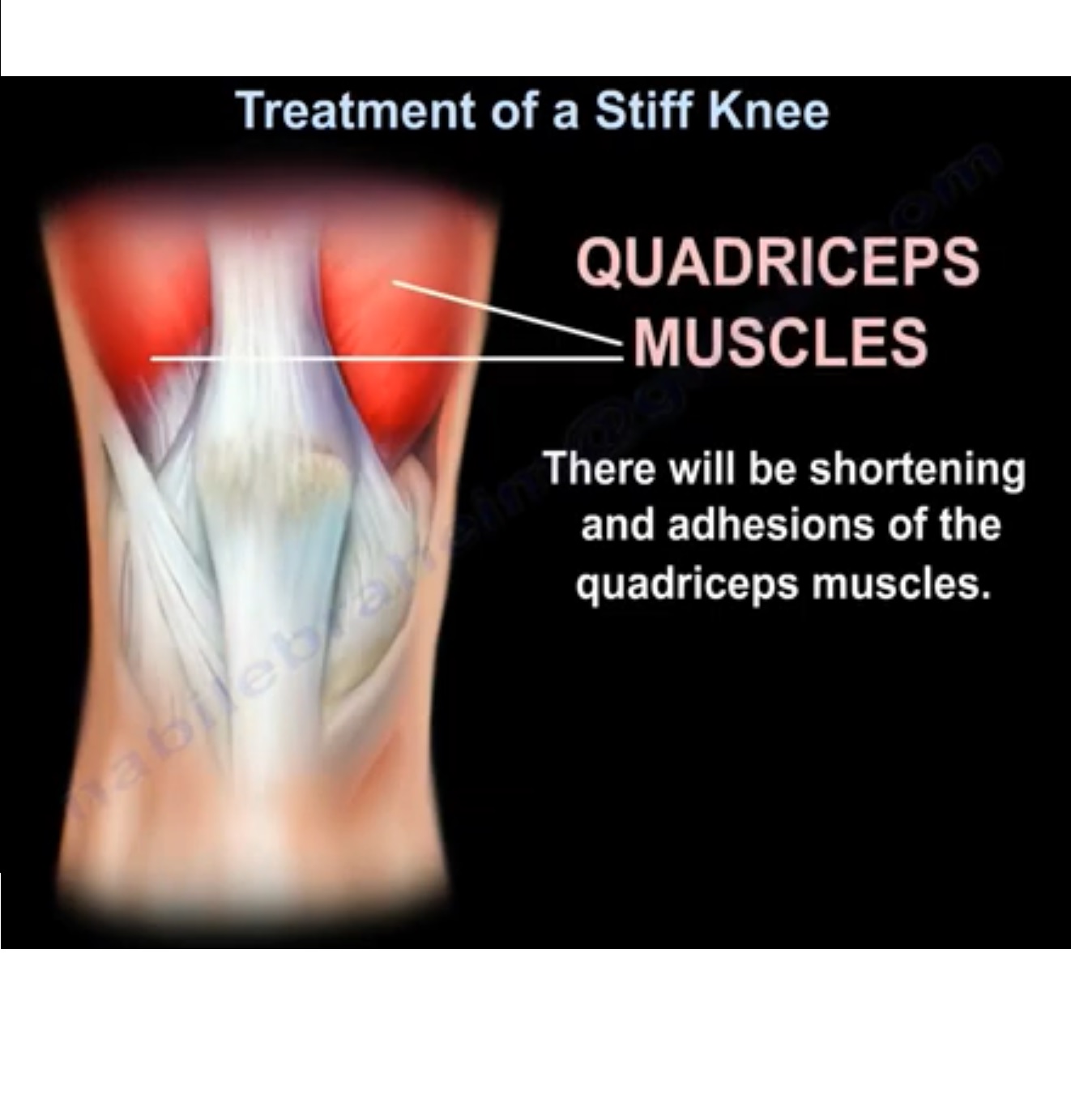
B. Quadriceps Mechanism
- Quadriceps shortening
- Quadriceps adhesions
- Contracture of the quadriceps muscle
Key Concept
A stiff knee may have both an intra-articular problem and an extra-articular quadriceps problem.
Therefore, treating only one component may not adequately restore flexion.
3. Initial Treatment
Aggressive Physiotherapy
The first-line treatment described is aggressive physiotherapy.
The aim is to progressively improve knee flexion and address soft-tissue contracture.
4. Always Exclude Infection
Before proceeding with treatment, infection should be excluded.
Investigations
- Blood investigations to look for infection
- If there is intra-articular fluid or effusion, aspirate the joint
Why Aspiration May Help
Joint fluid can contribute to quadriceps inhibition.
Removing the fluid may help reduce quadriceps inhibition and facilitate rehabilitation.
5. If Physiotherapy Fails
The first surgical option described is:
Arthroscopy and Adhesiolysis
- Arthroscopic evaluation
- Release of intra-articular adhesions
- Removal or release of fibrotic tissue
This addresses the intra-articular component of stiffness.
6. Quadricepsplasty
If the quadriceps itself is shortened or contracted, an additional procedure may be required.
Techniques Mentioned
- Thompson quadricepsplasty
- Judet quadricepsplasty
These procedures address the extra-articular quadriceps contracture.
7. Combined Procedure
In more severe stiffness, both components may need to be treated:
- Arthroscopic adhesiolysis
- Release of intra-articular contracture
- Quadricepsplasty
This addresses both:
- Intra-articular adhesions
- Quadriceps shortening and adhesions
Treatment Algorithm
Stiff knee with loss of flexion
Exclude infection
- Blood tests
- Aspirate effusion if present
Aggressive physiotherapy
If successful, continue rehabilitation.
If unsuccessful, proceed to arthroscopic adhesiolysis.
If significant quadriceps contracture persists, perform quadricepsplasty.
Possible techniques:
- Thompson
- Judet
In severe combined stiffness, arthroscopic release combined with quadricepsplasty may be required.
High-Yield Exam Points
- First-line treatment: Aggressive physiotherapy
- Always exclude infection
- Effusion: Aspiration may reduce quadriceps inhibition
- Intra-articular stiffness: Arthroscopic adhesiolysis
- Quadriceps contracture: Quadricepsplasty
- Quadricepsplasty techniques: Thompson and Judet
- Severe stiffness may require combined arthroscopic release and quadricepsplasty
- Key principle: Treat both the intra-articular adhesions and the quadriceps contracture.

Leave a Reply