
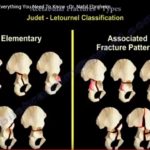
Courtesy: Prof Nabil Ebraheim, University of Toledo, Ohio, USA
-Classifications
Pipkins Fracture Dislocation

Pipkin Classification of Femoral Head • Type I: Hip dislocation with fracture of the femoral head caudad to the fovea capitis femoris. • Type II: Hip dislocation with fracture of the femoral head cephalad to the fovea capitis femoris. • Type III: Type I or II injury associated with fracture of the femoral neck. • […]
Tibial Plafond fracture Classification
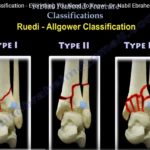
Courtesy: Prof Nabil Ebraheim, University of Toledo, Ohio, USA Introduction Pilon fractures involve the distal tibial articular surface (tibial plafond) and are typically caused by high-energy axial loading. Key Characteristics Articular comminution Metaphyseal impaction Severe soft-tissue injury Why Classification Matters Determines severity Guides treatment strategy Predicts prognosis Common Classification Systems Rüedi–Allgöwer classification AO/OTA classification Rüedi–Allgöwer […]
Femoral Neck fracture classification

? Courtesy: Prof Nabil Ebraheim, University of Toledo, Ohio, USA Overview Femoral neck fractures commonly occur following low-energy trauma in elderly patients, often related to osteoporosis. These patients require thorough medical evaluation and optimization. Femoral neck fractures can also occur following high-energy trauma, such as falls from height or motor vehicle accidents. These injuries […]
Clavicle #fracture Classification
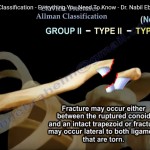
? Courtesy: Prof Nabil Ebraheim, University of Toledo, Ohio, USA Clavicle Fracture Classification: Allman & Neer Systems Introduction Clavicle fractures are common injuries, traditionally treated conservatively. However, current evidence suggests that displaced fractures may benefit from surgical fixation. Why This Matters Conservative treatment of significantly displaced fractures may lead to: Malunion Nonunion Persistent shoulder dysfunction […]
Syndactyly Classification
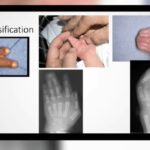
Syndactyly is the most common congenital hand anomaly Acrosyndactyly: fusion of distal parts of the digit with proximal fenestration Isolated syndactyly has an autosomal dominant inheritance with variable penetrance Frequency of syndactyly: thumb-index (5%), index-middle (15%), middle-ring (50%), ring-little (30%) Type Characteristics Simple […]
Lauge Hansen Classification of Ankle Fractures
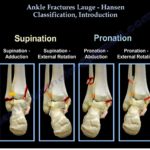
Calcaneal Fracture Classification
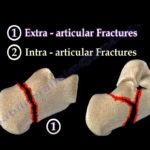
Courtesy: Prof Nabil Ebraheim Classification: Extra Articular Fractures • Anterior process fractures • Tuberosity fractures • Medial process fractures • Sustentacular fractures • Body fractures not involving the subtalar articulation Intra Articular Fractures (Essex Lopresti Classification) Intra- articular fractures involve the subtalar joint. They have primary and secondary fracture lines. Intra articular fractures are more […]
Hangman Fracture Classification
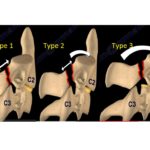
Courtesy: Prof Nabil Ebraheim, Unviersity of Toledo, Ohio, USA
Tibial Pilon Fracture Classification
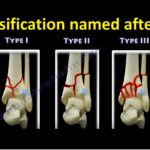
Courtesy: Prof Nabil Ebraheim
Femoral neck fracture classification
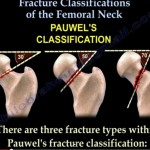
Garden classification Type I:Incomplete and impacted in valgus Type II:Fracture is complete and nondisplaced on at least two planes (anterior & lateral). Type III:Complete fracture and partially displaced. Trabecular pattern of the femoral head does not line up with the acetabular trabecular pattern. Type IV:Completely displaced with no continuity between the proximal and distal fragments […]