
Courtesy: Amr ABdelgawad, Maimonaides Medical Centre, Brooklyn, NYC, USA
Pediatric Forearm and Hand Fractures
Distal Radius Fracture
Types
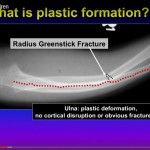
- Greenstick fracture with angulation and one cortex broken.
- Torus (buckle) fracture with compression and intact cortex.
- Complete fracture.
- Metaphyseal fracture.
- Physeal fracture (Salter Harris types).
Acceptable alignment
- Up to 20 degrees of dorsal angulation (apex volar).
- Acceptable in boys up to 14 years and girls up to 12 years.
Treatment
- Closed reduction with a well molded cast.
- Close follow up to detect displacement.
Remodeling potential
- Excellent because of the highly active distal radial physis.
- Even marked angulation may remodel in younger children.
Complication: Acute carpal tunnel syndrome
- Caused by median nerve compression.
- Reduce the fracture if symptoms occur before reduction.
- Split the cast if symptoms occur after reduction.
- Persistent symptoms require carpal tunnel release and fracture stabilization.
- This is not compartment syndrome and does not require fasciotomy.
Distal Radius Physeal Fracture
Key points
- Usually Salter Harris Type I or II.
- Heals faster than metaphyseal fractures.
- Very low risk of growth arrest.
Important rule
- Presentation after 4 to 5 days should not undergo forceful reduction.
- Treat with splint or cast to avoid physeal injury.
Distal Ulna Physeal Injury
Key points
- High risk of growth arrest (30 to 40 percent).
- May result in ulnar shortening.
Management of sequelae
- Ulnar lengthening is the preferred treatment.
- Distal radial epiphysiodesis is generally avoided.
Galeazzi Fracture
Definition
- Distal radius fracture associated with distal radioulnar joint dislocation.
Features
- Usually demonstrates volar angulation with apex dorsal.
- Radius and ulna fail to overlap on the lateral radiograph.
Treatment
- Closed reduction.
- Long arm cast in supination.
- Supination reduces the distal radioulnar joint.
Scaphoid Fracture
Features
- Most commonly involves the distal pole.
- Usually nondisplaced.
Treatment
- Cast immobilization for 4 to 6 weeks.
- Surgery is rarely required.
Phalanx Fractures
Important concept
- Remodeling decreases as the fracture is located farther from the physis.
Indications for surgery
- Rotational deformity.
- Significant displacement.
Treatment
- Closed reduction and pin fixation.
Late malunion
- Ostectomy may improve function.
- Corrective osteotomy is generally avoided.
Seymour Fracture
Definition
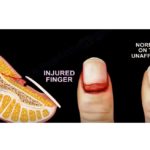
- Open physeal fracture of the distal phalanx with nail bed entrapment.
Clinical features
- May resemble a mallet finger.
- Should always be considered an open fracture.
Treatment
- Urgent debridement.
- Open reduction.
- Nail bed repositioning.
- Pin fixation.
- Antibiotic therapy.
Base of Proximal Phalanx of the Thumb
Injury
- Bony avulsion of the ulnar collateral ligament (Skier’s thumb equivalent).
Treatment
- Open reduction and screw fixation.
- Restores metacarpophalangeal joint stability.
Extra Octave Fracture
Definition
- Salter Harris Type II fracture involving the base of the proximal phalanx of the little finger.
Treatment
- Closed reduction and splint immobilization.
Exam Pearls
- Distal radius fractures have excellent remodeling potential.
- Distal ulna physeal injuries have a high risk of growth arrest.
- Avoid forceful reduction of physeal fractures presenting after 5 days.
- Rotational deformity of finger fractures requires surgical correction.
- Seymour fracture is an open fracture requiring urgent surgery.
- Galeazzi fracture is treated with reduction and long arm casting in supination.


Leave a Reply