• Skip to main content
  • Skip to secondary menu
  • Skip to primary sidebar
OrthopaedicPrinciples.com

OrthopaedicPrinciples.com

Integrating Principles and Evidence

Integrating Principles and Evidence

  • Home
  • Editorial Board
  • Our Books
    • Evidence Based Orthopaedic Principles
  • Courses
  • Exams
  • Reviews
  • Live Program
  • Contact

Complex Paediatric Hand fractures

Courtesy: Prof Nabil Ebraheim, University of Toledo, Ohio, USA

Seymour Fracture

Definition

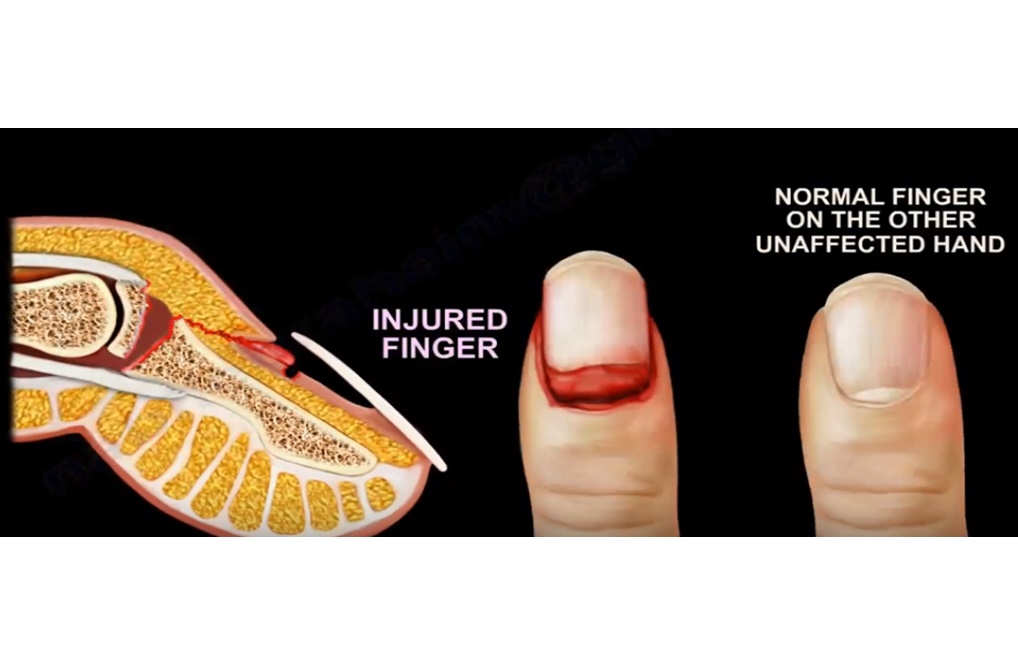
  • Open physeal fracture of the distal phalanx.
  • Usually a Salter Harris Type I or II injury.
  • Associated with a nail bed injury.
  • Frequently mistaken for a mallet finger.

Mechanism of Injury

  • Crush injury to the fingertip.
  • Finger caught in a closing door.
  • Flexion force applied to the distal phalanx.

Pathoanatomy

  • Fracture through the distal physis.
  • Extensor tendon disruption.
  • Flexor digitorum profundus remains intact, producing a flexion deformity.
  • Nail plate becomes interposed within the fracture site.

Clinical Features

  • Flexion deformity of the fingertip resembling a mallet finger.
  • Displaced or superficially positioned nail plate.
  • Bleeding at the nail fold.
  • Swelling and pain.

Diagnostic Clues

  • Bleeding around the nail fold should be considered evidence of an open fracture until proven otherwise.
  • Maintain a high index of suspicion even when deformity appears minimal.

Imaging

  • Anteroposterior and lateral radiographs of the finger.
  • Physeal fracture of the distal phalanx.
  • Fracture displacement may be subtle.

Seymour Fracture versus Mallet Finger

Seymour fracture

  • Open physeal fracture.
  • Nail bed injury is present.
  • High risk of infection.
  • Requires surgical treatment.

Mallet finger

  • Extensor tendon avulsion with or without a small bony fragment.
  • Nail bed is intact.
  • Low risk of infection.
  • Usually treated conservatively.

Complications

  • Infection.
  • Nail deformity.
  • Growth disturbance.
  • Malunion.

Treatment

  • Treat as an open fracture.
  • Administer antibiotics.
  • Provide tetanus prophylaxis when indicated.
  • Remove the nail plate.
  • Perform irrigation and debridement.
  • Achieve anatomical fracture reduction.
  • Stabilize with K wire fixation if required.
  • Repair the nail bed.

Immobilization

  • Protect the finger with a splint or cast following fixation.

Exam Pearls

  • Seymour fracture should always be considered an open fracture until proven otherwise.
  • Bleeding at the nail fold is an important diagnostic clue.
  • Commonly misdiagnosed as a mallet finger.
  • Nail plate interposition is a characteristic finding.
  • Prompt surgical management is essential to prevent infection and growth disturbance.
Post Views: 3,351

Related Posts

  • Total Hip Replacement

    Courtesy: RCSI

  • Hand Fractures

    Courtesy: Dr Sudhir Warrier, Hand Surgeon, President, Bombay Orthopaedic Society

  • Overview of Paediatric fractures

    Courtesy: Kaye Wilkins MD Lynn Staheli MD www.global-help.org   Pediatric Fractures – Basic Principles 1.…

Reader Interactions

Leave a Reply

Your email address will not be published. Required fields are marked *

Primary Sidebar

Follow Us

instagram slideshare

Categories

  • -Applied Anatomy
  • -Approaches
  • -Basic Sciences
  • -Cartilage & Meniscus
  • -Classifications
  • -Examination
  • -Foot and Ankle
  • -Foot and Ankle Trauma
  • -FRCS(Tr and Orth) tutorials
  • -Gait
  • -Hand and Wrist
  • -Hand and Wrist Trauma
  • -Hand Infections
  • -Hip and Knee
  • -Hip Preservation
  • -Infections
  • -Joint Reconstruction
  • -Knee Arthroplasty
  • -Knee Preservation
  • -Metabolic Disorders
  • -Oncology
  • -OrthoBiologics
  • -OrthoPlastic
  • -Paediatric Orthopaedics
  • -Paediatric Trauma
  • -Patellofemoral Joint
  • -Pelvis
  • -Peripheral Nerves
  • -Principles
  • -Principles of Surgery
  • -Radiology
  • -Rheumatology
  • -Shoulder and Elbow
  • -Shoulder and Elbow Arthroplasty
  • -Spine Deformity
  • -Spine Oncology
  • -Spine Trauma
  • -Spine, Pelvis & Neurology
  • -Sports Ankle and Foot
  • -Sports Elbow
  • -Sports Knee
  • -Sports Medicine
  • -Sports Medicine Hip
  • -Sports Shoulder
  • -Sports Wrist
  • -Statistics
  • -Technical Tip
  • -Technology in Orth
  • -Trauma
  • -Trauma (Upper Limb)
  • -Trauma Life Support
  • -Trauma Reconstruction
  • Book Shelf
  • Book Shelf Medical
  • Careers
  • Case Studies and Free Papers
  • DNB Ortho
  • Evidence Based Orthopaedic Principles
  • Evidence Based Orthopaedics
  • Exam Corner
  • Fellowships
  • Guest Editor
  • Guest Reviews
  • Image Quiz
  • Instructional Course Lectures
  • Journal Club
  • MCQs
  • Meetings and Courses
  • MS Ortho
  • Multimedia
  • News and Blog
  • Plaster Techniques
  • Podcasts
  • Public Health
  • Rehabilitation
  • Research
  • Shorts and Reels
Copyright@orthopaedicprinciples.com. All right rerserved.