
Courtesy: Prof Nabil Ebraheim, University of Toledo, ohio, USA
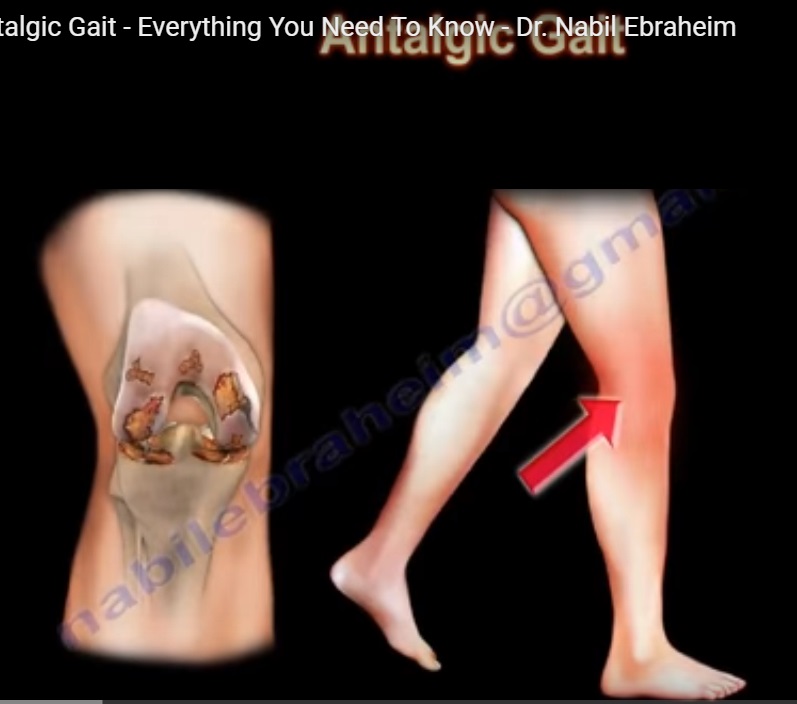
Antalgic Gait (Painful Gait)
Definition
- Antalgic gait is a pain-avoidance gait pattern
- Occurs when a patient:
- Reduces weight-bearing on a painful limb
- Minimizes time spent on the affected side
Normal Gait Pattern (For Comparison)
Phases of Gait
- Stance phase: ~60%
- Swing phase: ~40%
Normal Characteristics
- Symmetrical weight distribution
- Smooth alternation between limbs
Characteristics of Antalgic Gait
- Shortened stance phase on painful limb
- Increased time on normal limb
- Rapid unloading of affected limb
- Shortened step length of opposite limb
- Increased swing phase of affected limb
Purpose
- Reduce pain by minimizing weight-bearing
Mechanism
- Pain during stance leads to:
- Early lifting of affected limb
Result
- Reduced Stance phase (affected side)
- Increased Swing phase (affected side)
- Faster weight transfer to normal limb
Common Causes
1. Hip Pathology
- Hip arthritis
- Fracture
- Inflammation
2. Knee Pathology
- Arthritis
- Ligament injuries
- Meniscal tears
3. Foot and Ankle Conditions
- Fractures
- Sprains
- Plantar fasciitis
4. Spine Conditions
- Lumbar disc herniation
- Radiculopathy
Protective Mechanism (Guarding)
- Patient protects painful limb
- Alters gait to:
- Avoid loading
- Reduce discomfort
Use of Walking Aid
Principle
- Use cane on opposite side
Example
- Right leg pain — cane in left hand
Benefits
- Reduces load on affected hip
- Improves stability
Trunk Lean in Hip Pain
Observation
- Patient leans trunk toward painful side
Biomechanical Effect
- Shifts center of gravity toward hip
Result
- Decreased Moment arm of body weight
- Decreased Joint reaction force
- Decreased Pain
Difference from Trendelenburg Gait
| Feature | Antalgic Gait | Trendelenburg Gait |
|---|---|---|
| Cause | Pain | Hip abductor weakness |
| Stance phase | Shortened on affected side | Often normal |
| Trunk movement | Lean toward painful side (pain relief) | Lean toward affected side (muscle weakness) |
| Mechanism | Pain avoidance | Weak gluteus medius/minimus |
Gait Cycle Changes
| Phase | Normal Gait | Antalgic Gait |
|---|---|---|
| Stance | ~60% | Reduced (affected side) |
| Swing | ~40% | Increased (affected side) |
Key Clinical Point
- Most common abnormal gait pattern
- Indicates underlying:
- Pain in lower limb
- Or spine pathology
Final Concept
- Antalgic gait is a protective adaptation to pain, not a primary disease

Leave a Reply