
Courtesy: Prof Nabil Ebraheim, University of Toledo, Ohio, USA
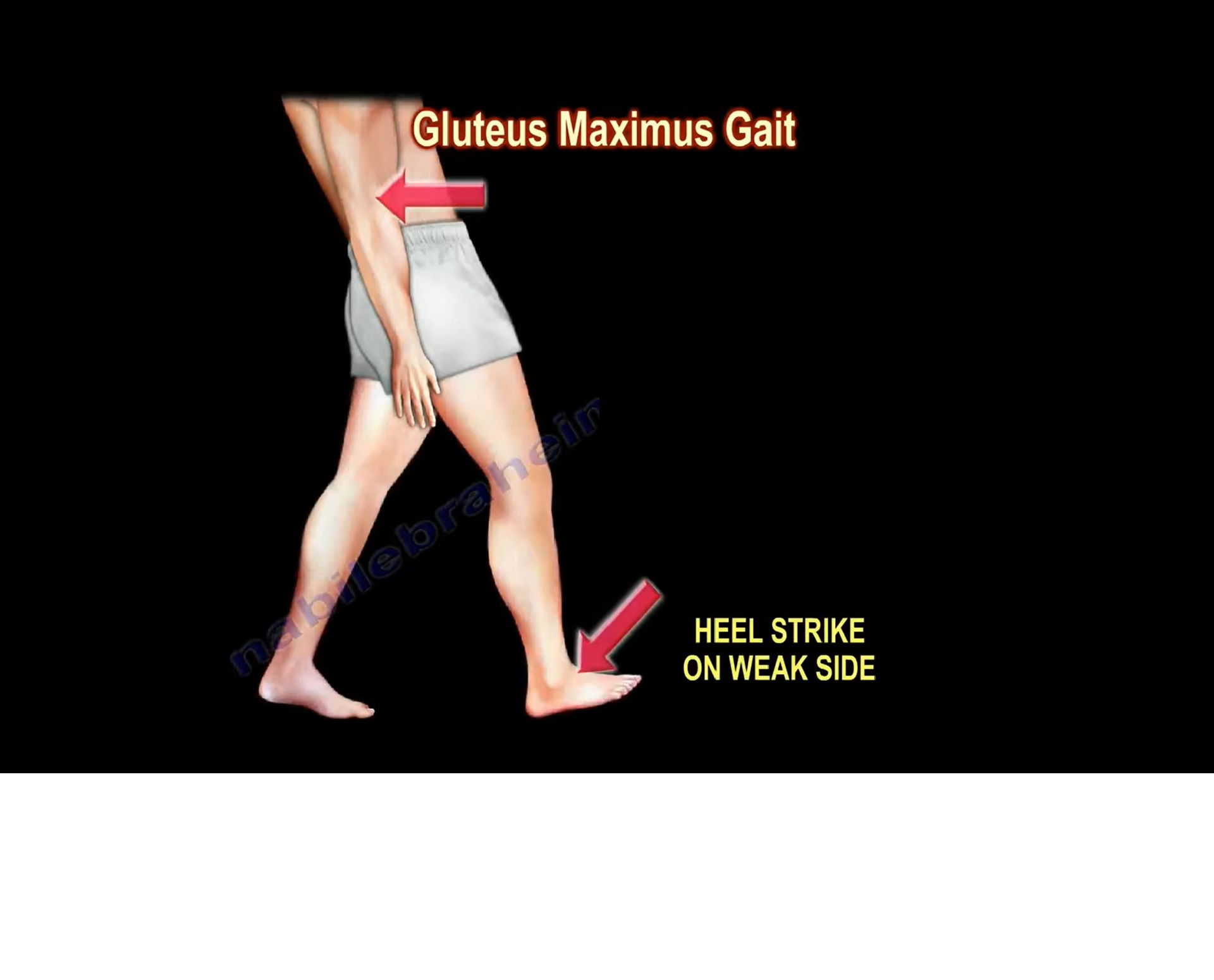
Gluteus Maximus Gait (Gluteus Maximus Lurch)
Definition
- Gluteus maximus gait occurs due to:
- Weakness or paralysis of the gluteus maximus muscle
- Characterized by:
- Backward trunk lurch during walking
Mechanism of Gait
During Heel Strike (Affected Side)
- Patient lurches trunk backward
Purpose of Compensation
- Prevents forward fall of trunk
- Compensates for loss of hip extension power
Biomechanical Effect
- Shifts line of gravity:
- Posterior to hip joint
- Allows:
- Passive stabilization of hip
Clinical Features
- Backward trunk lurch during stance phase
- Occurs at heel strike
- Maintains hip stability despite weak extensors
- Classic description:
- “Gluteus maximus lurch”
Gluteus Maximus Muscle
General Description
- Largest muscle of gluteal region
- Most superficial gluteal muscle
Other Gluteal Muscles
- Gluteus medius
- Gluteus minimus
Origin
- Posterior gluteal surface of ilium
- Dorsal sacrum
- Coccyx
- Sacrotuberous ligament
- Thoracolumbar fascia
Insertion
- Gluteal tuberosity of femur
- Iliotibial tract (IT band)
Blood Supply
- Superior gluteal artery
- Inferior gluteal artery (primary supply)
Nerve Supply
- Inferior gluteal nerve
Root Value
- L5, S1, S2
Functions of Gluteus Maximus
- Hip extension
- Lateral rotation of thigh
- Rising from sitting position
- Running, climbing, jumping
- Stabilizes knee via IT band
- Maintains upright posture
Related Structures
Tensor Fasciae Latae
- Located anteriorly
- Contributes to:
- Iliotibial tract tension
Iliotibial Tract (IT Band)
- Stabilizes:
- Hip
- Knee during stance phase
Key Clinical Point
- Weakness (commonly due to inferior gluteal nerve injury) leads to:
- Loss of hip extension power
- Compensatory backward trunk lurch

Leave a Reply