
Courtesy:
Dr Vijay Shetty, Consultant Orthopaedic Surgeon, Specialist in Hip Arthroscopy and Joint Reconstruction, Hiranandani Hospital, Powai, Mumbai, India
Introduction
Platelet-Rich Plasma (PRP) injections are commonly performed in an outpatient setting.
Importance of Documentation
Proper documentation is essential because:
- PRP indications are still evolving
- Data collection supports future research and standardization
PRP Preparation System
Commercial Kits
PRP is typically prepared using a commercial preparation system
(e.g., Harvest Technologies PRP kit)
Components of the Kit
1. Processing Chamber
- Used for:
- Blood separation
- Centrifugation
2. PRP Collection Chamber
- Used to collect the final platelet-rich concentrate
Anticoagulation
Agent Used
- ACD-A (Anticoagulant Citrate Dextrose)
Purpose
- Prevents clot formation during processing
- Preserves platelet integrity
Blood Collection
Procedure
- Blood drawn from a peripheral vein (usually arm)
- Collected in a syringe pre-filled with ACD-A
Typical Blood Volumes
- 20 mL system
- 60 mL system
Optional Step
- Baseline laboratory analysis may be performed if required
Transfer to Processing Chamber
Steps
- Blood is slowly transferred into the processing chamber
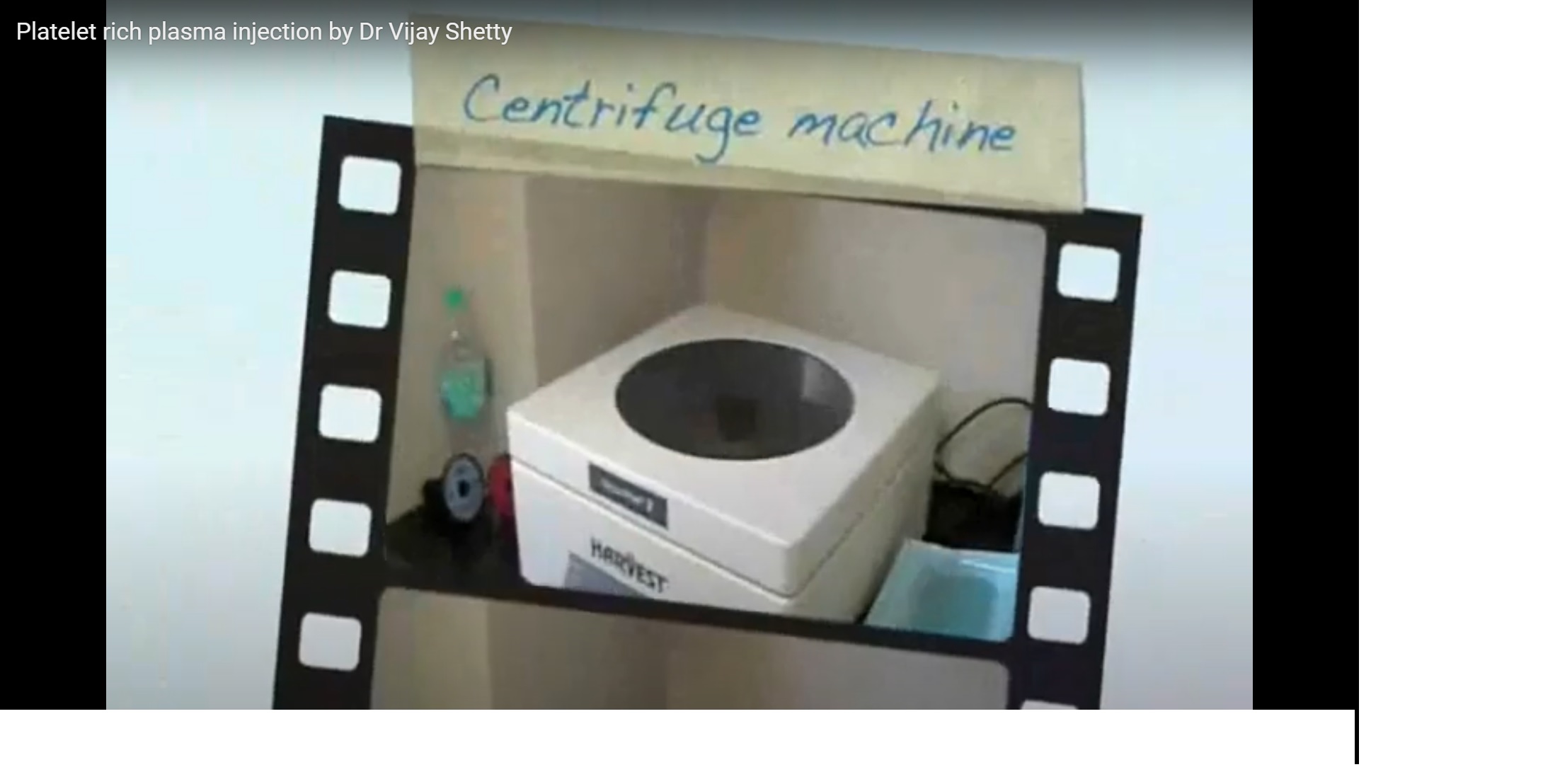
- Chamber is placed in a centrifuge machine
Important:
- Ensure proper balancing of centrifuge
Centrifugation Process
Two Phases
1. Soft Spin
- Separates blood into layers
2. Hard Spin
- Concentrates platelets
Duration
- Approximately 15 minutes
Blood Layer Separation
After centrifugation, three layers are formed:
Top Layer
- Platelet-Poor Plasma (PPP)
- Yellow in color
Middle Layer
- Platelet-Rich Plasma (PRP)
Bottom Layer
- Red Blood Cells (RBCs)
Isolation of PRP
Procedure
- PPP is carefully removed using a syringe
- A small amount is left behind
Purpose
- Facilitates resuspension of platelet pellet
Resuspension of Platelets
Technique
- Gentle mixing performed 3–4 times
Purpose
- Prevents platelet adherence to chamber walls
- Ensures uniform platelet distribution
Final PRP Composition
Platelet Concentration
- Approximately 5–6 times baseline
Contents
- Platelets
- Growth factors
- Cytokines involved in healing
Laboratory Analysis (Optional)
Purpose
- Platelet count
- Quality assurance
Injection Procedure
Local Anaesthesia
- May be administered before injection
Reason
- PRP injections often require large-bore needles
- Improves patient comfort
PRP Administration
PRP is injected into the target tissue, depending on indication:
Common Injection Sites
- Tendons
- Ligaments
- Joints
- Muscle injuries
Post-Injection Care
Immediate Care
- Apply occlusive dressing
Medications
- Analgesics for 1–2 days
Patient Advice
- Mild pain or swelling may occur
- Symptoms are temporary and self-limiting
Patient Counseling
Important Points to Explain
- Temporary discomfort at injection site
- Mild swelling or soreness
- Expected short-term inflammatory response
These effects are part of the healing process
Summary Points
- PRP injections are simple outpatient procedures
- Require careful preparation and standardization
- Platelet concentration typically 5–6× baseline
- Proper technique ensures:
- Effective delivery
- Optimal outcomes
- Patient safety
what are the indications and contraindications of PRP injection……
How much amount of blood to be extracted and what amount injected in knee.