
Sports Shoulder Injuries in Children
Epidemiology
Common Sports Associated
- Football (especially defensive players)
- Wrestling
- Basketball (males)
- Softball, gymnastics, cross-country (females)
- Extreme sports:
- Skateboarding
- Skydiving
Key Point
- Limited high-quality epidemiological data
- Need for:
- Registries and better tracking systems
Common Injury Patterns
1. Medial Clavicle Epiphyseal Injury
Population
- Adolescents
Key Concept
- Often a physeal fracture, not a true dislocation
Displacement Types
Anterior Displacement
- Relatively safe
Posterior Displacement
- Dangerous
- Risk to:
- Mediastinal structures
Treatment
- Usually non-operative
Outcome
- Good functional recovery
- Cosmetic deformity may persist
2. Proximal Humerus Fractures
Includes
- Salter–Harris injuries
Key Feature
- Excellent remodeling potential
Management
- Mostly conservative
- Surgery rarely required
3. Little League Shoulder
Definition
- Proximal humeral stress fracture
Cause
- Repetitive overhead throwing
Clinical Features
- Shoulder pain during throwing
- Reduced performance
Radiographic Finding
- Physeal widening
Diagnosis Tip
- Compare with:
- Contralateral shoulder
Treatment
- Rest (~3 months)
- Gradual return to sport
Prognosis
- Good
- Most athletes return to play
Biomechanics and Adaptations
Changes Due to Repetitive Throwing
- Increased external rotation
- Decreased internal rotation
- Humeral head retroversion
Concept
- Adaptive remodeling due to repetitive stress
Important Clinical Insight
Diaphyseal Humerus Fracture in Throwers
Key Rule
- Always suspect:
- Pathological fracture
Common Cause
- Simple bone cyst
Clinical Note
- May be asymptomatic
- Fracture may lead to:
- Healing of cyst
Overuse Injuries and Prevention
Risk Factors
- Early sports specialization
- High pitching load
- Poor technique
- Rapid growth phase
Prevention Strategies
- Limit pitching volume
- Avoid excessive competitive exposure
- Encourage multi-sport participation
- Educate:
- Parents
- Coaches
Key Message
- Early overuse can lead to:
- Long-term shoulder damage
Clinical Insight
- High training intensity at a young age:
- Does not guarantee elite performance
- Increases injury risk
Final Takeaways
- Most pediatric shoulder injuries:
- Respond well to conservative treatment
- Early diagnosis helps prevent:
- Deformity
- Abnormal rotational changes
- Prevention is essential:
- Protect young athletes from overuse
Final Message
- Focus should be on safe training, early recognition, and conservative management to ensure long-term shoulder health in young athletes
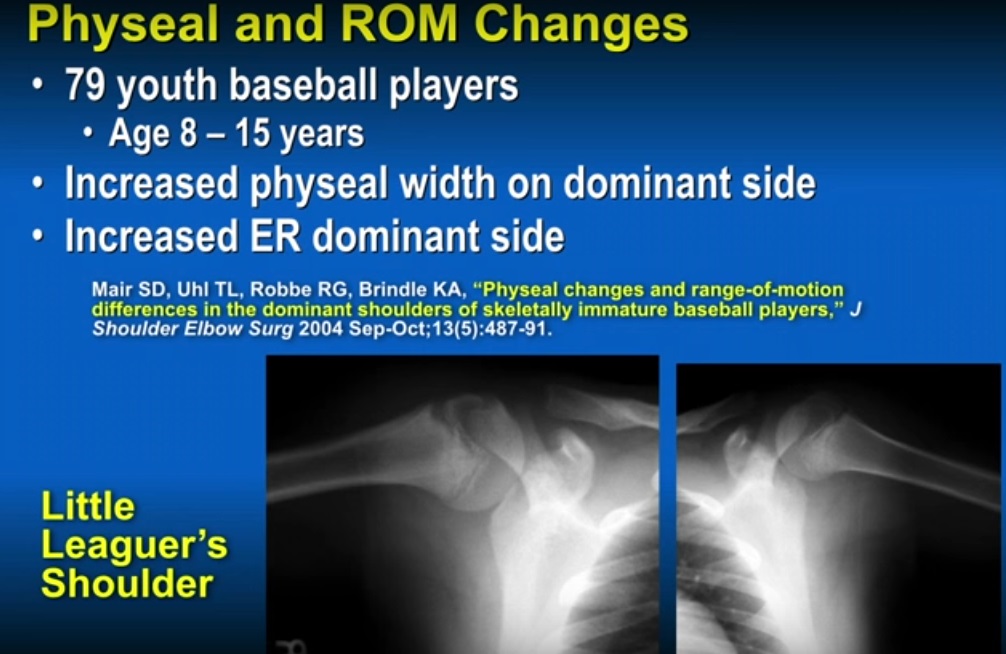
Courtesy: Mary Lloyd Ireland M.D. Associate Professor University of Ketucky Lexington, KY, USA www.MaryLloydIreland.com http://orthopaedics.med.uky.edu/


Leave a Reply