
Courtesy: Dr T Vail, Ashok Shyam TV, Ortho
Overview
-
TKA is successful in ~95% of patients.
-
The remaining 2–5%:
-
Experience pain, stiffness, or dissatisfaction.
-
Often consume a disproportionate amount of clinical time.
-
-
Typical scenario:
-
Radiographs appear normal.
-
Patient reports the knee “just doesn’t feel right.”
-
Clinical Presentation
Patients may report:
-
Stiffness
-
Swelling
-
Limited flexion
-
Sensation of instability
-
Mechanical symptoms (crepitus, clunk)
On examination:
-
Effusion
-
Reduced range of motion
-
Patellar clunk
-
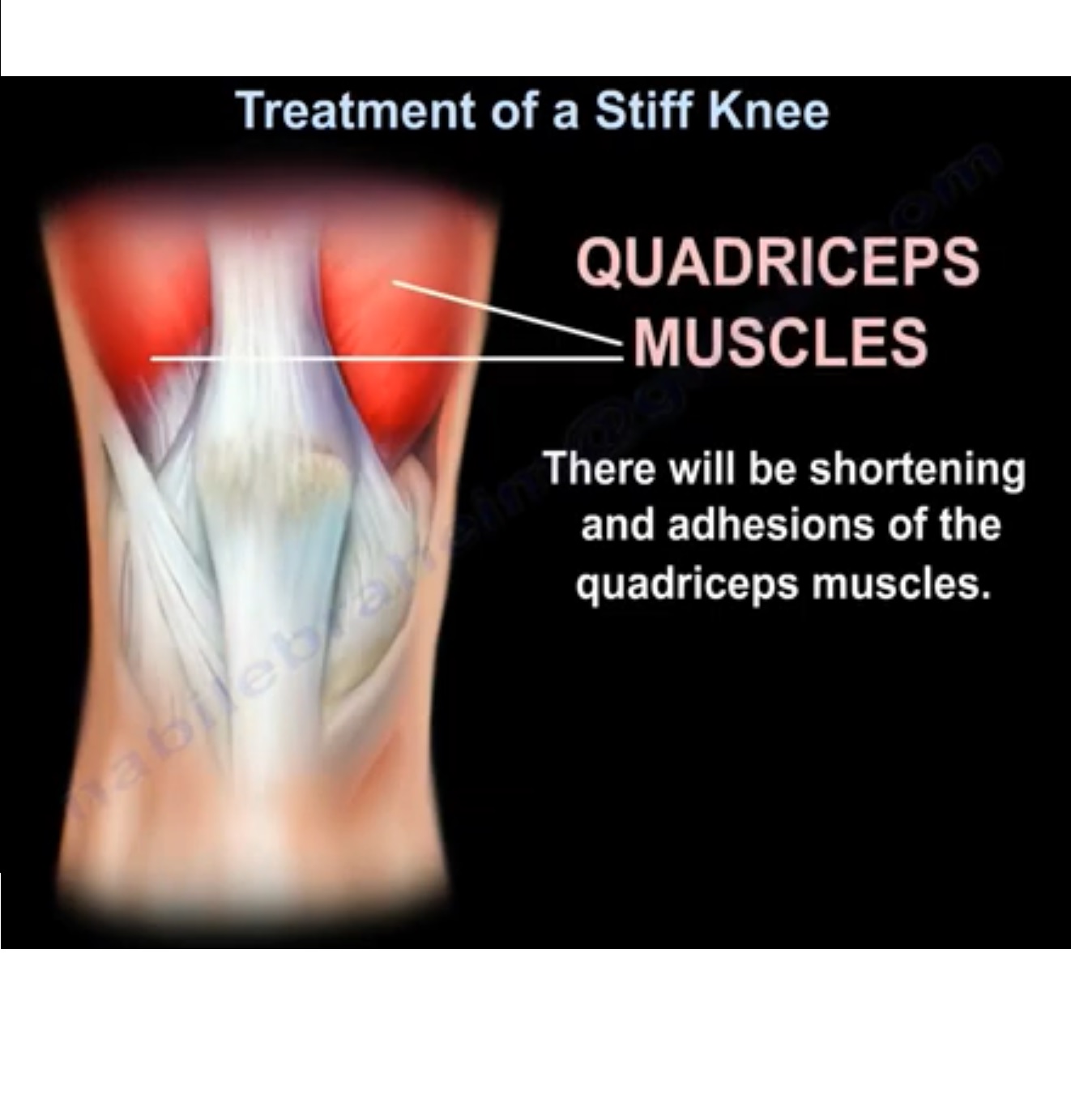
Arthrofibrosis
-
Possible instability
Pain and stiffness:
-
Reported in 5–10% of patients.
-
Contribute significantly to patient dissatisfaction.
Incidence of Stiffness
-
Reported rates vary:
-
8–12% in some series.
-
-
Revision data:
-
~17% of early revisions
-
~12% of late revisions
-
Associated with stiffness-related issues.
-
Functional Range of Motion Requirements
-
40–55° – Level walking
-
~85° – Stair climbing
-
90° – Rising from low chairs
-
110° – Kneeling
Key Concept: Stiffness is a Final Common Pathway
Stiffness may result from:
-
Chronic pain syndrome
-
Infection
-
Component malposition
-
Oversizing
-
Instability
-
Improper rehabilitation
-
Excessive scar formation (arthrofibrosis)
-
Patient-specific biologic factors
It may occur:
-
Early (infection, technical error, patient factors)
-
Late (loosening, wear-related synovitis, instability)
Common Clinical Scenarios
1. Early Pain with Stiffness
-
Negative infection workup.
-
Cementless implant not osseointegrated ? Loosening.
2. Chronic Effusion and Stiffness
-
Well-fixed components.
-
Underlying infection identified.
3. Late Instability with Loss of Flexion
-
Polyethylene wear.
-
Progressive instability leading to stiffness.
4. Wear-Related Synovitis
-
Well-fixed components.
-
Chronic inflammation and effusion.
-
Gradual loss of motion.
Technical Factors Contributing to Stiffness
Component Issues
-
Oversizing femoral component.
-
Tibial overhang.
-
Patellofemoral overstuffing.
-
Malalignment.
-
Improper flexion–extension gap balance.
Mobile Bearing Implants
-
Cement or bone impingement may restrict motion.
-
Must ensure unconstrained articulation.
Posterior Compartment Issues
-
Retained posterior osteophytes.
-
Posterior capsule tightness.
-
Inadequate posterior release.
Patient-Related Factors
-
Large limb girth limiting motion.
-
Post-traumatic scarring.
-
Skin adherence to deeper structures.
-
History of stiffness in contralateral knee:
-
Higher risk.
-
More frequent need for manipulation.
-
Requires aggressive early management.
-
Early Management Principles
-
Look for progressive improvement, not just a target number.
-
Manipulation under anesthesia (MUA):
-
Best performed within 6–8 weeks.
-
Indicated if motion plateaus early.
-
Rehabilitation
-
Early mobilization.
-
Routine CPM:
-
Does not improve long-term outcomes.
-
May reduce hospital stay.
-
Useful in:
-
Unmotivated patients
-
Revision settings
-
Slow progress cases
-
-
Kinematic Considerations
-
Restore proper femoral offset.
-
Avoid paradoxical anterior femoral translation.
-
Posterior cruciate ligament (PCL) insufficiency:
-
Can cause posterior impingement.
-
Leads to stiffness sensation.
-
Late Management
Indications for Revision
-
Component malalignment.
-
Oversizing.
-
Loosening.
-
Instability.
-
Wear-related synovitis.
Surgical Options
-
Revision to posterior-stabilized (PS) knee.
-
Open scar excision.
-
Complete capsulectomy (medial/lateral gutters, patellofemoral joint).
Arthroscopy:
-
Rarely helpful.
-
May assist in selected PCL imbalance cases.
Outcomes of Revision for Stiffness
-
Motion improvement possible.
-
Example outcomes:
-
Pre-op ROM ~42°
-
Post-op ROM ~85°
-
-
Improvement in both flexion and extension.
-
Functional gains achieved, but rarely “normal.”
Better prognosis when:
-
Correctable radiographic abnormality present.
-
Clear mechanical cause identified.
Key Take-Home Messages
-
A stiff TKA with normal radiographs requires systematic evaluation.
-
Stiffness is often secondary to another underlying issue.
-
Early intervention improves outcomes.
-
Revision can improve function but rarely restores normal motion.
-
Identifying and correcting mechanical causes improves prognosis.


Leave a Reply