• Skip to main content
  • Skip to secondary menu
  • Skip to primary sidebar
OrthopaedicPrinciples.com

OrthopaedicPrinciples.com

Integrating Principles and Evidence

Integrating Principles and Evidence

  • Home
  • Editorial Board
  • Our Books
    • Evidence Based Orthopaedic Principles
  • Courses
  • Exams
  • Reviews
  • Live Program
  • Contact

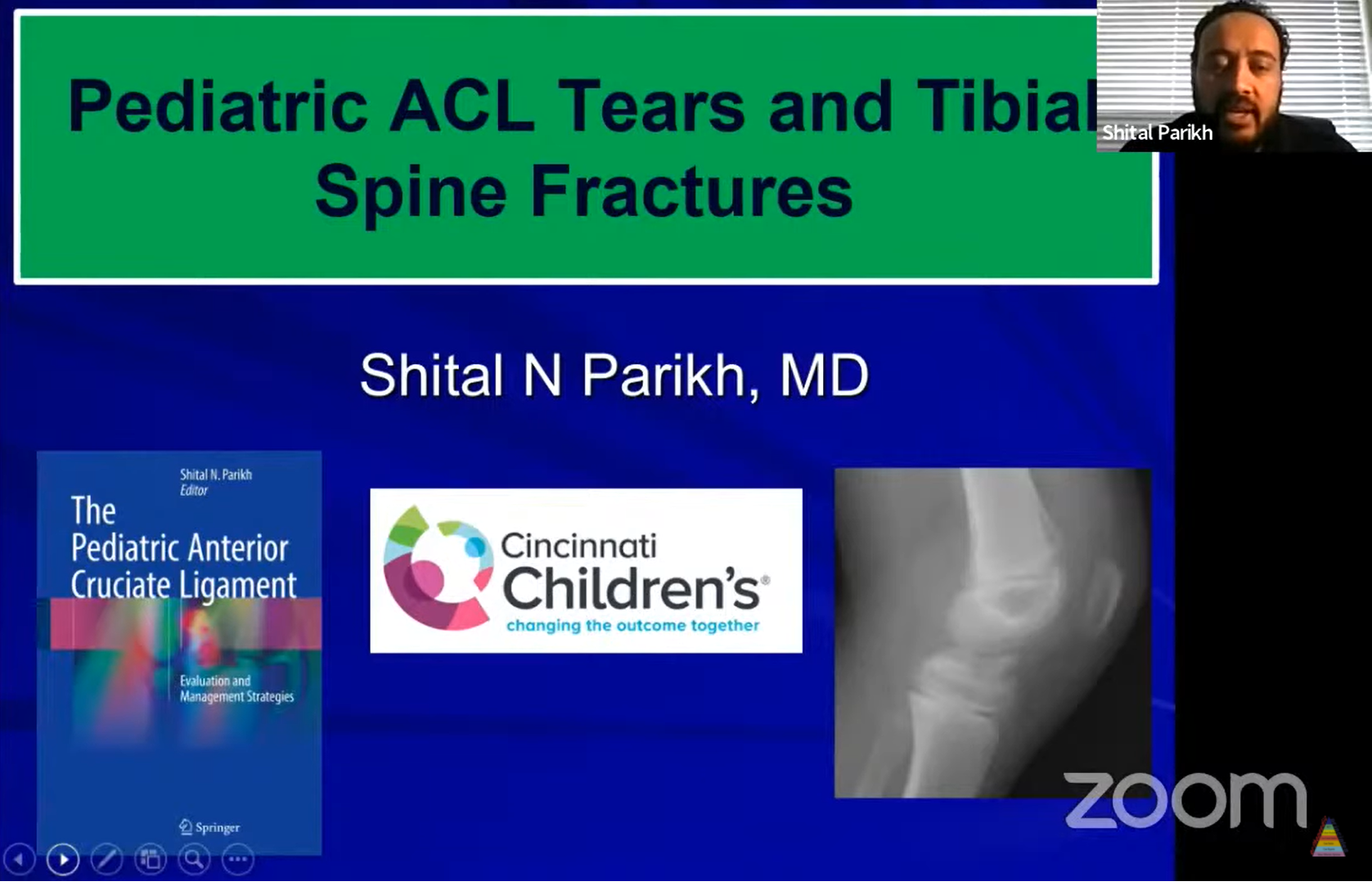
Paediatric ACL tears and Tibial Spine Fractures

Courtesy: Prof Shital Parikh, Professor, Cincinatti Childrens Hospital, Cincinatti, Ohio, USA

Pediatric ACL Tears & Tibial Spine Fractures – High-Yield Notes

 Pediatric ACL Tear

 Natural History (IMPORTANT)

  • Non-operative – poor outcomes
    •  instability
    •  meniscal tears
    •  return to sports
  • Delay > 12 weeks – irreparable meniscus injury
    Conclusion: Early surgical management preferred

 Assessment of Skeletal Maturity

Methods:

  • Tanner staging (unreliable clinically)
  • Bone age (hand X-ray)
  •  Distal phalangeal physis:
    • Open  >2 years growth remaining
    • Closing  <2 years growth

? Treatment Algorithm (VERY IMPORTANT)

  1.  Prepubescent (Tanner I–II)
  • Age: ~8–10 years
  • Physeal-sparing (Extra-articular)
    • Iliotibial band technique (MacIntosh)
  1.  Intermediate (Growth remaining >2 yrs)
  • Epiphyseal ACL reconstruction
    • Tunnels within epiphysis (no physis violation)
  1.  Near maturity (<2 yrs growth)
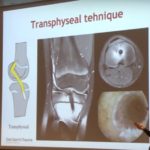
  • Transphyseal ACL reconstruction
    • Principles:
      • Tunnel < 8 mm
      • Physeal damage < 5%
      • Soft tissue graft
      • Avoid hardware across physis

 Graft Choices

  • Preferred: Hamstring / Quadriceps tendon
  • Avoid:  Allograft ( failure in children)

 Return to Sports

  • Minimum: 6 months
  • Preferred: 9–12 months
  • Add:
    • Functional testing
    • ACL brace (select cases)
    • Injury prevention programs

 Complications

  • Growth disturbance (rare ~1.3%)
    • Valgus deformity
    • Limb length discrepancy
  • Re-tear rate higher than adults

 Tibial Spine (ACL Avulsion) Fracture

 Classification (Meyers & McKeever)

  • Type I – Undisplaced
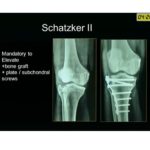
  • Type II – Hinged
  • Type III – Completely displaced
  • Type IV – Comminuted

 Management

 Type I

  • Casting

 Type II–IV

Surgical fixation (preferred)

 Why Not Conservative

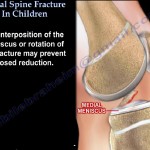
  • Meniscal interposition common
  • Malunion  extension block
  • High arthrofibrosis risk with immobilization

 Fixation Options

  1.  Screw fixation
  • Strong fixation
  •  Requires removal later
  1.  Suture fixation
  • No second surgery
  • Useful in comminuted fractures

Outcomes: No major difference

 Surgical Principles

  • Anatomical reduction
  • Rigid fixation
  • Early mobilization (to prevent stiffness)

 Complications

 Most important: Arthrofibrosis

  • Prevention:
    • Early surgery
    • Early ROM
    • Stable fixation

Others:

  • Residual laxity (due to ACL stretch)
  • ~5–20% may need later ACL reconstruction

 Important Clinical Pearls ?

  • Distal femur physis contributes:
    • 70% femoral growth
    • 37% limb growth
  • ACL avulsion  always normal ACL
    May lead to future instability
  • In children:
    Treat ACL early, don’t wait for maturity

 One-line Summary

  • Pediatric ACL  early surgery + growth-respecting technique
  • Tibial spine fracture  fix displaced, mobilize early
Post Views: 2,027

Related Posts

  • Tibial Spine Fractures in Children

    TIBIAL SPINE FRACTURES IN CHILDREN Fracture of tibial spine occur in skeletally immature patients It…

  • Paediatric ACL Injuries

    Courtesy: Sports Kongress, Copenhagen, Denmark   Pediatric anterior cruciate ligament injury – IOC Consensus Approach…

  • Tibial Condyle fractures

Reader Interactions

Leave a Reply

Your email address will not be published. Required fields are marked *

Primary Sidebar

Follow Us

instagram slideshare

Categories

  • -Applied Anatomy
  • -Approaches
  • -Basic Sciences
  • -Cartilage & Meniscus
  • -Classifications
  • -Examination
  • -Foot and Ankle
  • -Foot and Ankle Trauma
  • -FRCS(Tr and Orth) tutorials
  • -Gait
  • -Hand and Wrist
  • -Hand and Wrist Trauma
  • -Hand Infections
  • -Hip and Knee
  • -Hip Preservation
  • -Infections
  • -Joint Reconstruction
  • -Knee Arthroplasty
  • -Knee Preservation
  • -Metabolic Disorders
  • -Oncology
  • -OrthoBiologics
  • -OrthoPlastic
  • -Paediatric Orthopaedics
  • -Paediatric Trauma
  • -Patellofemoral Joint
  • -Pelvis
  • -Peripheral Nerves
  • -Principles
  • -Principles of Surgery
  • -Radiology
  • -Rheumatology
  • -Shoulder and Elbow
  • -Shoulder and Elbow Arthroplasty
  • -Spine Deformity
  • -Spine Oncology
  • -Spine Trauma
  • -Spine, Pelvis & Neurology
  • -Sports Ankle and Foot
  • -Sports Elbow
  • -Sports Knee
  • -Sports Medicine
  • -Sports Medicine Hip
  • -Sports Shoulder
  • -Sports Wrist
  • -Statistics
  • -Technical Tip
  • -Technology in Orth
  • -Trauma
  • -Trauma (Upper Limb)
  • -Trauma Life Support
  • -Trauma Reconstruction
  • Book Shelf
  • Book Shelf Medical
  • Careers
  • Case Studies and Free Papers
  • DNB Ortho
  • Evidence Based Orthopaedic Principles
  • Evidence Based Orthopaedics
  • Exam Corner
  • Fellowships
  • Guest Editor
  • Guest Reviews
  • Image Quiz
  • Instructional Course Lectures
  • Journal Club
  • MCQs
  • Meetings and Courses
  • Multimedia
  • News and Blog
  • Plaster Techniques
  • Podcasts
  • Public Health
  • Rehabilitation
  • Research
  • Shorts and Reels
Copyright@orthopaedicprinciples.com. All right rerserved.