• Skip to main content
  • Skip to secondary menu
  • Skip to primary sidebar
OrthopaedicPrinciples.com

OrthopaedicPrinciples.com

Integrating Principles and Evidence

Integrating Principles and Evidence

  • Home
  • Editorial Board
  • Our Books
    • Evidence Based Orthopaedic Principles
  • Courses
  • Exams
  • Reviews
  • Live Program
  • Contact

Monteggia Fractures- Staying Away From Trouble


Courtesy: Dr. Alvin Crawford, Dr Ashok Shyam, Ortho TV


Monteggia fracture-dislocation – Practical Concepts & Management


Definition


  • Injury consisting of:
    • Fracture of ulna
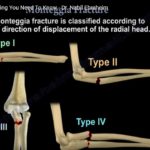
    • Dislocation of radial head

Key Principle (Most Important Point)


“Ulna is the key to management”

  • Proper ulnar alignment – spontaneous reduction of radial head
  • Focus should be on:
    • Restoring ulna anatomy, not chasing the radial head

Why the Ulna is Critical


  • Acts as a template for forearm alignment

If Ulna is Properly Reduced

  • Radial head usually relocates automatically

If Ulna is Not Stabilized

  • ~20% risk of:
    • Loss of reduction
    • Persistent radial head dislocation

Types of Ulnar Fractures


  • Greenstick fracture
  • Plastic deformation (bowing)
  • Complete fracture
  • Long oblique fracture

Key Point

  • Even non-displaced fractures must be stabilized

Management Principles


1. Reduction


  • Attempt closed reduction first
  • Aim:
    • Anatomical alignment of ulna

2. Stabilization (Essential Step)


Fixation Options

  • K-wires
  • Rush rod (commonly preferred)
  • Plates / intramedullary implants

Role of Implant

  • Acts as:
    • Reduction joystick
    • Maintains alignment

3. Radial Head Management


  • Usually reduces automatically after ulnar fixation

If Radial Head Does NOT Reduce

Check for:

  • Malreduction of ulna
  • Soft tissue interposition
  • Associated fractures

Associated Injuries


  • Radial neck fractures (commonly missed)
  • Radial head fractures
  • Capitellar alignment abnormalities

Radiological Rule


 Line drawn along radial shaft must pass through:

  • Capitellum (in all views)

Mnemonic to Avoid Missing Injury


RAMBO

  • R – Radial
  • A – Articulation
  • M – Missed
  • B – By
  • O – Orthopedists

Meaning

  • Always check:
    • Radiocapitellar alignment

Techniques Used


  • Closed reduction + casting
  • Open reduction + internal fixation (ORIF)
  • Ulnar osteotomy (chronic cases)
  • Annular ligament repair (if required)

What NOT to Do


  •  Trans-capitellar pinning
  •  Ignoring ulnar fracture
  •  Accepting unstable reduction

Failure Indicators


  • Radial head not stable in:
    • Pronation
    • Supination

  • Persistent dislocation
  • Inadequate ulnar alignment

Complications


  • Loss of reduction
  • Chronic radial head dislocation
  • Elbow stiffness
  • Arthrosis
  • Malunion

Important Clinical Advice


  • If uncertain:
    • Seek expert opinion

Key Insight

  • Avoid:
    • Trial-and-error surgical approaches
    • Inadequate fixation

Take-Home Messages


  •  Always fix the ulna first
  •  Stabilize even greenstick fractures
  •  Radial head usually reduces automatically
  •  Always check radiocapitellar alignment (RAMBO)
  •  Avoid unstable or incomplete reduction

Final Message

  • Successful management depends on:
    • Recognizing the injury early
    • Restoring ulnar anatomy precisely
    • Confirming stable radial head reduction

Post Views: 190

Related Posts

  • Monteggia fractures in Children

    Courtesy: Kaye Wilkins MD and Lynn Staheli MD   Monteggia fracture-dislocation in Children Definition A…

  • Monteggia Fractures In Children

    Courtesy: Dr. Tushar Agrawal, Dr Ashok Shyam, Ortho TV

  • Monteggia Fractures of the Forearm

    Courtesy: Prof Nabil Ebraheim, University of Toledo, Ohio, USA

Reader Interactions

Leave a Reply

Your email address will not be published. Required fields are marked *

Primary Sidebar

Follow Us

instagram slideshare

Categories

  • -Applied Anatomy
  • -Approaches
  • -Basic Sciences
  • -Cartilage & Meniscus
  • -Classifications
  • -Examination
  • -Foot and Ankle
  • -Foot and Ankle Trauma
  • -FRCS(Tr and Orth) tutorials
  • -Gait
  • -Hand and Wrist
  • -Hand and Wrist Trauma
  • -Hand Infections
  • -Hip and Knee
  • -Hip Preservation
  • -Infections
  • -Joint Reconstruction
  • -Knee Arthroplasty
  • -Knee Preservation
  • -Metabolic Disorders
  • -Oncology
  • -OrthoBiologics
  • -OrthoPlastic
  • -Paediatric Orthopaedics
  • -Paediatric Trauma
  • -Patellofemoral Joint
  • -Pelvis
  • -Peripheral Nerves
  • -Principles
  • -Principles of Surgery
  • -Radiology
  • -Rheumatology
  • -Shoulder and Elbow
  • -Shoulder and Elbow Arthroplasty
  • -Spine Deformity
  • -Spine Oncology
  • -Spine Trauma
  • -Spine, Pelvis & Neurology
  • -Sports Ankle and Foot
  • -Sports Elbow
  • -Sports Knee
  • -Sports Medicine
  • -Sports Medicine Hip
  • -Sports Shoulder
  • -Sports Wrist
  • -Statistics
  • -Technical Tip
  • -Technology in Orth
  • -Trauma
  • -Trauma (Upper Limb)
  • -Trauma Life Support
  • -Trauma Reconstruction
  • Book Shelf
  • Book Shelf Medical
  • Careers
  • Case Studies and Free Papers
  • DNB Ortho
  • Evidence Based Orthopaedic Principles
  • Evidence Based Orthopaedics
  • Exam Corner
  • Fellowships
  • Guest Editor
  • Guest Reviews
  • Image Quiz
  • Instructional Course Lectures
  • Journal Club
  • MCQs
  • Meetings and Courses
  • Multimedia
  • News and Blog
  • Plaster Techniques
  • Podcasts
  • Public Health
  • Rehabilitation
  • Research
  • Shorts and Reels
Copyright@orthopaedicprinciples.com. All right rerserved.