
Courtesy: Prof Nabil Ebraheim, University of Toledo, Ohio, USA
Causes of Hip Pain
1. Basic Approach
Hip pain may arise from:
- Structures within the hip joint
- Structures surrounding the hip
- Referred pain from the sacroiliac joint
- Referred pain from the lumbar spine
The most important first step is:
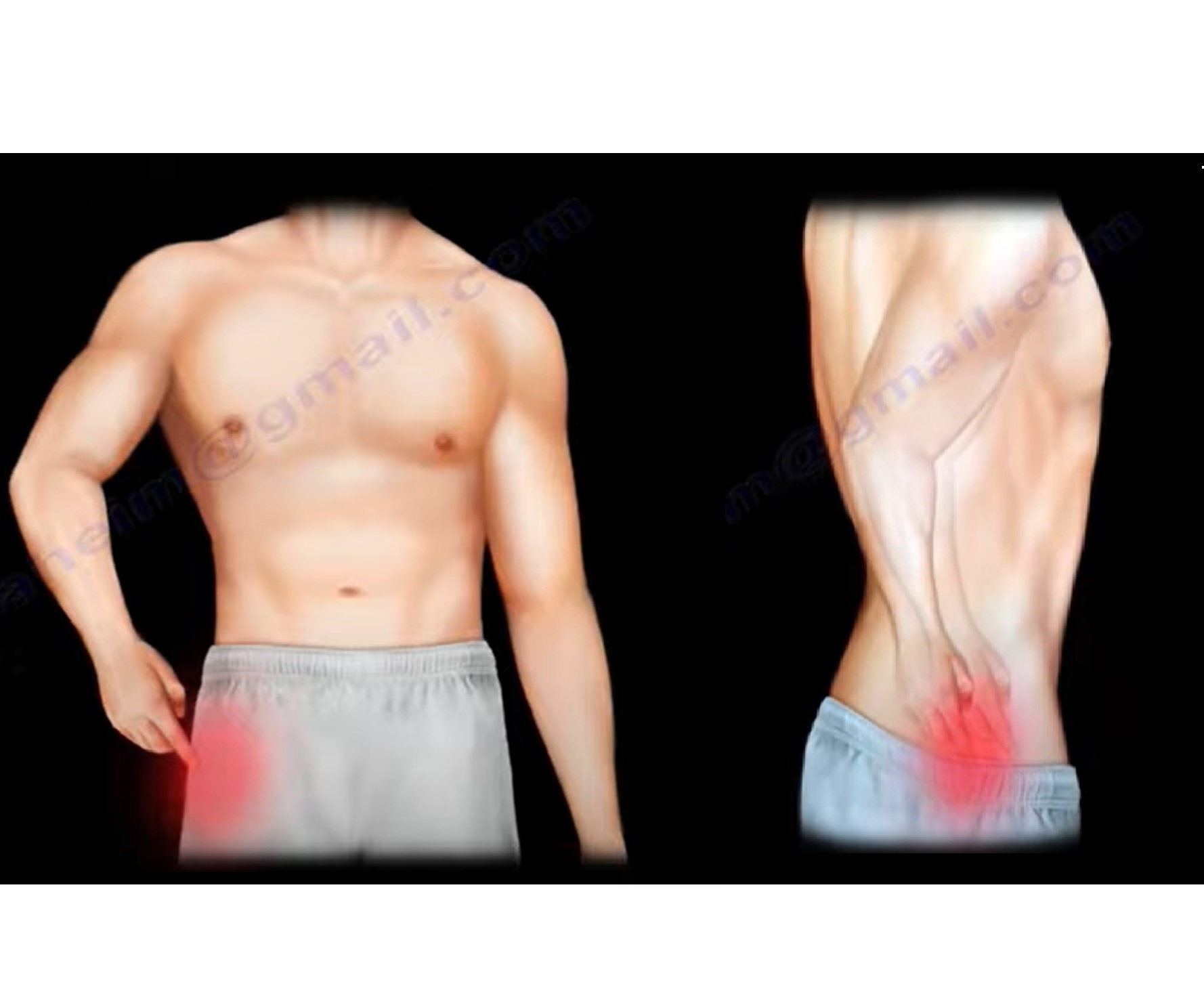
Ask the patient to point to exactly where the pain is.
A patient saying “my hip hurts” does not necessarily mean that the pain originates from the hip joint.
2. Classify by Location
Hip pain can broadly be divided into:
- Anterior hip pain
- Usually deep groin pain
- Lateral hip pain
- Posterior hip pain
- Far posterior hip pain
- Sacroiliac joint
- Lower lumbar spine
3. Anterior Hip Pain
A. Hip Arthritis
Typical presentation
- Deep groin pain
Treatment
Initially:
- Physiotherapy
- Anti-inflammatory medications
- Injections
Advanced disease:
- Total hip replacement
B. Labral Tear
Clinical features
- Anterior/deep hip pain
- Mechanical symptoms may occur
Clinical examination
A provocative test involving:
- Hip flexion
- Abduction
- Internal rotation
is used in the lecture.
Diagnosis
- MRI arthrogram
Treatment
Conservative:
- Physiotherapy
- Anti-inflammatory medications
- Injections
Surgical:
- Arthroscopic debridement
- Labral repair
4. Stress Fracture of the Hip
Diagnosis
- MRI is important
- X-ray may initially be normal
Why early diagnosis matters
Early diagnosis is important because the fracture may subsequently displace, resulting in a poorer outcome.
Treatment
The lecture describes:
- Surgical fixation
- Usually with screws
Rare late cases may require femoral head replacement.
5. Avascular Necrosis of the Femoral Head
The blood supply to the femoral head is relatively tenuous.
Interruption of the blood supply causes:
Bone death
followed by possible:
Femoral-head collapse
Diagnosis
- MRI
Early disease without collapse
Head-preserving treatment may include:
- Core decompression
- Vascularized fibular graft
Advanced disease with collapse
Usually:
- Total hip replacement
6. Lateral Hip Pain
The lecture describes lateral hip pain as commonly resulting from bursal inflammation.
Treatment
Usually conservative:
- Physiotherapy
- Anti-inflammatory medications
- Injections
Surgical excision of the bursa is rarely required.
Persistent trochanteric pain
In chronic, resistant cases:
MRI should be considered to exclude abductor tendon tears.
Particularly:
- Gluteus medius tear
- Gluteus minimus tear
7. Posterior Hip Pain
A common cause discussed is:
Piriformis Syndrome
The sciatic nerve can become irritated around the piriformis muscle.
Treatment
Usually conservative:
- Physiotherapy
- Stretching
- Anti-inflammatory medications
- Injections
Surgery
Rarely required.
For resistant cases, surgery may involve:
- Piriformis tendon release
- Sciatic nerve exploration
8. Far Posterior Hip Pain
Far posterior pain may originate from:
- Sacroiliac joint
- Lower lumbar spine
9. Sacroiliac Joint Pain
SI joint pathology can be difficult to diagnose.
Clinical tests
Several clinical examination maneuvers may be used, including the FABER test.
However, the lecture emphasizes:
SI joint injection is probably the most useful diagnostic method.
If the patient’s pain improves following an SI joint injection, this supports the SI joint as the pain generator.
The lecture also emphasizes that SI joint problems are often underestimated or unappreciated.
10. Lumbar Spine as a Source of Hip Pain
Lumbar spine disorders can produce:
- Buttock pain
- Hip-region pain
- Referred symptoms
The difficulty is that:
Hip and lumbar spine symptoms can overlap.
Furthermore, a patient may have both hip and lumbar spine pathology simultaneously.
Therefore, the clinician needs to determine how much of the patient’s pain originates from:
- The hip
- The spine
Quick Localization Table
| Pain location | Important causes |
|---|---|
| Anterior / deep groin | Hip arthritis, labral tear, stress fracture, AVN |
| Lateral hip | Bursal inflammation, abductor tendon tear |
| Posterior hip | Piriformis syndrome |
| Far posterior | SI joint, lumbar spine |
Diagnostic Approach
Patient says “hip pain”-
Ask the patient to point to the pain-
Anterior / groin
Consider:
- Arthritis
- Labral tear
- Stress fracture
- AVN
Lateral
Consider:
- Bursal inflammation
- Gluteus medius/minimus pathology
Posterior
Consider:
- Piriformis syndrome
Far posterior
Consider:
- SI joint
- Lumbar spine
High-Yield Exam Points
- First step in evaluating hip pain: ask the patient to localize the pain.
- Deep groin pain commonly indicates a hip-joint source.
- Labral tear: MRI arthrogram.
- Stress fracture: MRI, because early X-rays may be normal.
- AVN: MRI is important, especially before radiographic collapse.
- AVN without collapse may be treated with core decompression or grafting.
- AVN with femoral-head collapse generally requires hip replacement.
- Persistent lateral hip pain: consider gluteus medius/minimus tear.
- Posterior hip pain: consider piriformis syndrome.
- Far posterior pain: think SI joint or lumbar spine.
- SI joint injection can help identify the SI joint as the pain generator.
- Hip and spine pathology can coexist, so both need to be considered.


Leave a Reply