
Courtesy: Prof Nabil Ebraheim, Unviersity of Toledo, Ohio, USA
Ganglion Cysts Around the Knee
Ligamentous Ganglion Cysts
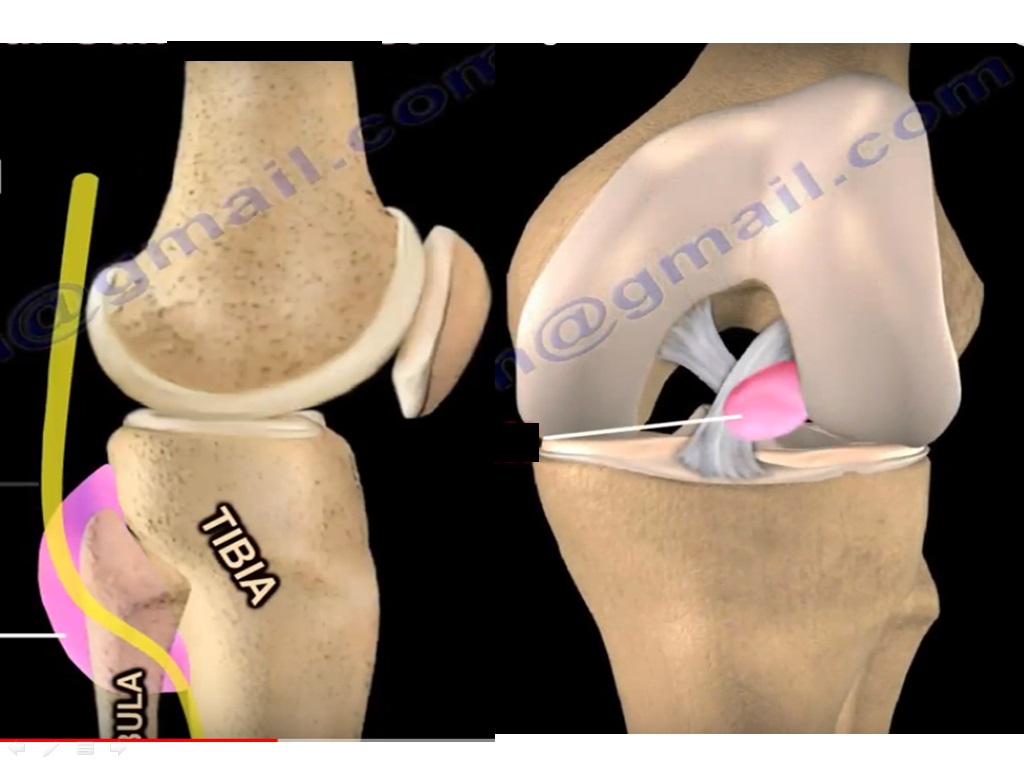
- Ganglion cysts arising around the knee, particularly from the ligaments, can cause:
- Knee pain
- A sensation of tightness
- Mechanical interference with knee flexion and extension
- Patients may particularly complain of pain and tightness during knee flexion.
- These lesions can be clearly demonstrated on MRI.
Intraosseous Ganglia
- An intraosseous ganglion is a benign subchondral radiolucent lesion that typically occurs in the absence of significant degenerative arthritis.
- Common locations include:
- Epiphyses of long bones
- Medial malleolus
- Femoral head
- Proximal tibia
- Carpal bones
- Intraosseous ganglia may occasionally cause pain.
Radiographic Features
- On plain radiographs, an intraosseous ganglion typically appears as:
- A well-demarcated, solitary radiolucent lesion
- A sclerotic or well-defined margin
- No obvious communication with the joint
- MRI may demonstrate:
- A solitary or multiloculated cystic lesion
- Well-defined margins
- Bone scintigraphy is usually not significantly hypermetabolic (“not hot”).
Proximal Tibiofibular Joint Ganglion Cyst
- A ganglion cyst arising from the proximal tibiofibular joint can cause compression of the common peroneal nerve.
- Clinical manifestations may therefore include symptoms related to common peroneal nerve compression.
Treatment
- The usual treatment is:
- Decompression and excision of the cyst
- Decompression of the affected nerve, when nerve compression is present
- In cases of recurrent cyst formation, fusion (arthrodesis) of the proximal tibiofibular joint may be considered, particularly when recurrence occurs following cyst excision.

Leave a Reply