
Courtesy: Dr Eugene E K, Ashok Shyam, Ortho TV
Functional Alignment in Knee Replacement Surgery
Introduction
-
Alignment strategies in total knee replacement have evolved significantly over the years.
-
Many surgeons initially adopted mechanical alignment, which has been the traditional and widely practiced method for several decades.
-
Over time, alternative approaches such as kinematic alignment and functional alignment have been introduced to improve patient outcomes and joint balance.
-
Functional alignment is a relatively newer concept that aims to combine the advantages of traditional methods while minimizing their limitations.
Traditional Mechanical Alignment
Basic Principle
-
Mechanical alignment has been the standard approach in knee replacement surgery for many years.
-
In this method:
-
The distal femur is cut perpendicular to the mechanical axis of the femur.
-
The proximal tibia is cut perpendicular to the mechanical axis of the tibia.
-
-
The goal is to create a neutral mechanical axis from the hip to the ankle.
Advantages
-
Simple and reproducible surgical technique.
-
Well-documented long-term outcomes.
-
Historically considered the safest alignment strategy for implant longevity.
Limitations
-
Achieving ideal gap balance can sometimes be difficult.
-
Flexion and extension gaps may not match naturally.
-
Surgeons frequently need to perform ligament releases to balance the knee.
Kinematic Alignment Concept
Surgical Objective
-
Kinematic alignment attempts to restore the patient’s native knee anatomy before arthritis developed.
-
The procedure aims to:
-
Reproduce the natural joint surfaces.
-
Preserve native ligament tension.
-
Potential Benefits
-
Faster functional recovery in some patients.
-
Improved knee kinematics.
-
Reduced need for extensive ligament releases.
Concerns
-
In patients with extreme anatomical deformities, restoring native alignment may place implants in unusual positions.
-
This could potentially increase the risk of implant failure or early wear.
Restricted Kinematic Alignment
Concept
-
Restricted kinematic alignment was introduced to address the risks associated with unrestricted kinematic techniques.
Key Principles
-
Maintain implant alignment within safe limits.
-
Slightly correct severe deformities when necessary.
-
Maintain a balance between restoring anatomy and ensuring implant safety.
Typical Alignment Boundaries
-
Hip-knee-ankle alignment within approximately three degrees of neutral.
-
Femoral and tibial cuts generally kept within five degrees of varus or valgus.
These limits aim to prevent excessive implant malalignment while preserving natural joint mechanics.
Functional Alignment Philosophy
Core Idea
-
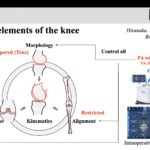
Functional alignment builds upon the principles of restricted kinematic alignment.
-
The primary goal is to achieve optimal ligament balance while preserving as much natural alignment as possible.
Key Surgical Strategy
Instead of performing additional ligament releases:
-
The implant position is slightly adjusted within safe limits.
-
These adjustments allow the surgeon to achieve balanced flexion and extension gaps.
Advantages
-
Minimizes soft tissue damage.
-
Reduces the need for extensive ligament releases.
-
Improves gap balance during surgery.
Clinical Example
Patient Profile
-
Female patient aged sixty one years.
-
Significant varus knee deformity.
Preoperative Measurements
-
Mechanical varus alignment: twelve degrees.
-
Lateral distal femoral angle: ninety two degrees.
-
Medial proximal tibial angle: eighty six degrees.
These measurements indicate a pronounced varus alignment of the knee.
Intraoperative Gap Assessment
Initial Measurements
During surgery:
-
Extension gap measured approximately twenty four millimeters.
-
Flexion gap measured approximately twenty seven millimeters.
This indicates that the flexion gap is slightly larger than the extension gap, which is a common situation.
Initial Surgical Adjustments
Steps performed:
-
Slight reduction in planned bone resection.
-
Removal of medial osteophytes.
-
Mild medial ligament release using the pie-crusting technique.
Pie-crusting involves multiple small punctures in the ligament using a needle to gradually reduce tightness.
Reassessment After Initial Balancing
-
Trial components were inserted.
-
Valgus stress testing was performed to evaluate alignment and ligament balance.
Findings:
-
Residual varus alignment remained.
-
The lateral side appeared slightly more lax.
Additional minor pie-crusting adjustments were performed to improve balance.
Flexion Gap Evaluation
At ninety degrees of knee flexion:
-
Controlled distraction forces were applied medially and laterally.
-
The medial and lateral gaps remained unequal.
Traditionally, further ligament release might be performed at this stage.
Functional Alignment Adjustment
Instead of further ligament release:
-
The position of the femoral component was slightly adjusted.
-
A small change in component alignment improved both:
-
Extension gap balance
-
Flexion gap balance
-
Additionally:
-
A slight increase in femoral external rotation helped optimize the flexion gap.
Postoperative Evaluation
Radiographic assessment confirmed:
-
Proper implant positioning.
-
Balanced alignment with slight residual varus that remained within acceptable limits.
Comparative Clinical Study
A comparison study was performed involving:
-
One hundred total knee replacement procedures.
Two alignment strategies were evaluated:
-
Modified kinematic alignment
-
Functional alignment
Results
Flexion Gap Balance
-
Modified kinematic alignment achieved satisfactory flexion gap balance in approximately forty three percent of cases.
-
Functional alignment achieved satisfactory flexion gap balance in all cases studied.
Component Rotation
-
Functional alignment typically resulted in slightly greater external rotation of the femoral component, which improved flexion gap symmetry.
Key Takeaways
-
Several alignment philosophies exist in total knee replacement surgery.
-
There is still no universal agreement regarding the best alignment strategy.
-
Mechanical alignment remains reliable with long-term results.
-
Kinematic alignment focuses on restoring native anatomy.
-
Functional alignment aims to optimize ligament balance while preserving anatomical alignment.
Conclusion
-
Functional alignment offers a promising approach for achieving balanced knee mechanics.
-
By adjusting implant position rather than extensively releasing ligaments, surgeons can achieve better gap balance while preserving soft tissues.
-
Continued research and long-term studies are necessary to determine the optimal alignment strategy for knee replacement surgery.


Leave a Reply