
Courtesy: Dr. Jon Conroy, Dr Ashok Shyam, Ortho TV
Functional Alignment in Robotic Total Knee Arthroplasty: Principles, CPAK Phenotyping, and Case Execution
Rationale for Functional Alignment (FA)
-
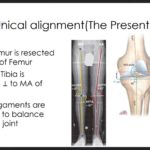
Clinical Driver: Traditional mechanical alignment frequently requires extensive soft-tissue stripping to force native anatomical variations into a rigid, non-anatomical rectangular gap.
-
Core Philosophy of Functional Alignment:
-
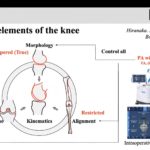
Uses either mechanical alignment or kinematic alignment as an initial reference baseline.
-
Modifies bone resection planes within safe, defined boundaries to match the patient’s individual dynamic ligament envelope.
-
Eliminates or substantially minimizes surgical soft-tissue and collateral ligament releases.
-
Balances medial and lateral flexion-extension gaps while respecting native joint line height and obliquity.
-
-
Technology Prerequisite: Achieving functional alignment within millimetric and sub-degree tolerance is impossible with conventional manual cutting jigs; it strictly requires optical computer navigation or haptic robotic platforms (e.g., Mako 2.0).
CPAK Phenotype Distribution & Soft-Tissue Impact
-
Population Demographics:
-
Normal and osteoarthritic populations follow an asymmetric distribution across the 9 Coronal Plane Alignment of the Knee (CPAK) categories.
-
Type II (Constitutional Varus, Neutral Joint Line): The single most prevalent phenotype in both healthy and arthritic cohorts.
-
Type I (Constitutional Varus, Apex Distal Joint Line): The second most frequent presentation, highly prevalent across Middle Eastern, Asian, and Indian patient demographics.
-
-
Soft-Tissue Balancing Realities:
-
For severe constitutional varus knees (Type I and Type II), pure mechanical alignment achieves soft-tissue balance without ligamentous release in only 0% to 15% of cases.
-
Kinematic/functional approaches achieve physiological collateral balance without major releases in up to 89% to 100% of constitutional varus deformities.
-
Operative Strategy: The Safe Boundary Envelope
-
Restoration Goal: Restore the individual’s pre-arthritic constitutional axis rather than forcing an arbitrary 180° mechanical line.
-
Boundary Restrictions:
-
Avoid excessive tibial varus or valgus tilt (keep within safe bony tolerance, typically $\le 3^\circ\text{ to }5^\circ$).
-
Avoid extreme non-anatomical internal or external rotational adjustments on the femoral component.
-
-
Ligament Balance Rules:
-
When gap discrepancies between medial and lateral compartments fall within roughly 5 mm, bone cuts and implant positioning are adjusted dynamically on the robotic console to balance gaps without soft-tissue release.
-
When severe, long-standing contractures generate gap asymmetries exceeding 5 mm, a selective, step-wise soft-tissue release is performed first to bring the gap difference back into the correctable envelope.
-
Complex Surgical Case Execution: Severe Varus Gonarthrosis (Mako 2.0)
Preoperative Profile & Deformity Analysis
-
Patient Pathology: CPAK Type I severe varus right knee deformity.
-
Baseline Measurements:
-
Native uncorrected coronal deformity: 14.5° varus.
-
Fixed flexion contracture (FFC): 16°.
-
Unassisted passive manual stress correction: Reaches only 12.5° varus without releases.
-
-
Pre-Planning Radiographic Landmarks:
-
Large posteromedial femoral condylar osteophyte (cannot be excised prior to initial gap assessment; must be factored into robotic tension readings).
-
Prominent medial tibial plateau osteophyte tethering the deep MCL.
-
Dynamic Gap Tensioning & Assessment
-
Initial Robotic Ligament Interrogation:
-
Flexion gap: Severe medial compartment tightness (4.5 mm tight / negative gap) alongside marked lateral laxity (5.0 mm opening).
-
Net gap discrepancy exceeds the safe 5 mm implant-adjustment threshold.
-
-
Stepwise Surgical Release:
-
Targeted medial soft-tissue release performed to de-tension the contracted medial sleeve.
-
Post-Release Reassessment:
-
Extension gap: Lateral balance 3.5 mm; medial balance $-0.5\text{ mm}$.
-
Flexion gap: Lateral balance 2.5 mm; medial balance $-3.0\text{ mm}$.
-
Brings the residual gap difference within the 5 mm correctable window.
-
-
Implant Position Fine-Tuning & Cultural Adjustments
-
Femoral Component: Positioned from 0° neutral to 1° varus.
-
Tibial Baseplate: Adjusted from 0° neutral to 2° varus to mirror the native tibial joint line obliquity.
-
Gap Targeting:
-
Extension gap expanded by 2 mm to accommodate and correct the 16° fixed flexion contracture without requiring aggressive posterior capsular resection.
-
Flexion gap lateral compartment deliberately targeted with 2 mm of physiological laxity.
-
Cultural Rationale: Preserving 2.0 mm of lateral flexion laxity accommodates deep flexion, lateral condylar rollback, and external rotation necessary for comfortable high-flexion kneeling and cross-legged sitting.
-
Final Verification and Kinematic Outcome
-
Final Corrected Axis: 2° residual coronal varus and 2° of extension flexion.
-
Final Compartment Balance:
-
Extension: 2.5 mm lateral / 1.5 mm medial.
-
Flexion: 2.0 mm lateral / 1.0 mm medial.
-
Confirms a balanced, stable knee with physiological lateral rollback clearance.
-
Clinical Evidence & Outcome Metrics
-
Postoperative Recovery: Patients undergoing robotic functional alignment demonstrate reduced early postoperative pain, decreased narcotic consumption, and accelerated hospital discharge.
-
Implant Precision: Robotic assistance significantly lowers component placement outliers and eliminates iatrogenic soft-tissue damage.
-
Validated Clinical Trials (Haddad & Lustig):
-
Mid-term clinical data up to 5 years demonstrate equivalent to superior functional outcomes compared to conventional manual techniques.
-
Superior scores documented on the Forgotten Joint Score (FJS), reflecting a joint that feels more natural to the patient.
-
No increase in all-cause complication rates or early implant revisions.
-
-
Long-Term Survivorship: High-level registry survivorship data beyond 10 to 15 years remain ongoing to confirm whether physiological gap balancing translates into reduced long-term polyethylene wear and aseptic loosening.

Leave a Reply