
Courtesy: Prof Nabil Ebraheim, University of Toledo, Ohio, USA
Felon (Infection of the Fingertip Pulp)
Definition
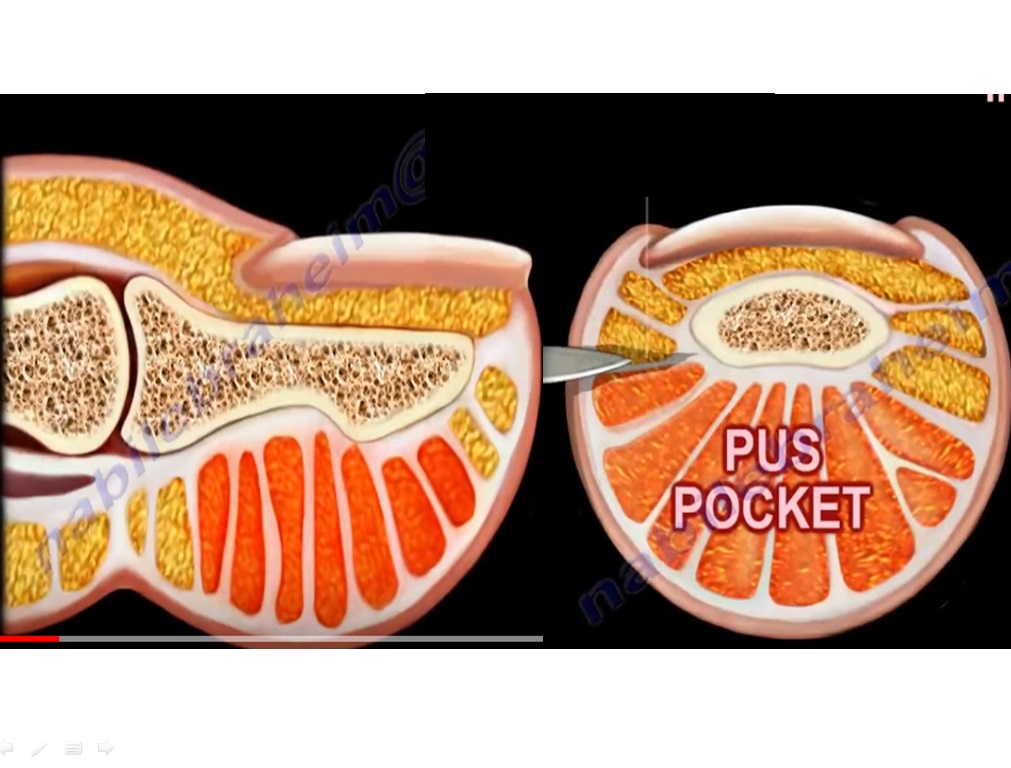
- A felon is a localized abscess of the volar pulp of the fingertip
- Characterized by:
- Painful swelling
- Pus accumulation within pulp space
Key Concept
- Fingertip pulp is compartmentalized — rapid pressure buildup during infection
Cause and Mechanism
- Most commonly due to penetrating trauma
Typical Causes
- Needle punctures
- Splinters
- Thorns or sharp objects
Anatomy of Fingertip Pulp
- Composed of:
- Multiple small fat compartments
Structure
- Compartments separated by fibrous septa
Attachments
- Septa extend between:
- Dermis
- Distal phalanx
Clinical Significance
- Limits spread of infection
- Promotes rapid pressure increase
Pathophysiology
- Infection leads to:
- Pus accumulation in compartments
Effects of Increased Pressure
- Compromised blood supply
- Tissue ischemia
- Tissue necrosis
Important Concept
- Acts like a mini compartment syndrome of the fingertip
Possible Complications
- Osteomyelitis (distal phalanx)
- Flexor tendon sheath infection
- Progressive tissue necrosis
Common Organism
- Staphylococcus aureus infection
Treatment
Primary Management: Surgical Drainage
Principles
- Incision and drainage (I&D)
- Release pus and reduce pressure
Key Surgical Steps
- Break fibrous septa
- Ensure adequate decompression
Structures to Protect
- Flexor tendon sheath
- Distal interphalangeal (DIP) joint
Surgical Incision Options
When No Foreign Body
- Mid-axial incision
- J-shaped incision
Post-Procedure
- Wound left open for drainage
When Foreign Body Present
- Longitudinal incision
- Allows:
- Removal of foreign body
- Adequate drainage
Incisions to Avoid
1. Fish-Mouth Incision
- Risk:
- Pulp instability
2. Double Longitudinal Incisions
- Risk:
- Injury to digital neurovascular bundles
Key Clinical Points
- Felon is a compartmental infection
- Early intervention prevents:
- Necrosis
- Deep spread



Leave a Reply