
Courtesy: Dr Suryanaraya, Ashok Shyam TV, Ortho
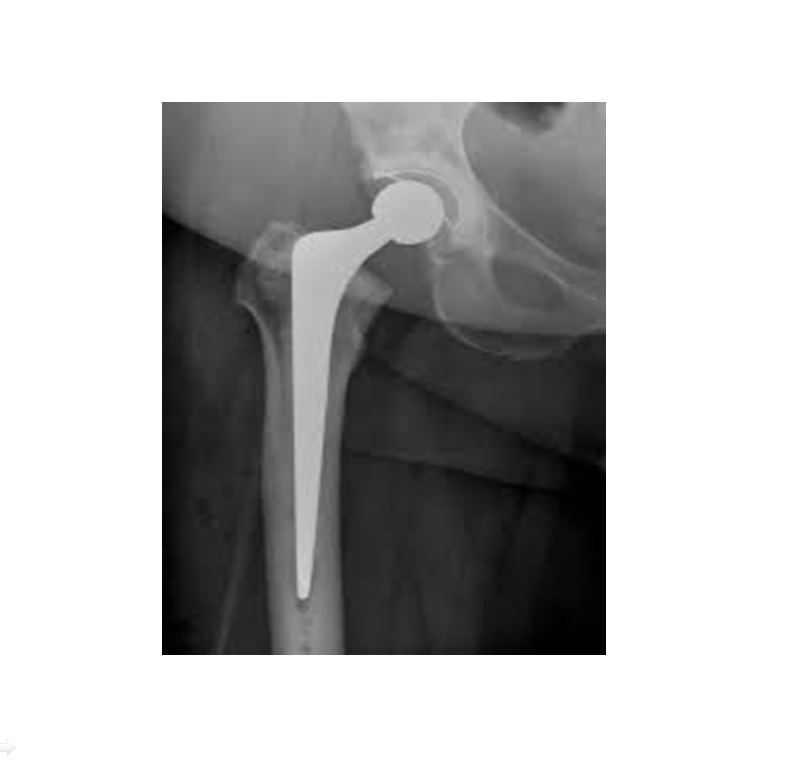
Hemiarthroplasty vs Total Hip Arthroplasty in the Elderly
-
Ongoing debate in displaced femoral neck fractures:
-
Internal fixation vs hemiarthroplasty vs THA.
-
-
Considerations:
-
Functional outcome
-
Morbidity and mortality
-
Revision risk
-
Historical Failures of Early Hemiarthroplasty
Primary Causes of Early Failure
-
Metallurgical failure
-
Fixation failure
-
Cartilage degeneration over time
Design-Related Issues
-
Monoblock prostheses:
-
Poor restoration of hip biomechanics
-
Suboptimal offset and kinematics
-
-
Cemented stems:
-
Sharp corners ? cement mantle breakdown
-
-
Early uncemented stems:
-
Non-porous or poorly integrating surfaces
-
Inconsistent bone ingrowth
-
Cartilage Failure: A Major Limitation
-
Progressive acetabular cartilage erosion over 5–10 years.
-
Leads to:
-
Pain
-
Protrusio acetabuli
-
Progressive migration
-
Need for revision
-
Histological Findings at Revision
-
Near-complete loss of acetabular cartilage
-
Replacement with fibrous tissue
Revision Rates
-
Approximately 37–40% revision at 5–8 years in symptomatic cases.
-
Strong correlation with:
-
Younger age
-
Higher activity levels
-
Unipolar Hemiarthroplasty
Characteristics
-
Single articulation: metal head against native cartilage.
-
Simpler design.
Limitations
-
High cartilage wear rate.
-
Increased acetabular erosion in active patients.
-
~40% revision risk in symptomatic patients within 5–8 years.
-
Faster cartilage loss compared to non-implanted matched groups.
Bipolar Hemiarthroplasty
Design Concept
-
Dual articulation:
-
Inner bearing (between head and polyethylene liner)
-
Outer bearing (between metal shell and acetabulum)
-
Early Bipolar Designs
-
Concentric centers of rotation.
-
Problems included:
-
Varus migration
-
Impingement
-
Polyethylene wear
-
Dislocation
-
Component dissociation
-
Modern Bipolar Designs
-
Eccentric center of rotation.
-
Improved containment of the head.
-
Promotes self-centering mechanism.
-
Better stress distribution across acetabulum.
-
Reduced point loading.
Mechanics of Bipolar Motion
In Vitro Observations
-
At low loads:
-
Both articulations function.
-
-
At higher loads:
-
Outer articulation predominates.
-
Influence of Cartilage Condition
-
Normal cartilage:
-
Bipolar motion tends to be preserved.
-
-
Degenerated cartilage:
-
Motion becomes predominantly unipolar.
-
-
Dual motion decreases over time.
Head Size Considerations
-
No strong evidence that head size (22, 28, 32 mm) significantly alters long-term bipolar function.
Complications of Bipolar Prostheses
-
Component dissociation
-
Impingement
-
Polyethylene wear
-
Gradual loss of bipolar function
-
Potential mode of failure due to polyethylene debris
Long-Term Results
-
10-year survival approximately 80–85% in modern series.
-
Bipolar prostheses generally show:
-
Lower failure rates
-
Slightly better functional scores compared to unipolar designs
-
Key Principles for Successful Hemiarthroplasty
Patient Selection
-
Best suited for:
-
Low-demand
-
Very elderly patients
-
-
Younger or active individuals:
-
Consider THA due to better long-term outcomes.
-
Surgical Technique
-
Treat hemiarthroplasty like a total hip replacement:
-
Proper femoral preparation
-
Accurate sizing
-
Correct offset restoration
-
-
Cemented or uncemented choice:
-
Based on bone quality and patient condition
-
-
Emphasize:
-
Proper cementation technique (if cemented)
-
Secure fixation
-
Modular stem use
-
Soft Tissue Considerations
-
Smaller surgical approaches when appropriate
-
Meticulous capsular repair
-
Preserve acetabular labrum if possible
-
Reduce dislocation risk
Current Perspective
-
Fixation-related failures are largely addressed with modern implants.
-
Cartilage erosion remains the main long-term limitation.
-
Bipolar designs appear to offer advantages over unipolar designs.
-
Outcomes around 80% at 5–8 years in appropriate patients.
Final Take-Home Messages
-
Hemiarthroplasty remains primarily a fracture solution.
-
Optimal in low-demand elderly patients.
-
Modern modular and bipolar designs improve outcomes.
-
Proper surgical technique and patient selection are critical.
-
In higher-demand patients, total hip arthroplasty often provides superior long-term results.

Leave a Reply