
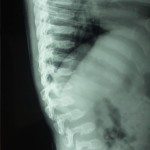
Winquist Hansen Classification for #Femoral Shaft
Courtesy : Prof Nabile Ebraheim, University of Toledo, Ohio, USA
Patella Denervation improves patient satisfaction following TKA

Patella Denervation in Primary Total Knee Arthroplasty – A Randomized Controlled Trial with 2 Years of Follow-Up Ramnadh S. Pulavarti, Videsh V. Raut, George J. McLauchlan Department of Orthopaedics and Trauma, Lancashire Teaching Hospitals NHS Foundation Trust, Chorley and South Ribble Hospital, Chorley, Lancashire, United Kingdom DOI: http://dx.doi.org/10.1016/j.arth.2013.10.017 The Journal of Arthroplasty Volume 29, Issue […]
Foot Drop
Introduction Foot Drop is a gait abnormality where the forefoot drops due to weakness or paralysis of the dorsiflexor muscles. It is a multifactorial condition involving central, spinal, or peripheral nervous systems. Management varies from conservative treatment to surgery depending on the underlying cause. Why Important..? FD affects mobility, gait, and quality of life; presents […]
Incongruous Hip and Femoroacetabular Impingement
By Prof Mininder Kocher, Children’s Hospital, Boston, USA; Harvard Medical School Courtesy: Dr Taral Nagda,Mumbai Dr Sandeep Patwardhan,Pune
Spinal Accessory to Suprascapular Nerve Transfer for Brachial plexus injury
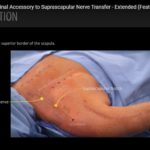
Posterior Approach – Spinal Accessory to Suprascapular Nerve Transfer Reconstructing shoulder function following a nerve injury is a challenge due to its dynamic movement originating from several muscles. The supra/infraspinatus muscles are critical for shoulder function in that they initiate abduction of the arm, external rotation, and stabilization of the shoulder joint. In upper brachial […]
Solitary Bone Cyst
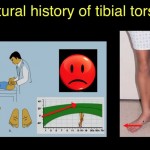
Courtesy: Ashok Shyam, IORG, Ortho TV and POSI
Subtrochanteric Fractures
Courtesy : Prof Nabile Ebraheim, University of Toledo, Ohio, USA
Congenital Pseudoarthrosis Tibia
By Prof Kit Song, Seattle Children’s Hospital, USA POSICON 2012 Courtesy: Dr Taral Nagda, India Dr Sandeep Patwardhan, SIOR, Pune CONGENITAL PSEUDOARTHROSIS OF TIBIA ETIOLOGY • Unknown • Speculation: Many theories • Sporadic familial associations • Approximately 50% associated with NF-1 • Only 2-6% of NF-1 patients have CPT • Presence of NF-1 does not […]
Obstetric Brachial Plexus Palsy Basics
Courtesy : Dr Amr Abdelgawad, Associate Professor, University of Texas, USA
Obturator Internus Anatomy
Obturator internus is a fan shaped muscle that passes through lesser sciatic notch. The muscle lies within the pelvis and the tendon lies posterior to the hip joint. Origin and insertion: The obturator internus arises from the medial surface of the obturator membrane, ischium, and the rim of pubis. The obturator internus muscle ends […]
Image Quiz 6
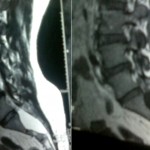
Popular answer may not imply right answer. Answer will be published by the end of the month. Courtesy : Dr Nadeem Ali, MS Orth, Srinagar, Jammu and Kashmir, India
Popliteus Muscle

Courtesy : Prof Nabile Ebraheim, University of Toledo, Ohio, USA Popliteus Muscle A triangular muscle with a narrow tendinous origin and broad insertion. One of the deep flexors of the knee. Origin : strong tendon arises from the anterior part of the popliteal groove on the lateral surface of the condyle of the femur Insertion […]
Phantom pain: Basics
Courtesy : Prof Nabile Ebraheim, University of Toledo, Ohio, USA Phantom pain is a common symptom after amputation of limb. The term phantom doesnot mean that the symptoms are imaginary or in the patient’s head It is a real phenomenon. Upto 80% of amputee patients have phantom symptoms. The patient will feel the sensation of […]
Extensors of the Leg
Courtesy : Prof Nabile Ebraheim, University of Toledo, Ohio, USA