
Courtesy:Prof Nabil Ebraheim, University of Toledo, Ohio, USA
Adamantinoma: Key Features and Management
Overview
- Adamantinoma is a rare, low grade malignant bone tumor that most often affects young adults.
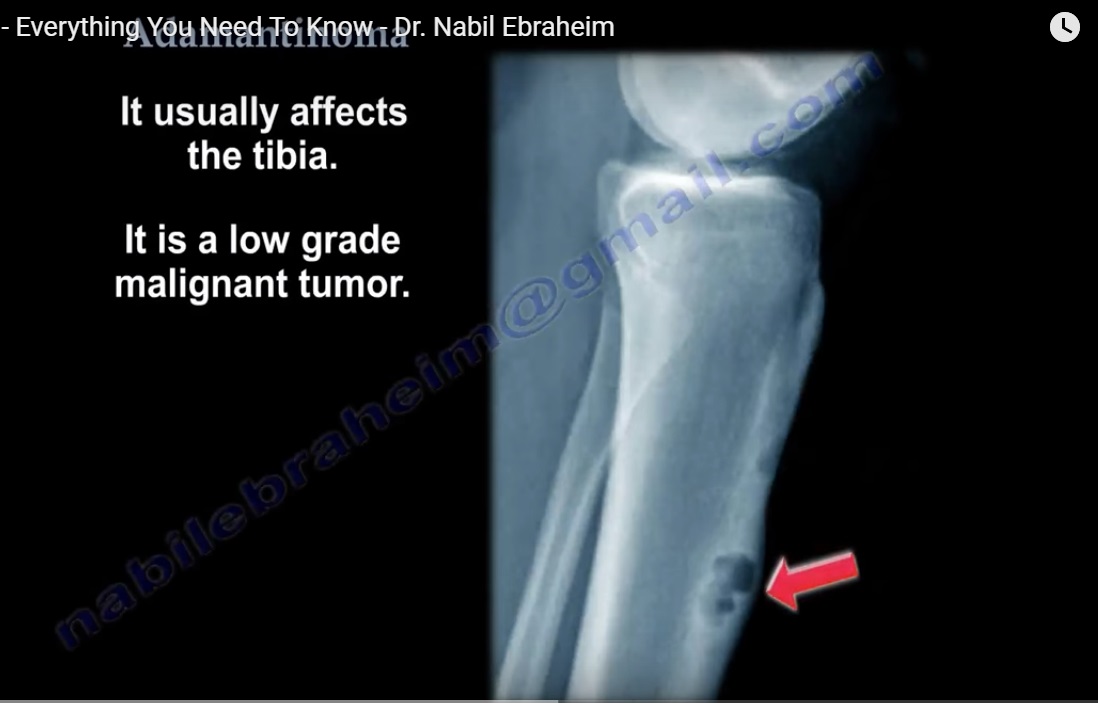
- It commonly involves the tibia, particularly the diaphysis.
Clinical Features
- Patients typically present with long standing pain.
- Localized tenderness over the tibia may be present.
- A palpable mass or anterior bowing of the tibia may be noted.
Radiological Features
- Radiographs often show multiple lucent and sclerotic lesions producing a bubble like appearance.
- The lesion usually occurs in the diaphysis of the tibia.
- Periosteal reaction is typically absent.
Pathology
- The tumor is biphasic, composed of epithelial cell nests within a fibrous stroma.
- Immunohistochemistry typically shows keratin positivity.
Differential Diagnosis
- Chondromyxoid fibroma.
- Fibrous dysplasia.
- Osteofibrous dysplasia, which occurs in children and is benign.
Related Conditions
- Osteofibrous dysplasia may resemble adamantinoma radiologically.
- Unlike adamantinoma, osteofibrous dysplasia shows osteoblastic rimming and is managed conservatively.
Management
- Treatment involves wide surgical excision with reconstruction.
- Chemotherapy and radiation therapy are generally not effective for low grade malignant bone tumors such as adamantinoma.
- Similar surgical management applies to parosteal osteosarcoma and chondrosarcoma.
Metastasis and Follow Up
- Pulmonary metastasis may occur in approximately twenty five percent of cases.
- Long term follow up is required due to the risk of recurrence and metastasis.
Summary
- Adamantinoma is a rare tibial tumor with characteristic clinical, radiological, and pathological features.
- Wide resection remains the primary treatment approach.
Leave a Reply