
Courtesy: Prof Nabil Ebraheim, University of Toledo, Ohio, USA
Overview
- Several types of cystic swellings can develop in and around the knee joint.
- The commonly encountered cystic conditions include:
- Ganglion cysts involving the cruciate ligaments
- Meniscal cysts
- Popliteal cysts, also known as Baker cysts
- These lesions differ in origin, location, clinical features, and management.
Ganglion Cyst of the Anterior Cruciate Ligament
Definition
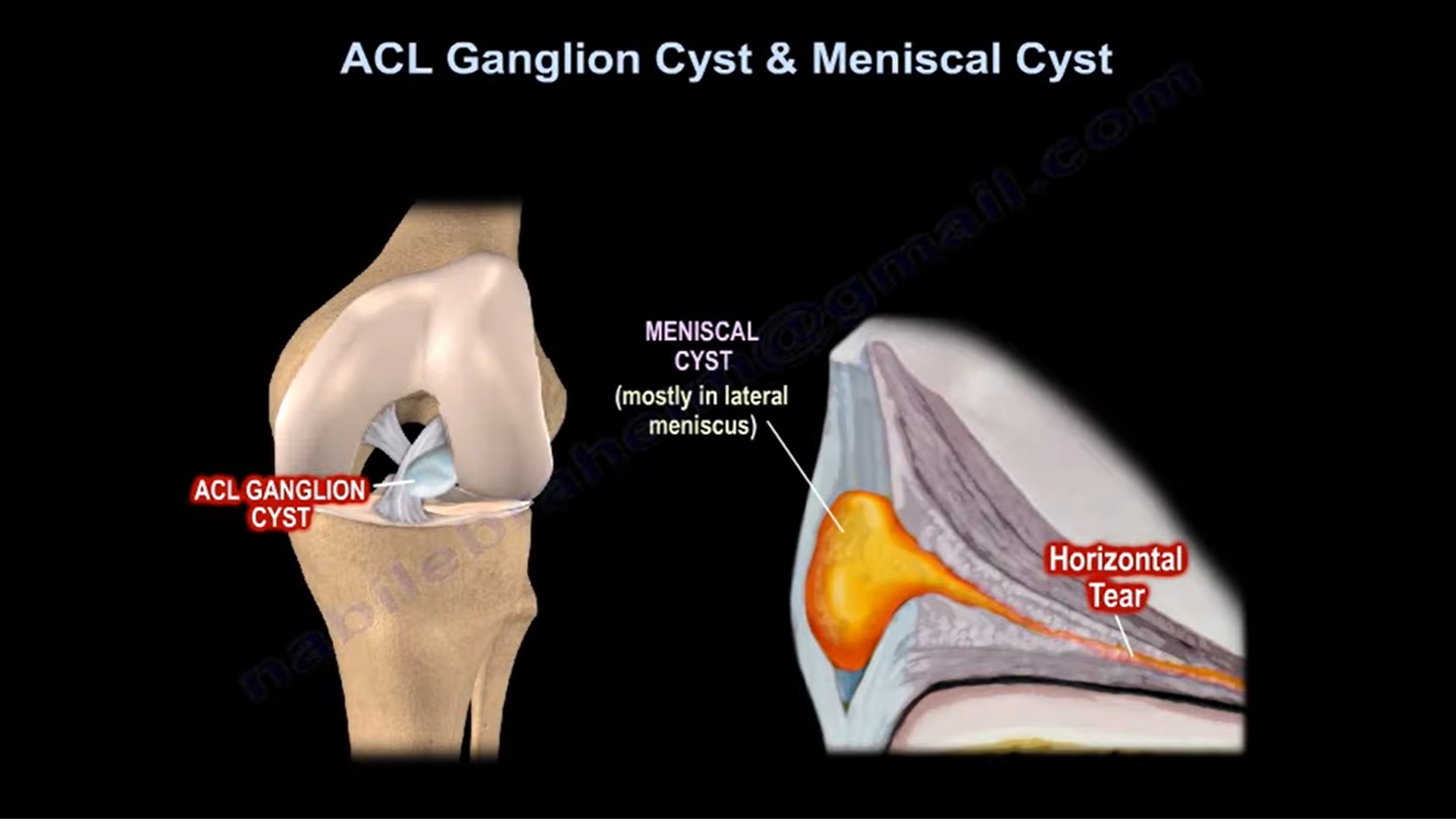
- Ganglion cysts involving the anterior cruciate ligament are uncommon intra-articular lesions.
- These cysts resemble ganglion cysts found in other parts of the body.
Pathogenesis
- Often associated with mucoid degeneration of the anterior cruciate ligament.
- The cyst forms within or adjacent to the ligament fibers.
Clinical Features
- Knee pain that may be poorly localized.
- Restriction or discomfort during knee movement.
- Sensation of catching during joint motion.
- Mechanical locking is uncommon.
- Knee stability usually remains normal because the ligament itself is not ruptured.
Differential Diagnosis
Conditions that may produce similar symptoms include:
- Medial meniscus tear
- Popliteal cyst
Imaging Findings
- Magnetic resonance imaging typically shows:
- A cystic structure within the anterior cruciate ligament
- A fluid-filled lesion with high signal intensity on T2-weighted images
Management
- Initial treatment is usually conservative.
- If symptoms persist, arthroscopic removal or debridement of the cyst may be performed.
Meniscal Cyst
Definition
- A meniscal cyst is a fluid-filled swelling adjacent to the meniscus.
- It is most frequently associated with tears of the meniscus.
Etiology
- The cyst develops when synovial fluid escapes through a meniscal tear.
- Fluid accumulates outside the meniscus, forming a localized cyst.
Typical Location
- Commonly occurs in the middle portion of the lateral meniscus.
Associated Meniscal Injuries
- Frequently linked to horizontal tears or horizontal cleavage tears of the meniscus.
Management
- When the tear communicates with the joint cavity:
- Arthroscopic partial removal of the damaged meniscus
- Decompression of the cyst
- When there is no communication with the joint:
- Arthroscopic evaluation may be performed
- Open excision of the cyst may be required in some cases.
Popliteal Cyst (Baker Cyst)
Definition
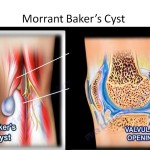
- A popliteal cyst is a benign fluid-filled swelling located behind the knee.
- It is also known as a Baker cyst.
Anatomical Location
- Typically found between the medial head of the gastrocnemius muscle and the semimembranosus tendon.
- Usually located at or slightly below the knee joint line.
Pathophysiology
- The cyst communicates with the knee joint through a valve-like opening.
- Synovial fluid flows from the joint into the cyst in a one-way direction.
- Increased intra-articular fluid leads to expansion of the cyst.
Associated Conditions
Popliteal cysts often occur secondary to intra-articular pathology, such as:
- Degenerative arthritis of the knee
- Meniscal tears, especially involving the posterior horn of the medial meniscus
Clinical Features
- Swelling behind the knee
- Pain, tenderness, or a feeling of fullness
- The cyst is often more visible when the knee is fully extended.
Diagnosis
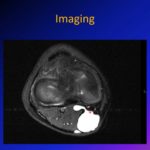
- Magnetic resonance imaging can confirm the cyst and identify underlying intra-articular abnormalities.
- If a cyst is detected in an unusual location, further evaluation is necessary to exclude tumors or other conditions.
- The cyst is fluid-filled and may transmit light during examination.
Management
Initial treatment options include:
- Ice application
- Anti-inflammatory medications
- Physical therapy
Additional treatments may involve:
- Aspiration of the cyst
- Surgical removal in selected cases
Recurrence
- Recurrence is common if the underlying joint pathology is not addressed.
- The most effective management often involves arthroscopic treatment of the intra-articular condition causing excess fluid production.
Leave a Reply