
Courtesy: Dr Glass DPM
Supination–Adduction (SA) Injury
(Lauge–Hansen Classification of Ankle Fractures)
Overview
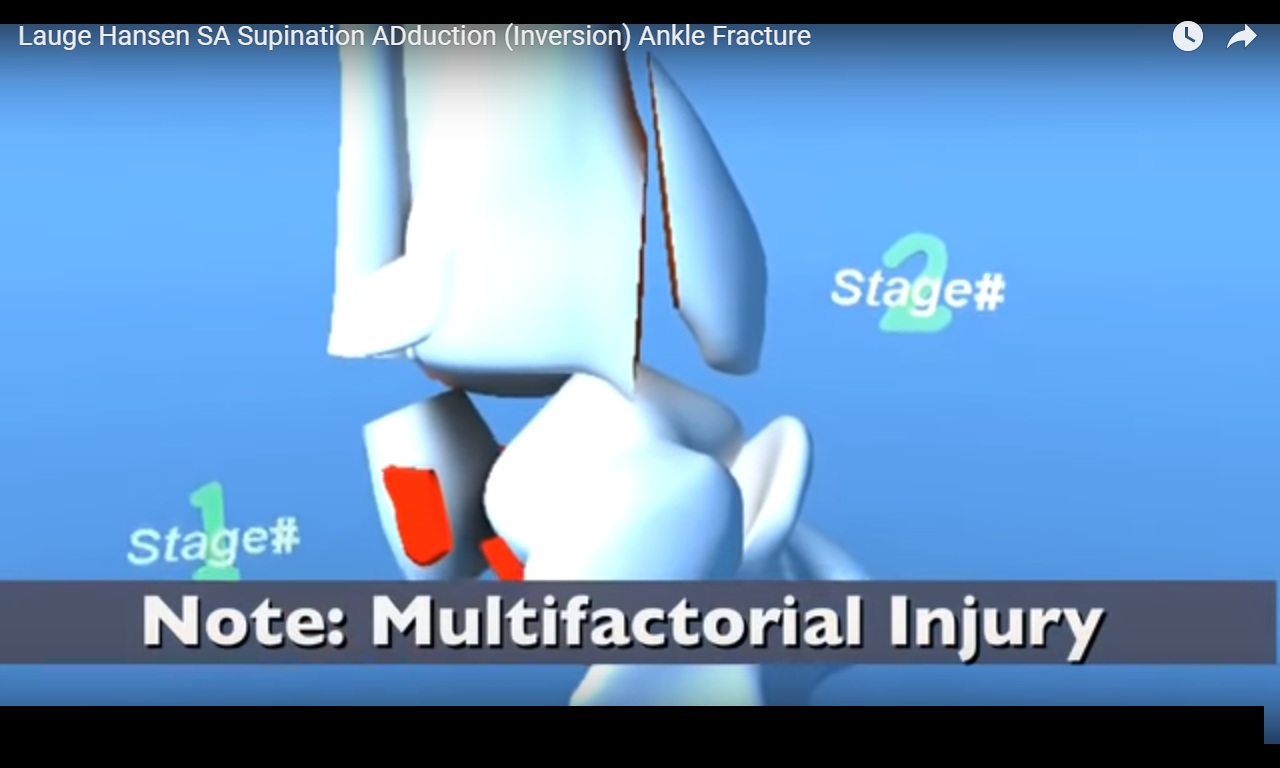
Supination–Adduction (SA) injuries are a distinct pattern of ankle fractures described in the Lauge–Hansen classification, based on mechanism of injury.
Key Concept
Injury pattern follows a predictable sequence depending on the applied force
Mechanism of Injury
Position of Foot
- Supinated foot
Applied Force
- Adduction force acting laterally
Effect on Talus
- Talus undergoes inversion within the ankle mortise
Stages of Injury
Stage I
Injury Pattern
One of the following occurs:
Ligament Injury
- Rupture of lateral collateral ligaments
- Anterior talofibular ligament (ATFL)
- Calcaneofibular ligament (CFL)
Bony Injury
- Avulsion fracture of lateral malleolus
OR - Transverse fracture of distal fibula
Fracture Characteristics
- Occurs below or at ankle joint level
Infrasyndesmotic fracture
Key Point
- Syndesmotic ligaments remain intact
Stage II
Mechanism Progression
- Continued adduction force
Result
- Talus impacts against medial tibia
Injury Pattern
- Vertical or oblique fracture of medial malleolus
Mechanism
Compression between:
- Talus
- Medial tibial plafond
Summary of Injury Pattern
| Stage | Injury |
|---|---|
| Stage I | Lateral ligament rupture OR transverse fibular fracture (infrasyndesmotic) |
| Stage II | Vertical/oblique medial malleolus fracture |
Key Features
- Fibular fracture – below ankle joint
- Syndesmosis – intact
- Medial malleolus fracture – vertical pattern
Important Exam Point
Classic Pattern
Transverse fibular fracture + vertical medial malleolus fracture
Clinical Insight
- Vertical medial malleolus fracture indicates compression mechanism
- Helps differentiate from:
- Supination–External Rotation (SER) injuries
High-Yield Takeaways
- SA injuries = inversion + adduction force
- Stage I – lateral side injury
- Stage II – medial compression fracture
- Syndesmosis remains intact throughout
Leave a Reply