
Courtesy: Berte Boe, Vice President, ESSKA
Can We Predict Whether Rotator Cuff Repair Will Heal?
Introduction
Rotator cuff repair can provide significant improvements in pain, function, and shoulder strength. However, structural healing is influenced by multiple patient-, tear-, biological-, surgical-, and rehabilitation-related factors.
A key challenge is determining:
- Whether a rotator cuff tear is reparable.
- Whether the repaired tendon is likely to heal.
- Which factors increase the risk of re-tear or non-healing.
- How structural healing relates to the patient’s clinical outcome.
- Whether revision surgery is appropriate when a repair fails.
1. Predicting Outcomes After Rotator Cuff Repair
Predicting the outcome of rotator cuff repair requires assessment at several stages.
Preoperative assessment
Important considerations include:
- Patient-related factors and comorbidities.
- Clinical examination.
- Tear characteristics.
- Tendon and muscle quality.
- Radiological findings, particularly on X-ray and MRI.
- Potential contraindications to surgery.
Intraoperative assessment
During surgery, the surgeon should assess:
- Whether the tendon can be mobilised adequately.
- Whether the tendon can reach the footprint without excessive tension.
- The elasticity and quality of the tendon.
- Whether medialisation of the footprint is required.
- Whether augmentation may be appropriate.
- Whether anterior or posterior mobilisation is necessary.
Postoperative factors
Healing is also influenced by:
- Surgical technique.
- Rehabilitation protocol.
- Patient compliance with rehabilitation.
- Biological healing capacity.
Rotator cuff healing is therefore a multifactorial process.
2. What Does “Failure” Mean?
Structural failure and clinical failure are not necessarily the same.
Structural failure
A postoperative MRI may demonstrate:
- Persistent non-healing of the tendon.
- Re-tear after an initially successful repair.
However, a patient may remain clinically satisfied despite a structural failure.
Clinical failure
Conversely, a patient may have:
- Persistent pain.
- Weakness.
- Poor functional recovery.
despite an apparently intact repair on imaging.
Key principle
The definition of success should include both structural healing and the patient’s clinical outcome.
The patient’s pain, function, strength, expectations, and activity level are ultimately more important than MRI appearances alone.
3. Patient-Related Factors Affecting Healing
Age
Age is an important predictor of rotator cuff healing.
- Re-tear is relatively uncommon in patients younger than 50 years.
- The risk of non-healing or re-tear increases with increasing age.
- The risk appears to increase by approximately 5% per decade between 50 and 70 years.
- After 70 years, the risk increases more substantially.
Age should therefore be considered when counselling patients about the likelihood of healing.
Smoking
Smoking can adversely affect:
- Tendon biomechanics.
- Tendon histology.
- The biological healing environment.
Patients should be encouraged to stop smoking around the time of rotator cuff repair.
However:
- The optimal duration of smoking cessation remains uncertain.
- Smoking should not necessarily be considered an absolute reason to deny surgery.
- Smokers can still experience meaningful improvements following rotator cuff repair.
Endocrine and Metabolic Disorders
Metabolic conditions may adversely affect tendon quality and healing.
The presentation highlighted:
- Hyperglycaemia.
- Hyperlipidaemia.
- Hypercholesterolaemia.
These conditions may negatively influence the biomechanical properties of the rotator cuff and potentially increase the risk of complications.
4. Manual Workers and Return to Work
Manual workers can represent a challenging group following rotator cuff repair.
A study discussed in the presentation involving 165 patients found that:
- Approximately one in four patients were unable to return to their original occupation.
- Occupational change was significantly associated with poorer shoulder function.
- This was reflected in Constant scores.
- Change in professional activity was not associated with:
- Presence of a full-thickness tear.
- Initial tear type.
- Sex.
- Salaried employees were more likely to change occupation than self-employed individuals.
Clinical implication
Preoperative counselling should consider:
- The physical demands of the patient’s occupation.
- The likelihood of returning to the same work.
- The patient’s expectations.
- The possibility of occupational modification.
5. Clinical Assessment of Reparability
Pseudoparalysis
Pseudoparalysis remains a subject of some controversy regarding its precise definition.
It generally describes:
- Markedly restricted active elevation.
- Relatively preserved passive movement.
- The restriction is not primarily explained by pain or stiffness.
The threshold for active elevation may vary, with definitions using approximately 45° to 90°.
Pseudoparalysis may indicate:
- Extensive posterosuperior cuff pathology.
- Reduced reparability.
- Poor functional potential following repair.
External Rotation Deficit
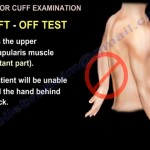
Loss of active external rotation, including a positive lag sign, may indicate:
- Significant rotator cuff dysfunction.
- Infraspinatus involvement.
- Reduced reparability.
These findings should raise concern when planning rotator cuff repair.
6. Tear Characteristics
Important tear-related factors include:
- Tear size.
- Medial-to-lateral retraction.
- Anterior-to-posterior tear size.
- Chronicity.
- Tendon quality.
- Number of tendons involved.
- Fatty infiltration.
- Muscle atrophy.
- Acromiohumeral distance.
The greater the chronicity, retraction, muscle atrophy, and fatty infiltration, the more challenging repair and healing become.
7. Role of Plain Radiographs
A standard shoulder X-ray remains an important part of the initial assessment.
The acromiohumeral distance can provide information about chronic rotator cuff disease.
Hamada Classification
The Hamada classification can help assess chronic cuff tear arthropathy.
- Lower grades are associated with less advanced disease.
- A Hamada stage III finding may indicate chronic rotator cuff pathology.
- Advanced Hamada changes suggest a longstanding tear and reduced reparability.
An important point is that acromiohumeral migration seen on MRI may sometimes be misleading because the patient is examined in a supine position.
Therefore, plain radiographs can provide useful information regarding chronicity.
8. Fatty Infiltration
Fatty infiltration of the rotator cuff muscles is an important prognostic factor.
Goutallier Classification
The presentation discussed the Goutallier classification:
- Grade 0: No fatty infiltration.
- Grade 1: A few fatty streaks.
- Grade 2: More fat is present, but muscle remains predominant.
- Grade 3: Approximately equal amounts of fat and muscle.
- Grade 4: More fat than muscle.
As fatty infiltration increases:
- The likelihood of successful repair decreases.
- Advanced fatty infiltration is associated with poorer healing potential.
In particular, Goutallier grade 3–4 changes should raise significant concern regarding reparability and healing.
9. Tangent Sign
The tangent sign is used to assess supraspinatus muscle atrophy.
It is assessed on:
- T1-weighted oblique sagittal MRI images.
- The level of the scapular Y.
A positive tangent sign occurs when the tangent line between the relevant bony landmarks lies above the supraspinatus muscle belly.
Clinical significance
A positive tangent sign may indicate:
- Supraspinatus muscle atrophy.
- Poorer prognosis for rotator cuff repair.
However, it is important to recognise that:
- Acute massive tendon retraction can sometimes produce a similar appearance.
- Therefore, the tangent sign should not be interpreted in isolation.
10. Intraoperative Assessment of Tendon Mobility
During surgery, the surgeon should assess whether the tendon can be returned to the footprint without excessive tension.
Important considerations include:
- Tendon mobility.
- Tendon elasticity.
- Direction of tendon retraction.
- Delamination.
- Scar tissue.
- Ability to mobilise the tendon anteriorly or posteriorly.
Tension and Healing
A key principle is:
Excessive tension compromises rotator cuff healing.
If the tendon cannot be brought back to the footprint without substantial tension, alternative strategies should be considered.
11. Surgical Strategies to Reduce Tension
Several techniques can be used to facilitate repair and reduce tension.
Single-Row vs Double-Row Repair
The presentation emphasised that:
- Tear size and tissue quality are more important than the number of sutures alone.
- Single-row repair may be sufficient for small-to-medium tears.
- Double-row or transosseous-equivalent techniques are commonly used for larger tears.
There is also concern that certain double-row configurations may result in medial failure, which can be difficult to manage.
Transosseous Repair
Transosseous techniques:
- Provide an alternative to anchor-based repair.
- Can be cost-effective.
- Remain relatively underutilised.
Most surgeons continue to use suture anchors.
Interval Slides
Interval slides can be used to improve tendon mobility.
Anterior interval slide
The retracted supraspinatus tendon is released from the anterior rotator interval.
Posterior interval slide
The interval between the supraspinatus and infraspinatus is released.
Potential advantages
- Increased tendon mobility.
- Potential ability to bring the tendon back to the footprint.
- Reduction in repair tension.
Potential concern
Excessive release may result in:
- Tendon devascularisation.
- Potential compromise of healing.
Therefore, the extent of mobilisation remains debated.
12. Margin Convergence
Margin convergence uses side-to-side sutures to:
- Reduce the size of the tear.
- Decrease strain on the repair.
- Facilitate fixation of large or complex tears.
The presentation also highlighted increasing interest in incorporating the patient’s own biceps tendon as a potential biological or structural adjunct in selected cases.
13. Medialisation of the Footprint
When a tendon falls just short of its anatomical footprint, medialisation can sometimes allow repair with less tension.
This involves:
- Removing a small amount of cartilage from the humeral head.
- Increasing the available footprint.
- Allowing the tendon to be repaired more medially.
This can be performed using:
- A soft-tissue shaver.
- A burr when required.
The aim is to achieve a secure repair without excessive tension.
14. Biological Augmentation
Biological augmentation has attracted increasing interest in rotator cuff surgery.
Potential strategies include:
- Platelet-rich plasma (PRP).
- Biological patches.
- Collagen implants.
- Synthetic augmentation materials.
However, evidence regarding routine use remains inconsistent.
15. Platelet-Rich Plasma (PRP)
PRP is frequently discussed and used in sports medicine, and some patients request it following discussion of rotator cuff surgery.
However, the evidence remains heterogeneous.
Factors contributing to variability include:
- Leukocyte-rich versus leukocyte-poor preparations.
- Differences in preparation techniques.
- Differences in application protocols.
- Different outcome measures.
The presentation cited evidence suggesting that approximately 75% of the literature reviewed did not demonstrate a significant difference between PRP and standard treatment.
Current clinical message
- PRP may potentially have a small effect on structural healing.
- Evidence for meaningful improvement in clinical outcomes remains limited.
- Routine use cannot currently be strongly recommended based on the evidence presented.
The American Academy of Orthopaedic Surgeons (AAOS) recommendations discussed in the presentation do not support routine PRP use for rotator cuff management.
16. Biological and Synthetic Patches
Patches may be used for different purposes.
Depending on the material, they may:
- Provide load sharing.
- Reduce stress at the repair site.
- Increase tendon thickness.
- Protect a repaired tendon.
- Potentially prevent progression of a partial tear.
Not all patches provide the same mechanical or biological effect.
Bioinductive Collagen Implants
A randomised study discussed in the presentation evaluated a bioinductive collagen implant in patients undergoing repair of small-to-medium rotator cuff tears.
Patients were randomised to:
- Standard repair alone.
- Standard repair plus a bioinductive collagen implant.
The study reported:
- A re-tear rate of approximately 8.3% with the implant.
- A re-tear rate of approximately 25% without the implant at one year.
However:
- The improvement in structural healing did not translate into a significant difference in clinical outcomes at the reported follow-up.
Current evidence
Systematic reviews have described bioinductive patches as promising, but further evidence is required regarding:
- Long-term outcomes.
- Clinical significance of reduced re-tear rates.
- Appropriate patient selection.
- Cost-effectiveness.
17. Potential Disadvantages of Patch Augmentation
Routine augmentation is not without drawbacks.
Potential disadvantages include:
- Increased cost.
- Increased operative time.
- Technical challenges.
- Potential stiffness.
- Possible inflammatory reactions.
Key question before augmentation
Will augmentation meaningfully improve the likelihood of healing for this particular patient?
At present, the evidence does not support routine augmentation for every rotator cuff repair.
18. Rehabilitation After Rotator Cuff Repair
Rehabilitation plays an important role in recovery and tendon healing.
Early Mobilisation
Potential benefits:
- Faster improvement in range of motion.
- Earlier functional recovery.
- Reduced postoperative stiffness.
Potential disadvantage:
- Increased risk of re-tear, particularly with larger and more complex tears.
Delayed Mobilisation
Potential advantages:
- Greater protection of the repair.
- Potentially improved tendon healing.
Potential disadvantage:
- Slower recovery of movement.
Clinical balance
The rehabilitation protocol should consider:
- Tear size.
- Tear complexity.
- Tissue quality.
- Repair strength.
- Patient characteristics.
- Functional requirements.
19. Can We Predict Irreparability?
A study involving approximately 750 patients evaluated factors associated with irreparable rotator cuff tears.
The overall irreparability rate was approximately 12.5%.
Compared with reparable tears, irreparable tears were associated with:
- Older age.
- Greater prevalence of pseudoparalysis.
- Larger medial-to-lateral tear size.
- Larger anterior-to-posterior tear size.
- Smaller acromiohumeral distance.
- More pronounced tangent sign.
- Greater fatty infiltration.
- Greater number of tendons involved.
These findings reinforce the importance of combining clinical and radiological factors when assessing reparability.
20. Predicting Re-tear
Several factors have been incorporated into prediction models for re-tear.
Important variables include:
- Tear size.
- Tendon retraction.
- Fatty infiltration.
- Age.
- Bone mineral density.
- Manual occupation.
- Anterior-to-posterior tear size.
- Surgical time.
One prediction model assigned points to these factors to estimate the likelihood of non-healing.
Patients with a score of more than 10 points were reported to have a re-tear rate of approximately 86%.
Such prediction models may eventually help clinicians identify patients in whom repair is unlikely to provide meaningful benefit.
21. Limitations of Prediction Models
Although prediction models are promising, several limitations remain.
Heterogeneous patient populations
Studies often include patients with:
- Different tear patterns.
- Different degrees of chronicity.
- Different imaging findings.
- Different rehabilitation protocols.
Imaging variability
Assessment of:
- Fatty infiltration.
- Muscle atrophy.
- Tendon quality.
may vary between observers.
Surgeon experience
Outcomes may also depend on:
- Surgical experience.
- Surgical volume.
- Technical expertise.
Patient biology
Individual biological factors are not completely captured by currently available prediction models.
22. Revision Rotator Cuff Repair
When a primary repair fails, revision surgery is generally more challenging and has a lower likelihood of success.
Factors associated with poorer prognosis include:
- Female sex.
- Preoperative elevation below approximately 136°.
- Preoperative pain greater than 5/10.
- More extensive tendon involvement.
Tear pattern
The likelihood of successful revision is higher with:
- An isolated supraspinatus tear.
The prognosis is poorer with:
- Multi-tendon involvement.
- Large or massive tears.
23. What Does a Re-tear Mean for the Patient?
An important observation is that a structural re-tear does not necessarily mean a poor clinical result.
A systematic review and meta-analysis involving approximately 3,300 patients found that approximately 25% experienced either:
- Failure to heal, or
- Re-tear.
Despite this, many patients experienced substantial clinical improvement compared with their preoperative state.
Differences in:
- Constant score.
- Pain.
- Muscle strength.
between healed and re-torn groups were reported to be smaller than the minimal clinically important difference in the reviewed literature.
Key message
A structural re-tear does not necessarily equate to clinical failure.
Patient expectations, functional demands, health status, and clinical improvement should all be considered.
24. Factors to Consider Before Revision Surgery
Before undertaking revision repair, consider:
- Patient symptoms.
- Functional demands.
- General health.
- Current shoulder function.
- Time since the primary repair.
- Tear size and retraction.
- Fatty infiltration.
- Muscle atrophy.
- Pseudoparalysis.
- External rotation deficit.
- Number of tendons involved.
- Likelihood that the tendon can be mobilised and repaired.
Time is important because progressive fatty infiltration may reduce the potential for successful revision.
25. Reverse Shoulder Arthroplasty in Failed Rotator Cuff Repair
Reverse shoulder arthroplasty may provide a valuable alternative for selected patients presenting with:
- Large or irreparable recurrent tears.
- Significant cuff dysfunction.
- Pseudoparalysis.
- Poor tissue quality.
- Failed previous repairs.
The decision should be based on the overall clinical and structural situation rather than the presence of a re-tear alone.
26. Acute Versus Degenerative Rotator Cuff Tears
An important clinical question is whether a tear represents:
- An acute traumatic tear.
- An acute-on-chronic tear.
- A degenerative tear.
A patient may report a sudden injury despite having pre-existing degenerative cuff pathology.
Radiographic clues
A patient who develops symptoms after an acute injury but has advanced superior migration or a high Hamada grade on X-ray may already have had chronic cuff disease.
This can be difficult for patients to understand if they had no previous shoulder symptoms.
Ongoing research
A randomised controlled trial involving acute supraspinatus injuries was discussed.
Patients with acute small supraspinatus tears were randomised to:
- Surgical repair.
- Sham surgery.
The study aims to clarify the benefit of repairing acute tears compared with non-repair.
27. Shared Decision-Making
Prediction models and imaging findings should support, rather than replace, shared decision-making.
Important considerations include:
- Patient expectations.
- Functional requirements.
- Symptoms.
- Probability of improvement with surgery.
- Probability of improvement with physiotherapy.
- Risks of surgery.
- Likelihood of structural healing.
- Long-term consequences of leaving the tear untreated.
Patients should understand that a structurally intact repair is not the only definition of a successful outcome.
28. Physiotherapy Versus Surgical Repair
Historically, several randomised trials suggested that physiotherapy could provide outcomes comparable to surgical repair for some small-to-medium rotator cuff tears.
However, longer-term evidence discussed in the presentation has demonstrated a difference favouring surgical repair.
A 15-year follow-up of a randomised trial was cited, showing:
- A significant difference favouring surgical repair.
- Progressive enlargement of untreated tears.
- Inferior long-term outcomes with physiotherapy alone.
This highlights the importance of considering both:
- Short-term clinical outcomes.
- Long-term structural and functional progression.
29. InSpace Balloon
The InSpace balloon was discussed as a potential option for selected irreparable rotator cuff tears.
The speaker described limited personal experience and use within a study involving:
- Debridement.
- Biceps surgery.
- Randomisation to balloon implantation versus no balloon.
The balloon may be considered particularly in situations involving chronic supraspinatus deficiency, provided appropriate remaining cuff function is present.
The proposed biomechanical rationale is that the balloon may:
- Substitute for some of the function of the supraspinatus.
- Alter the mechanics of the humeral head.
- Potentially increase contact between the tendon and footprint in selected situations.
The speaker noted that the balloon has not been routinely used on top of a complete rotator cuff repair in their practice.
30. Key Take-Home Messages
Predicting healing
Rotator cuff healing is multifactorial and depends on:
- Age and comorbidities
- Tear size
- Tendon retraction
- Pseudoparalysis
- Acromiohumeral distance
- Muscle atrophy
- Fatty infiltration
- Number of tendons involved
- Tendon quality
- Repair tension
- Surgical technique
- Rehabilitation
- Patient biology
Assessing reparability
Before surgery, carefully evaluate:
- Clinical function.
- Active and passive range of motion.
- Pseudoparalysis.
- External rotation and lag signs.
- Plain radiographs.
- Acromiohumeral distance.
- Hamada classification.
- MRI findings.
- Fatty infiltration.
- Tangent sign.
- Tendon retraction.
- Number of tendons involved.
During surgery
The surgeon should:
- Assess tendon mobility.
- Avoid excessive tension.
- Consider mobilisation techniques when appropriate.
- Consider footprint medialisation when necessary.
- Select the repair configuration according to tear size and tissue quality.
Biological augmentation
- PRP remains controversial.
- Current evidence does not support routine use.
- Bioinductive collagen patches are promising but require further evidence.
- Cost, operative time, and potential complications must be considered.
Rehabilitation
- Early mobilisation may improve recovery of movement but may increase re-tear risk.
- Delayed mobilisation may protect healing but can slow functional recovery.
- Rehabilitation should be individualised according to tear characteristics and repair quality.
Re-tear does not necessarily equal failure
A patient can have:
- Structural failure on MRI,
- Yet significant improvement in pain and function.
Therefore, postoperative assessment should focus on the patient’s clinical outcome as well as structural healing.
Revision surgery
Revision repair has a lower likelihood of success and requires careful assessment of:
- Patient factors.
- Tear characteristics.
- Muscle quality.
- Fatty infiltration.
- Functional status.
- Time since the previous repair.
In selected patients with irreparable recurrent tears, reverse shoulder arthroplasty may be an appropriate alternative.
Conclusion
Predicting whether a rotator cuff repair will heal remains challenging.
The most important approach is to assess the whole patient rather than relying on a single radiological or clinical parameter.
A combination of:
- Patient factors,
- Tear characteristics,
- Muscle quality,
- Fatty infiltration,
- Clinical function,
- Tendon mobility,
- Repair tension,
- Surgical technique,
- Rehabilitation,
- and patient expectations
should guide treatment decisions.
Ultimately, the goal is not simply to achieve an intact tendon on postoperative imaging, but to achieve meaningful improvement in pain, strength, function, and quality of life for the individual patient.
Leave a Reply