• Skip to main content
  • Skip to secondary menu
  • Skip to primary sidebar
OrthopaedicPrinciples.com

OrthopaedicPrinciples.com

Integrating Principles and Evidence

Integrating Principles and Evidence

  • Home
  • Editorial Board
  • Our Books
    • Evidence Based Orthopaedic Principles
  • Courses
  • Exams
  • Reviews
  • Live Program
  • Contact

POSITRON EMISSION TOMOGRAPHY(PET Scan)

POSITRON EMISSION TOMOGRAPHY


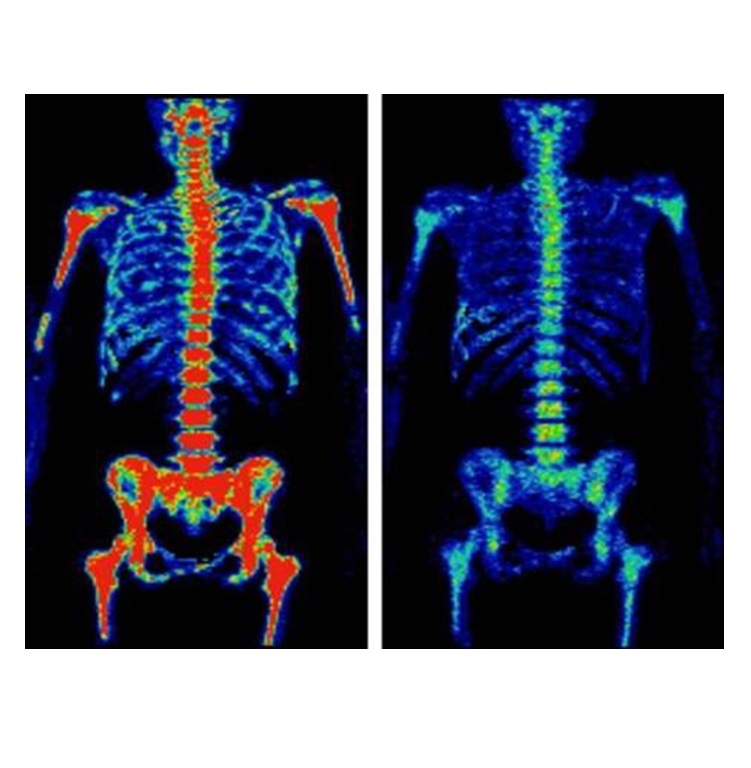
  • PET allows the visualisation of the metabolic activity of disease.
  • Helps in diagnosis of malignant tumours and their recurrence.
  • Also helps in the staging of tumours and the monitoring of their response to therapy, and in the diagnosis of osteomyelitis.
  • The positron-emitting tracers may be used to define:
    1. Amino-acid uptake (11C-methionine; 11 C-tyrosine),
    2. Bone turnover (18F-fluoride).
    3. DNA turnover (18F-fluoro methyl thymidine (FLT)),
    4. Glucose metabolism (18F-fluorodeoxyglucose (FDG)),
    5. Tissue hypoxia (18F-fluoromisonidazole)
  • Tumours and infection show increased uptake of FDG


PET and Tumours

  • FDG imaging of soft-tissue sarcomas can distinguish high-grade from low grade tumours and benign lesion
  • The separation of low-grade from benign lesions is not possible.
  • Metabolic imaging with FDG combined with MRI may be useful in directing the surgeon to the most malignant area within a large heterogeneous mass and helps in biopsy
  • FDG PET is useful in the localisation of distant and multisystem disease in patients with soft-tissue sarcomas or sarcomas of bone.
  • The localisation of metastases from soft tissue sarcoma to the lung, however, is not as sensitive as that with CT, although metastases from osteosarcoma are easily visualised.
  • Definition of the primary tumour with glucose metabolism, amino-acid uptake, DNA turnover, tissue hypoxia may have a predictive value equal to or higher than histological techniques
  • These tracers will also provide information to direct and monitor the response to neoadjuvant therapy
  • PET has been shown to be cost-effective in the management of lung cancer by reducing morbidity from unnecessary operative intervention and allowing better selection of patients for definitive surgery.

Infection

  • FDG PET also helps in the diagnosis of infection
  • FDG has accuracy for diagnosing infection in the peripheral skeleton of 96% and in the central skeleton of approximately 96%.
  • FDG has the potential advantage of a single-step procedure with imaging one hour after the injection, rapid loss of radioactivity from the patient and a radiation dose comparable to the leucocyte imaging techniques
Post Views: 32,158

Related Posts

  • Positron Emission Tomography(PET Scan) in Orthopaedics

    Courtesy: Srikanth Murthy, Hitesh Gopalan Orthopaedic Principles ICL Kochi

  • Radionuclide Bone Scan

    Courtesy: 123Radiology. Discussion on Radionculide Bone scan, Super scan, 3 phase Bone scan

  • Musculoskeletal Ultrasound Scan

    COurtesy: Radiology MasterClass

Reader Interactions

Comments

  1. gaurav says

    at

    can we know something more so as to write in DNB exam

  2. Aditya kekatpure says

    at

    PET scanning for evaluation of bone metabolism
    Acta Orthop. 2009 December 4; 80(6): 737–739.
    Published online 2009 December 4. doi: 10.3109/17453670903487040

Leave a Reply

Your email address will not be published. Required fields are marked *

Primary Sidebar

Follow Us

instagram slideshare

Categories

  • -Applied Anatomy
  • -Approaches
  • -Basic Sciences
  • -Cartilage & Meniscus
  • -Classifications
  • -Examination
  • -Foot and Ankle
  • -Foot and Ankle Trauma
  • -FRCS(Tr and Orth) tutorials
  • -Gait
  • -Hand and Wrist
  • -Hand and Wrist Trauma
  • -Hand Infections
  • -Hip and Knee
  • -Hip Preservation
  • -Infections
  • -Joint Reconstruction
  • -Knee Arthroplasty
  • -Knee Preservation
  • -Metabolic Disorders
  • -Oncology
  • -OrthoBiologics
  • -OrthoPlastic
  • -Paediatric Orthopaedics
  • -Paediatric Trauma
  • -Patellofemoral Joint
  • -Pelvis
  • -Peripheral Nerves
  • -Principles
  • -Principles of Surgery
  • -Radiology
  • -Rheumatology
  • -Shoulder and Elbow
  • -Shoulder and Elbow Arthroplasty
  • -Spine Deformity
  • -Spine Oncology
  • -Spine Trauma
  • -Spine, Pelvis & Neurology
  • -Sports Ankle and Foot
  • -Sports Elbow
  • -Sports Knee
  • -Sports Medicine
  • -Sports Medicine Hip
  • -Sports Shoulder
  • -Sports Wrist
  • -Statistics
  • -Technical Tip
  • -Technology in Orth
  • -Trauma
  • -Trauma (Upper Limb)
  • -Trauma Life Support
  • -Trauma Reconstruction
  • Book Shelf
  • Book Shelf Medical
  • Careers
  • Case Studies and Free Papers
  • DNB Ortho
  • Evidence Based Orthopaedic Principles
  • Evidence Based Orthopaedics
  • Exam Corner
  • Fellowships
  • Guest Editor
  • Guest Reviews
  • Image Quiz
  • Instructional Course Lectures
  • Journal Club
  • MCQs
  • Meetings and Courses
  • Multimedia
  • News and Blog
  • Plaster Techniques
  • Podcasts
  • Public Health
  • Rehabilitation
  • Research
  • Shorts and Reels
Copyright@orthopaedicprinciples.com. All right rerserved.