
Courtesy: Prof Nabil Ebraheim, University of Toledo, Ohio, USA
Piriformis Syndrome – Clinical Tests
1. Basic Concept
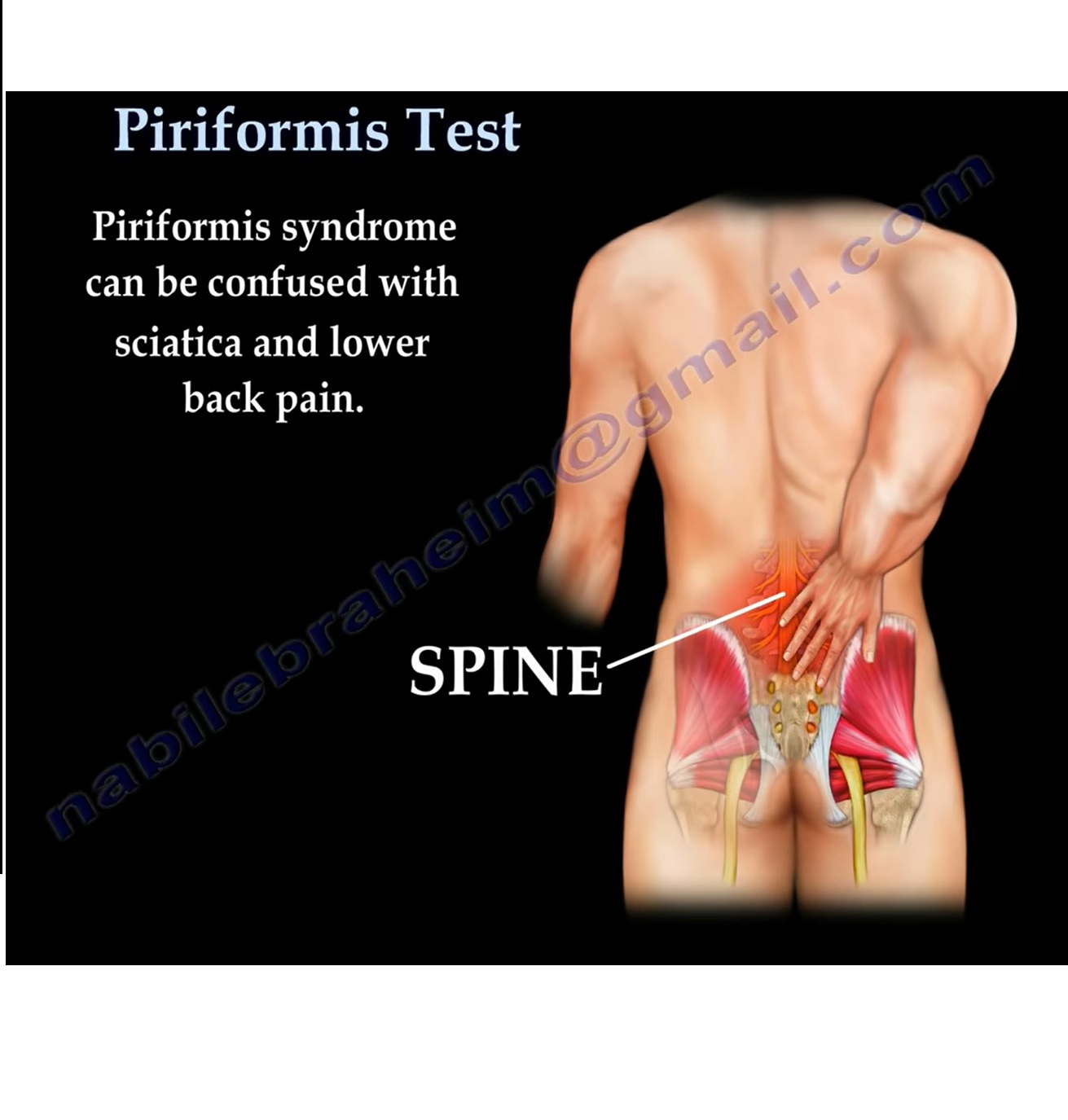
Piriformis syndrome refers to leg pain or sciatica attributed to compression/irritation of the sciatic nerve at the hip, rather than a lumbar spine pathology.
It can therefore mimic:
- Lumbar disc herniation
- Lumbar radiculopathy
- Sciatica
The diagnosis can be difficult because the symptoms may overlap considerably with lumbar spine disease.
2. Anatomy
Piriformis muscle
- Origin: Anterolateral/anterior surface of the sacrum
- Insertion: Posterior aspect of the greater trochanter
- Located deep in the buttock.
Pain distribution
Typically:
- Deep buttock pain
- Posterior thigh pain
- May extend into the posterior leg because of sciatic nerve irritation
- Paresthesia/pins and needles may occur
3. Straight Leg Raising Test
The lecture emphasizes the straight leg raising (SLR) test primarily in the context of lumbar disc herniation.
Technique
- Hip is flexed while the knee is progressively extended.
Positive test
Reproduction of the patient’s sciatic/radicular pain suggests sciatic nerve irritation, and the lecture associates a positive SLR particularly with lumbar disc herniation.
Important distinction
SLR primarily tests neural tension associated with lumbar pathology; it is not the specific test for piriformis syndrome.
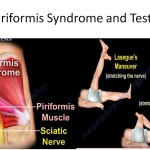
4. Lasègue / Straight Leg Stretch Test
The lecture describes the Lasègue maneuver as a nerve-stretching test.
Technique
- Hip flexed to approximately 90°
- Knee progressively extended
Positive test
- Reproduction of the patient’s pain.
It may also be performed with the patient lying on their side.
5. FAIR Test — Most Important Piriformis Test
FAIR = Flexion, Adduction, Internal Rotation
This should not be confused with FABER.
FAIR test
The hip is positioned in:
- Flexion
- Adduction
- Internal rotation
Principle
This maneuver stretches the piriformis and can reproduce symptoms if the piriformis is irritating/compressing the sciatic nerve.
Positive FAIR test
- Reproduction of the patient’s typical buttock/sciatic symptoms.
6. FAIR vs FABER
| Test | Position | Main purpose in the lecture |
|---|---|---|
| FAIR | Flexion + Adduction + Internal rotation | Piriformis syndrome |
| FABER | Flexion + Abduction + External rotation | SI/hip pathology |
Exam Pearl
FAIR / FABER
FAIR – Piriformis
FABER – SI/hip assessment
7. Posterior Buttock Pressure
During the FAIR maneuver, the examiner can apply pressure over the posterior buttock/piriformis region.
Positive finding
- Marked tenderness
- Reproduction of the patient’s familiar pain
This supports the possibility that the piriformis region is contributing to the symptoms.
8. Clinical Differentiation
| Feature | Lumbar disc/radiculopathy | Piriformis syndrome |
|---|---|---|
| Main source | Lumbar spine | Piriformis/sciatic nerve region |
| Sciatic symptoms | Common | Can occur |
| SLR | Important clinical test | May reproduce symptoms but is not specific |
| FAIR | Not the primary test | Important provocative test |
| Buttock tenderness | Less characteristic | May be prominent |
| Posterior buttock pressure | Not diagnostic | May reproduce symptoms |
High-Yield Take-Home Points
- Piriformis syndrome can mimic lumbar sciatica.
- Piriformis originates from the sacrum and inserts on the greater trochanter.
- Pain is typically deep in the buttock, often extending into the posterior thigh/leg.
- SLR/Lasègue – stretches the sciatic nerve and is classically associated with lumbar disc pathology.
- FAIR – piriformis provocative test.
- FAIR = Flexion + Adduction + Internal Rotation.
- FABER is different from FAIR.
- Posterior buttock tenderness during the provocative maneuver supports piriformis-region pathology.
- A positive clinical test does not by itself establish piriformis syndrome, because the condition can overlap clinically with lumbar radiculopathy.

Leave a Reply