
Multimedia presentation on Anatomy of Piriformis, Relation to the sciatic nerve, Piriformis Tests and Piriformis Syndrome.
PIRIFORMIS SYNDROME
• This Syndrome is not clearly understood.
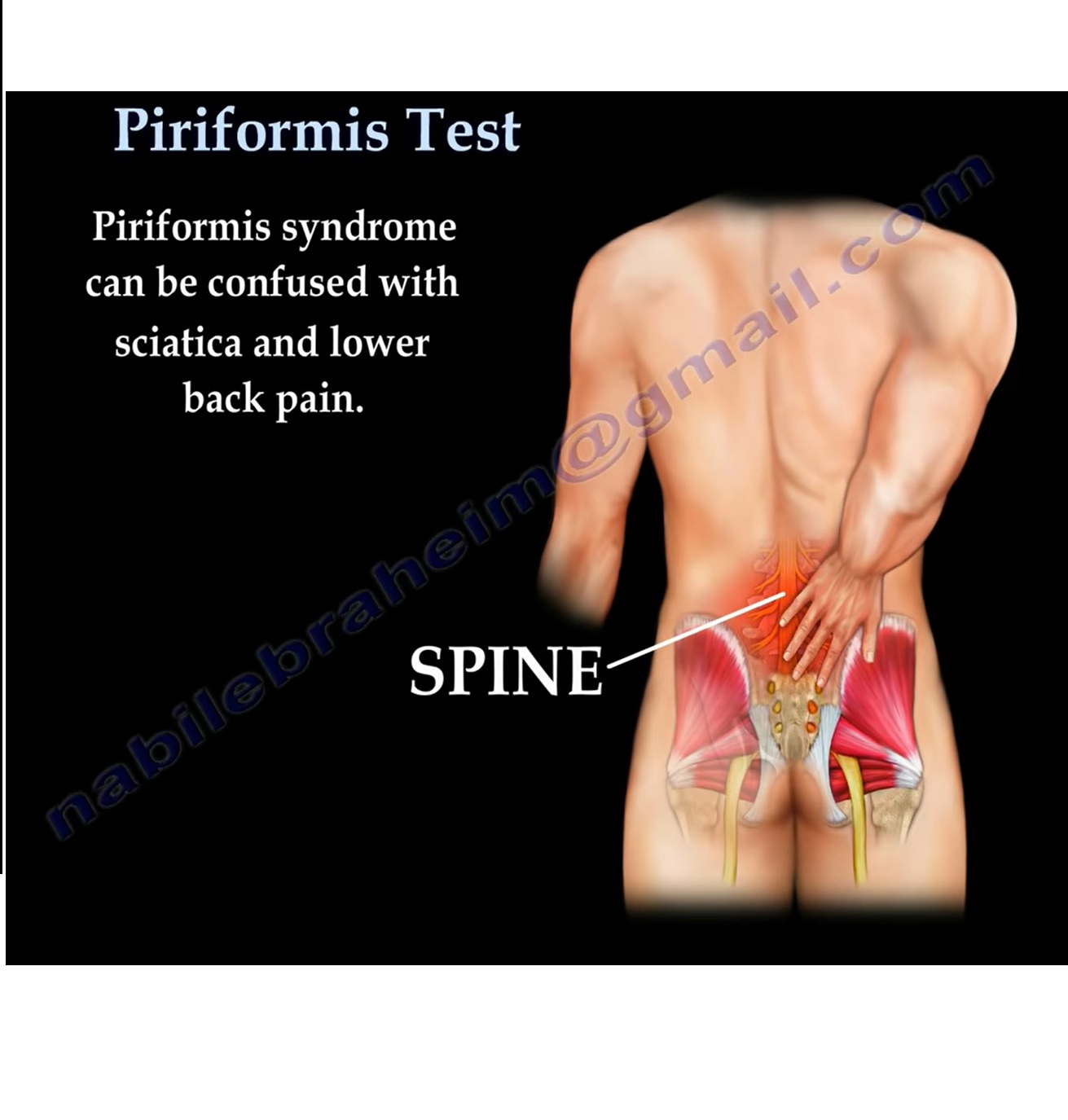
• Can be confused with Sciatica and lower Back pain.
• Sometimes it is hard to differentiate between Piriformis syndrome and lumbar spinal disc Herniation which both can cause sciatica.
Straight Leg Raising Test
• Straight leg raising test is the gold Standard as a clinical test to diagnose disc herniation that is irritating the sciatic nerve.
• Elevation of a painful Limb causes sciatica and radicular pain.
• If the test is positive, consider spine Problems.
• Herniated disc is typically the source of sciatic pain.
The piriformis muscle arises from the anterolateral Part of the sacrum and is Inserted into the posterior aspect of the greater Trochanter (deep into the Buttock).
Pain associated with piriformis Syndrome is usually deep in the buttock and posterior thigh.
It may also include the posterior Aspect of the leg due to Irritation of the sciatic nerve (sometimes misdiagnosed as lumbar spine disc Pathology).
The patient will complain of pain in the buttock, Posterior thigh, and may have “pins and needles” down the leg.
There are two tests Commonly used to diagnose piriformis Syndrome.
• Lasegue’s Maneuver (stretching the nerve)
• Stretching the Piriformis
Lasegue’s Maneuver
Reproduction of the pain by the hip being flexed to 90 degrees and the knee
extended.
The test can also be done with the patient on the side
Stretching the Piriformis
- When stretching the piriformis muscle, assess if Passive stretching of the muscle is predisposed to or causes pressure on the sciatic nerve.
- By adducting and internally rotating the hip, this maneuver will stretch the piriformis and will compress the nerve.
- This maneuver will reproduce the patient’s symptoms
- Also during the maneuver, when the examiner adds pressure to the posterior part of the buttock, the patient will complain of severe tenderness and pain
Courtesy Prof Nabile ebraheim, Professor of Orthopaedic Surgery and Trauma, University of Toledo, Ohio, United States.

Hi, l have terrible thigh and groin pain that began 4 months ago. I cannot lift my legs to walk due to the severity of the pain and weakness in my thighs. I must use 2 walking sticks to walk one inch at a time. Before 4 months ago l was able to walk properly and even run. I am 60 years of age. Can you please tell me which food will decrease my pain, God Bless, kind regards Maria
The only thing that has helped me with this is muscle relaxers.I start physical therapy soon! The pain can be unbearable!
I think I have this condition. Please provide me with as much information as possible. I’m especially interested in exercises that might lessen the pain. Thank you,
Rebecca