
Courtesy: Prof Nabil Ebraheim, University of Toledo, Ohio, USA
Paronychia
1. Basic Concept
Paronychia is an infection or inflammation of the nail fold.
It can be classified into:
- Acute paronychia
- Chronic paronychia
2. Acute Paronychia
Definition
Acute paronychia is an acute infection of the nail fold.
It is one of the common hand infections and usually affects a single digit.
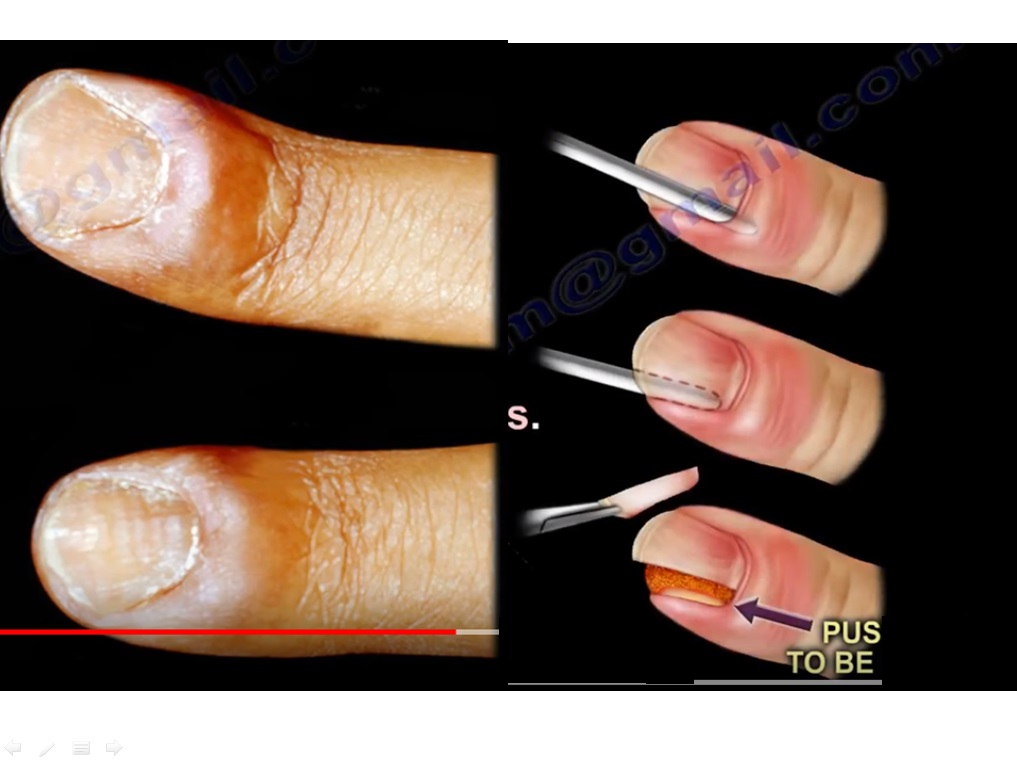
Clinical Features
The nail fold may be:
- Tender
- Red
- Swollen
- Fluctuant
- Associated with pus when an abscess develops
3. Causes
Acute paronychia commonly follows trauma to the nail fold, including:
- Hangnail
- Nail biting
- Manicuring
- Other minor trauma
Common Organism
Staphylococcus aureus is the most common organism mentioned.
4. Treatment of Acute Paronychia
Early Infection
If there is no established abscess:
- Antibiotics may be used when indicated.
- The lecture mentions clindamycin and amoxicillin-clavulanate (Augmentin).
Abscess
If an abscess has developed:
Incision and drainage
may be required, with:
- Partial or total nail removal when necessary
- Appropriate antibiotics
5. Chronic Paronychia
Chronic paronychia differs significantly from acute paronychia.
It is described in the lecture as a fungal infection/inflammation of the nail fold, with:
Candida albicans being the common organism mentioned.
Clinical Features
- Usually affects multiple digits
- Chronic or recurrent course
- Nail fold is:
- Swollen
- Inflamed
- Red
- Tender
- No abscess
Unlike acute paronychia, chronic paronychia does not respond to antibiotics.
6. Risk Factors
Chronic paronychia is associated with:
- Diabetes
- Repeated exposure to water
- Exposure to chemical irritants
- Occupations involving frequent wet work
Examples mentioned include:
- Dishwashers
- Bartenders
- Gardeners
- Housekeepers
- Laundry workers
The lecture also mentions association with certain medications and HIV-positive patients.
7. Treatment of Chronic Paronychia
First-line Measures
- Avoid water exposure
- Reduce exposure to chemical irritants
- Use topical antifungal agents
The lecture mentions miconazole.
Additional Treatment
- Topical corticosteroids may be used.
Resistant Cases
Surgery is considered a last resort.
A procedure such as marsupialization may be performed in severe, resistant cases.
Acute vs Chronic Paronychia
| Feature | Acute | Chronic |
|---|---|---|
| Main process | Acute infection | Chronic fungal/inflammatory process |
| Common organism | Staphylococcus aureus | Candida albicans |
| Digits | Usually single | Often multiple |
| Abscess | May be present | Usually absent |
| Course | Acute | Recurrent/chronic |
| Antibiotics | May be used | Not effective |
| Main treatment | Drain abscess when present | Avoid water, topical antifungal ± steroid |
| Surgery | I&D when abscess present | Last resort, marsupialization |
Exam Pearls
- Acute paronychia = painful, red, swollen nail fold, often single digit
- Staphylococcus aureus is the common organism mentioned
- Abscess formation requires incision and drainage
- Chronic paronychia = multiple digits, recurrent, no abscess
- Chronic paronychia is associated with water and chemical exposure
- Candida albicans is the organism mentioned
- Chronic paronychia does not respond to antibiotics
- Treatment includes avoidance of water + topical antifungal ± topical steroid
- Marsupialization is a last-resort treatment for resistant cases.



Leave a Reply