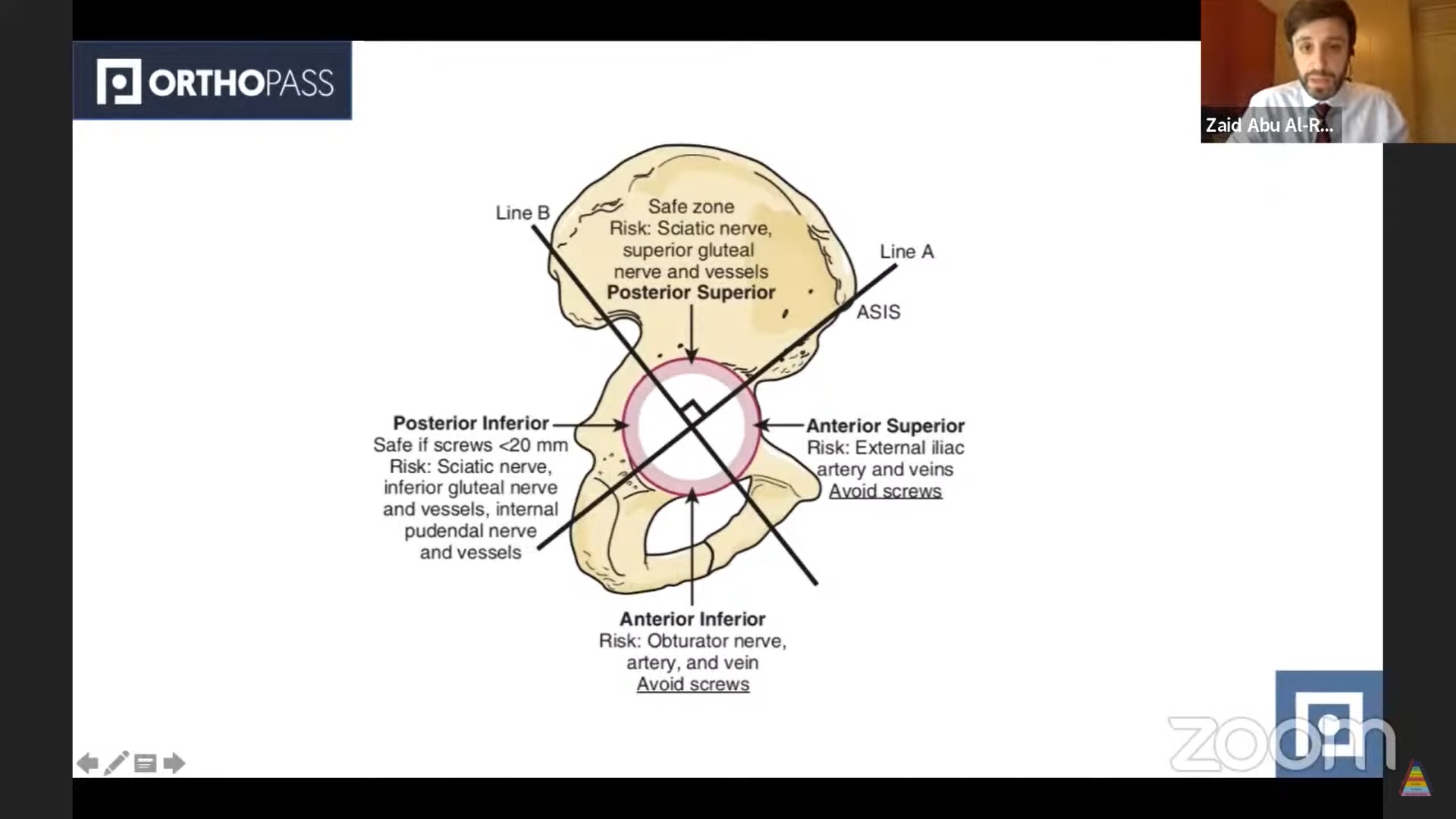
Must-Know MCQs for the Fellowship Exam This exam must be completed in 20 minutes. Click here to start the exam Time left: 1200 1. Regarding obstetric brachial plexus injuries, which of the following is not typically associated with Erb’s palsy? Increased likelihood of skin infection Forearm pronation Shoulder adduction Anterior shoulder dislocation Elbow extension(Question 1 of 10)2. Which of the following is the most sensitive clinical sign for detection of developmental dysplasia of the hip (DDH) in a baby aged 6 months? Asymmetric skin folds in the thighs Galeazzi test Barlow’s test Ortolani’s test Limited hip abduction in flexion(Question 2 of 10)3. Comparing total hip replacement for displaced femoral neck fracture to hemiarthroplasty, total hip replacement would be expected to result in : Poor long term patient satisfaction Increased acetabular wear Increased rate of revision surgery Reduced need for blood transfusion Reduced dislocation rate(Question 3 of 10)4. A 25 years old patient is admitted with a forearm radius and ulna shaft fractures. You proceed with an open reduction and internal fixation. Regarding the implant used, which of the following statements is CORRECT: The bending rigidity of plate is proportional to the second power of it’s thickness The pullout strength of screw is proportional to the core diameter of the screws Compared to titanium, the elastic modulus of stainless steel is closer to the cortical bone. In transverse fractures, a convex pre-bending of the plate is required to help achieving compression Maximum efficiency of plate is achieved when it’s applied to the tension side of the fracture.(Question 4 of 10)5. The highest concentration of proteoglycans is found in which layer of the articular cartilage? Tidemark Calcified Middle Superficial Deep(Question 5 of 10)6. The safe insertion zone of acetabular screws in total hip replacement is : Posterolateral Anteroinferior Anterosuperior Posterosuperior Posteroinferior(Question 6 of 10)7. While performing a total knee replacement for a knee with valgus deformity, to balance the coronal plane, which of the following statement is CORRECT : The iliotibial band should be released with a Z-type release if the knee is tight in flexion If there is a valgus deformity of greater than 15 degree, both the iliotibial band and the popliteal tendon will often need to be released The osteophytes are the the last structures that should be removed The popliteus should be released before the lateral capsule If the lateral collateral ligament is released, there is no need to consider the use of a constrained-type prosthesis(Question 7 of 10)8. A 12 year old girl attends the outpatient clinic for follow up of thoracic spine scoliosis. The cobb angle is measured at 30 degrees and she is found to be Risser grade 2. The best management option would be: Brace Observation Repeat X-ray in 6 months Posterior deformity correction and spinal fusion Anterior release and posterior deformity correction and spinal fusion(Question 8 of 10)9. Which of the following would be an evidence-based indication for operative intervention for a typical thoracolumbar burst fracture of the spine? Canal encroachment with static neurological deficit Kyphosis greater than 30 degrees Canal encroachment without neurological deficit Lack of posterior midline tenderness on examination Loss of anterior vertebral height of less than 50%(Question 9 of 10)10. During a primary total knee replacement on a patient with previous fixed flexion deformity, you complete the distal femur and proximal tibia cuts. The gap is tight in extension, but balanced in flexion, what is the most appropriate first step to address this Increase size of femoral component Thinner tibial insert Resect more tibia Resect more distal femur Posterior capsule release(Question 10 of 10) Loading ... Courtesy: Zaid Al-RUb, FRCS Orth, Founder, OrthoPass Post Views: 5,205 Related Posts Hand Exam for the Fellowship ExamCourtesy: Dr Philip Mathew, Chelsea and WestMinster NHS Trust, UK Hands for the Fellowship ExamCourtesy: Prof Bijayendra Singh, Kent, UK Polytrauma for the Fellowship examCourtesy: Dr Ajith Appuhamy, FRCS Tr and Orth, FEBOT, SriLanka POLYTRAUMA DEFINITION: Defined as a…
Leave a Reply