• Skip to main content
  • Skip to secondary menu
  • Skip to primary sidebar
OrthopaedicPrinciples.com

OrthopaedicPrinciples.com

Integrating Principles and Evidence

Integrating Principles and Evidence

  • Home
  • Editorial Board
  • Our Books
    • Evidence Based Orthopaedic Principles
  • Courses
  • Exams
  • Reviews
  • Live Program
  • Contact

Metastatic Spinal Tumours

Courtesy: Orthopaedic Principles ICL Kochi by Dr Hitesh Gopalan

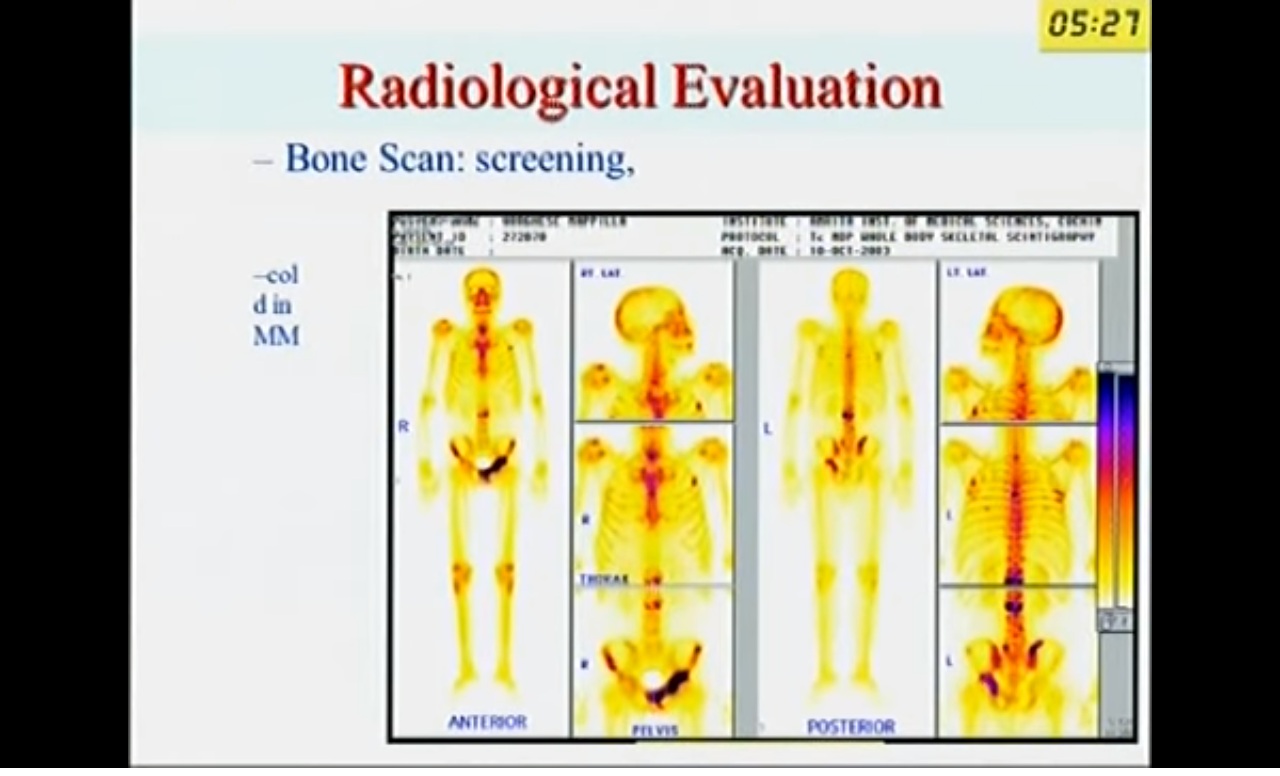
• Metastatic disease of the spine is quite common, Skeletal system is the third most common organ affected by metastatic cancer, after the lungs and the liver
• Symptomatic spinal metastasis is the initial manifestation of malignancy in 12% to 20% of cases and metastasis is the most commonly encountered malignant lesion in the spine.
• The primary tumours most likely to metastasize to the vertebral column are breast (16% to 37% of breast cancer patients develop spine metastases), prostate (9% to 15%), lung (12% to 15%), kidney (3% to 6%), and thyroid (4%).
• Thoracic spine is most commonly involved, possibly because it contains the greatest volume of bone marrow for receiving metastatic deposits
• Symptomatic lesions typically are found in the thoracic (68% to 70%), lumbosacral (16% to 22%) and cervical (8% to 15%) spine.

PATHOGENESIS
• Malignant cells are generally thought to spread to the spine hematogenously, either through segmental arteries to the highly vascular vertebral marrow or by retrograde spread through the valveless extradural Batson’s venous plexus.
Post Views: 1,939

Related Posts

  • Cervical #Spine Tumours

    Courtesy: Prof Nabil Ebraheim, University of Toledo, Ohio, USA

  • Cervical #Spine Tumours

    Courtesy: Prof Nabil Ebraheim, University of Toledo, Ohio, USA

  • Cervical #Spine Tumours

    Courtesy: Prof Nabil Ebraheim, University of Toledo, Ohio, USA

Reader Interactions

Leave a Reply

Your email address will not be published. Required fields are marked *

Primary Sidebar

Follow Us

instagram slideshare

Categories

  • -Applied Anatomy
  • -Approaches
  • -Basic Sciences
  • -Cartilage & Meniscus
  • -Classifications
  • -Examination
  • -Foot and Ankle
  • -Foot and Ankle Trauma
  • -FRCS(Tr and Orth) tutorials
  • -Gait
  • -Hand and Wrist
  • -Hand and Wrist Trauma
  • -Hand Infections
  • -Hip and Knee
  • -Hip Preservation
  • -Infections
  • -Joint Reconstruction
  • -Knee Arthroplasty
  • -Knee Preservation
  • -Metabolic Disorders
  • -Oncology
  • -OrthoBiologics
  • -OrthoPlastic
  • -Paediatric Orthopaedics
  • -Paediatric Trauma
  • -Patellofemoral Joint
  • -Pelvis
  • -Peripheral Nerves
  • -Principles
  • -Principles of Surgery
  • -Radiology
  • -Rheumatology
  • -Shoulder and Elbow
  • -Shoulder and Elbow Arthroplasty
  • -Spine Deformity
  • -Spine Oncology
  • -Spine Trauma
  • -Spine, Pelvis & Neurology
  • -Sports Ankle and Foot
  • -Sports Elbow
  • -Sports Knee
  • -Sports Medicine
  • -Sports Medicine Hip
  • -Sports Shoulder
  • -Sports Wrist
  • -Statistics
  • -Technical Tip
  • -Technology in Orth
  • -Trauma
  • -Trauma (Upper Limb)
  • -Trauma Life Support
  • -Trauma Reconstruction
  • Book Shelf
  • Book Shelf Medical
  • Careers
  • Case Studies and Free Papers
  • DNB Ortho
  • Evidence Based Orthopaedic Principles
  • Evidence Based Orthopaedics
  • Exam Corner
  • Fellowships
  • Guest Editor
  • Guest Reviews
  • Image Quiz
  • Instructional Course Lectures
  • Journal Club
  • MCQs
  • Meetings and Courses
  • Multimedia
  • News and Blog
  • Plaster Techniques
  • Podcasts
  • Public Health
  • Rehabilitation
  • Research
  • Shorts and Reels
Copyright@orthopaedicprinciples.com. All right rerserved.