
Courtesy: Prof Nabil Ebraheim, University of Toledo, Ohio, USA
Spine Surgery High-Yield Review: Waddell Signs, Fractures, Adjacent Segment Disease, and Thoracic Discs
Waddell Non-Organic Signs
-
Waddell signs identify non-organic or behavioral physical responses.
-
They indicate symptom exaggeration, potential malingering, or secondary psychological gain.
-
They remain controversial in disability and medicolegal evaluations.
-
They assess non-anatomical tenderness, axial loading simulation, distraction testing, regional sensory disturbances, and overreaction.
Lumbar Disc Herniation & Gait Pathology
-
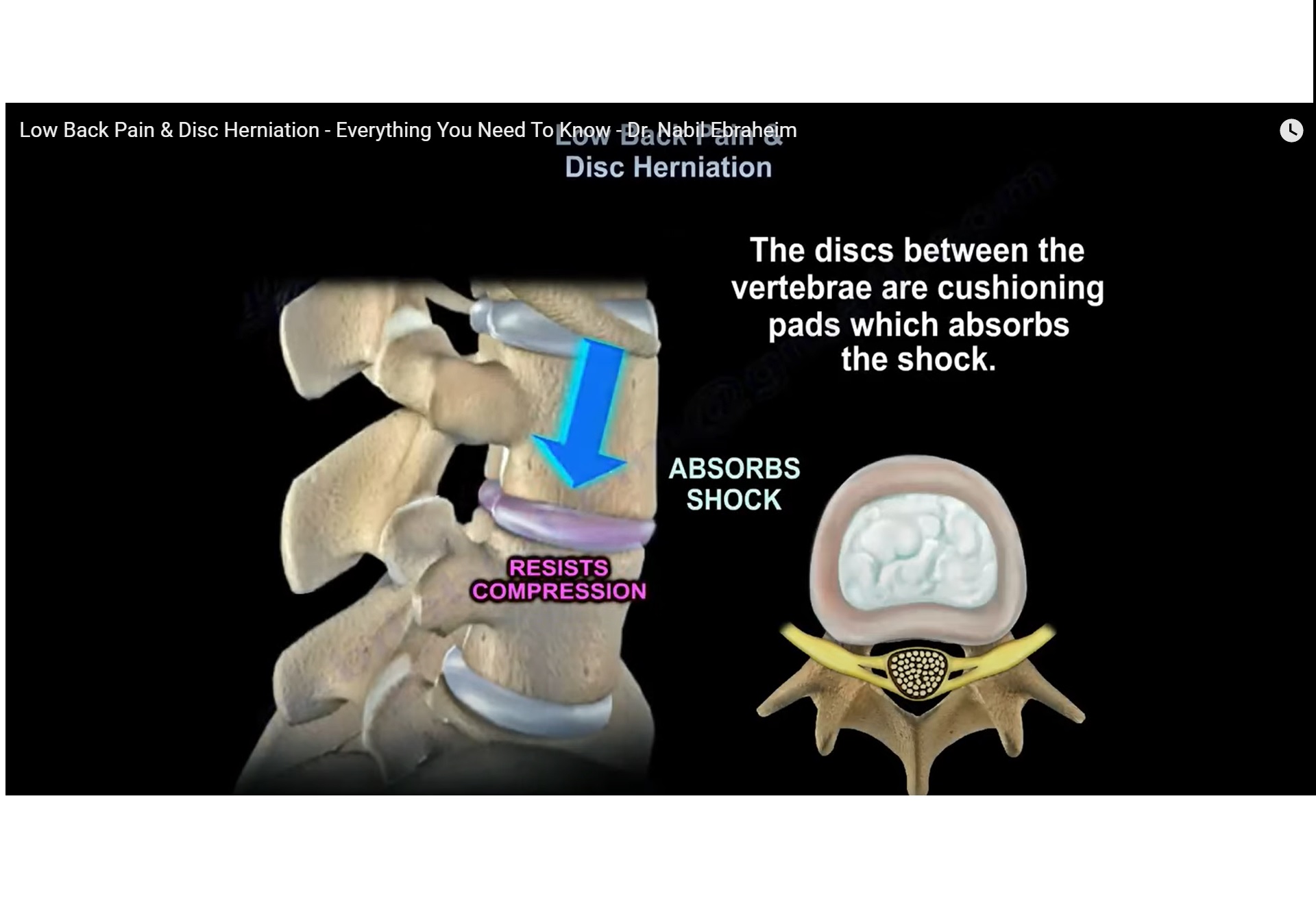
An L4–L5 posterolateral disc herniation compresses the traversing L5 nerve root.
-
L5 motor innervation supplies the gluteus medius via the superior gluteal nerve.
-
Denervation leads to hip abductor weakness.
-
The patient manifests a classic Trendelenburg gait.
Thoracolumbar Burst Fractures
-
Stable burst fractures yield equivalent clinical outcomes with rigid orthosis bracing or surgical stabilization.
-
Stable patterns allow early ambulation in a molded orthosis.
-
Absolute Emergency Indication: Progressive neurological deficit in the presence of canal occlusion.
-
Low lumbar burst fractures associated with laminar fractures risk entrapped nerve roots within the fractured posterior elements.
-
These injuries carry a high risk of concomitant dural tears.
-
Surgical management requires wide laminectomy, freeing entrapped neural elements, dural repair, reduction, and instrumented fixation.
-
Pediatric seatbelt distraction flexion injuries (Chance-type) carry a high incidence of intra-abdominal hollow viscus disruptions, particularly colon perforations.
Intervertebral Disc Degeneration & Adjacent Segment Disease (ASD)
-
Primary Driver: Genetics represents the single dominant factor determining intervertebral disc degeneration.
-
Adjacent Segment Pathology: Adjacent segment disease manifests as adjacent instability, spondylolisthesis, secondary disc herniation, facet arthropathy, or adjacent vertebral fracture.
-
Performing a laminectomy immediately adjacent to an instrumented fusion segment accelerates adjacent segment breakdown.
-
Approximately 30% of lumbar fusion patients develop adjacent segment degeneration by 10 years post-surgery.
-
Lumbar total disc arthroplasty (TDA) aims to preserve motion and lower adjacent level mechanical stress.
Thoracic Disc Herniations
-
Occur predominantly in adult males.
-
Radicular Symptoms: Dermatomal band-like pain radiating along the ribs toward the anterior chest or abdomen.
-
Cord Compression Manifestations:
-
Gait disturbance and spasticity.
-
Completely normal upper extremity neurological examination.
-
Bilateral lower extremity upper motor neuron signs (hyperreflexia, sustained clonus, positive Babinski sign).
-
-
Imaging: Begin with plain thoracic spine radiographs, followed by a thoracic MRI.
-
False-Positive MRI Rate: High rate of asymptomatic thoracic disc protrusions on cross-sectional MRI.
-
Surgical Threshold: Reserved for progressive thoracic myelopathy or refractory radicular pain.
-
Operative Warning: Isolated posterior laminectomy is strictly contraindicated for central thoracic disc herniations due to a high risk of iatrogenic paraplegia from cord retraction. Safe decompression requires anterior or posterolateral approaches (transthoracic, costotransversectomy, or lateral extracavitary).
Leave a Reply