
Courtesy Dr Cholawish Chanlalit, Dr Ashok Shyam, Ortho TV
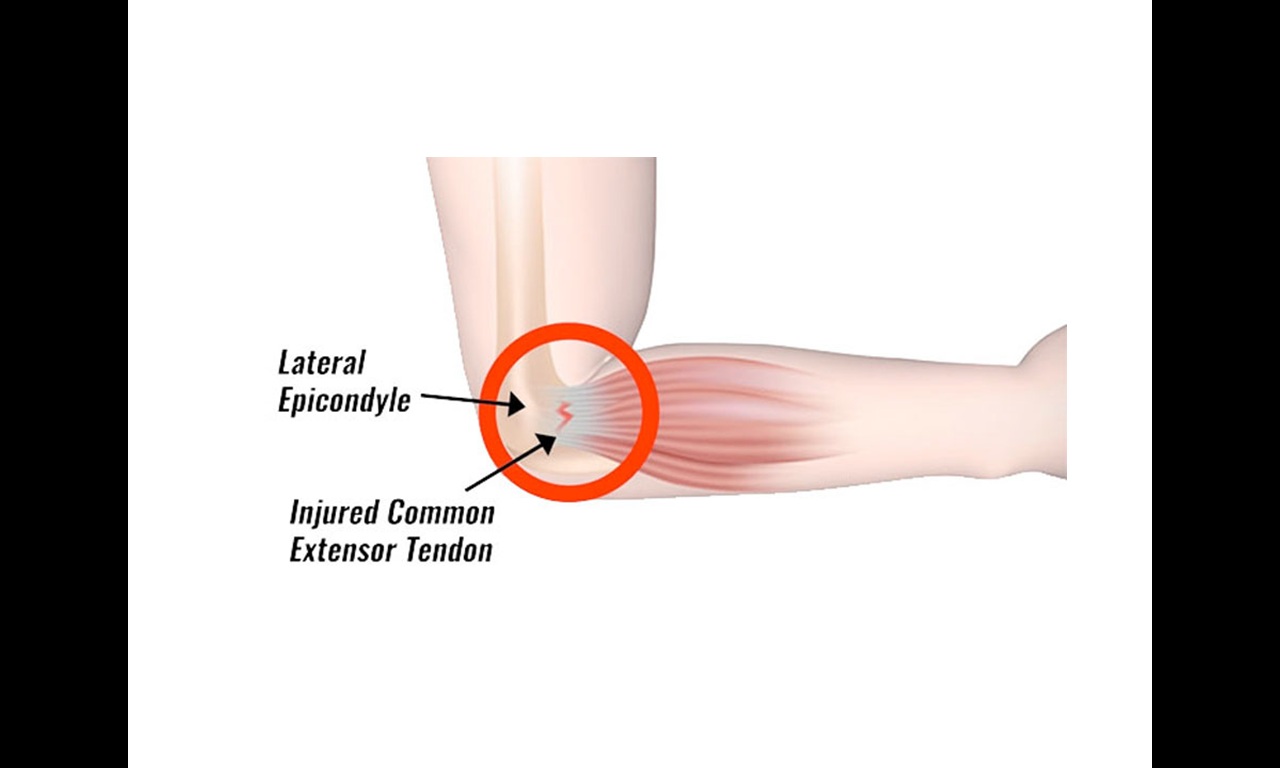
Lateral epicondylitis, commonly known as tennis elbow, is one of the most frequent causes of lateral elbow pain. Despite its name, it is not primarily an inflammatory condition. Instead, it represents a degenerative tendinopathy involving the origin of the extensor carpi radialis brevis (ECRB) tendon.
An important clinical concept is that chronic lateral elbow pain is often multifactorial. Tendon degeneration may coexist with intra articular pathology, synovial impingement, cartilage lesions, or elbow instability. Successful treatment depends on identifying all contributing pain generators.
Pathophysiology
What Happens in Tennis Elbow?
Histological studies demonstrate:
- Tendinosis rather than tendinitis
- Fibroblastic hyperplasia
- Collagen disorganization
- Degenerative tissue changes
- Minimal acute inflammatory response
The ECRB tendon is most commonly involved.
Epidemiology
- Peak incidence between 40 and 50 years of age
- More commonly affects the non dominant arm
- Associated with repetitive gripping and wrist extension activities
Clinical Presentation
Symptoms
- Localized pain over the lateral elbow
- Pain during gripping activities
- Pain while lifting objects
- Difficulty with repetitive wrist activities
Clinical Examination
Key findings include:
- Tenderness over the lateral epicondyle
- Pain reproduced with resisted wrist extension
- Pain during gripping tasks
The diagnosis is largely clinical.
Conservative Management
Treatment Goals
- Reduce pain
- Promote tendon healing
- Restore strength and function
- Enable progressive tendon loading
Exercise Therapy
The cornerstone of treatment is structured rehabilitation.
Recommended Exercises
- Eccentric strengthening
- Concentric strengthening
- Progressive loading programs
Exercise therapy addresses the underlying tendon degeneration and remains the most important component of nonoperative treatment.
Additional Conservative Measures
- Activity modification
- Physiotherapy
- Counterforce bracing
- Nonsteroidal anti inflammatory medications
- Selected injection therapies
Most patients improve without surgery.
When Should Surgery Be Considered?
Indications
Surgical treatment may be considered when:
- Symptoms persist beyond six months
- Adequate conservative treatment has failed
- Functional limitations remain significant
Clinical experience suggests that the success rate of continued nonoperative treatment decreases after prolonged symptoms.
Role of Imaging
MRI Evaluation
Magnetic resonance imaging is useful when:
- Symptoms are atypical
- Conservative treatment fails
- Additional pathology is suspected
Benefits of MRI
- Identifies ECRB degeneration
- Localizes the pain generator
- Detects associated pathology
Coronal MRI images are particularly useful for evaluating the ECRB origin.
Associated Pathology Detected by MRI
MRI may reveal:
- Calcific tendinitis
- Synovial abnormalities
- Cartilage lesions
- Ligament pathology
- Elbow instability
Surgical Principles
The objective of surgery is to remove or release the pathological tissue responsible for pain.
Traditional Open Surgery
Advantages:
- Direct visualization
- Familiar technique
Limitations:
- Requires dissection through normal tissue
- Greater soft tissue disruption
Arthroscopic Surgery
Advantages
- Minimally invasive
- Direct visualization of pathology
- Preservation of healthy tissue
- Ability to identify intra articular abnormalities
Arthroscopy permits treatment of multiple pain generators during the same procedure.
Arthroscopic Management
Surgical Goals
ECRB Treatment
- Release of the diseased tendon
- Debridement of degenerative tissue
Important Technical Consideration
Care must be taken to avoid injury to the lateral collateral ligament complex.
Additional Benefits
Arthroscopy allows inspection of:
- Synovium
- Cartilage surfaces
- Ligaments
- Joint stability
This is particularly valuable in patients with chronic symptoms.
Synovial Plica Syndrome
What is a Synovial Plica?
A synovial plica is a fold of synovial tissue that can become thickened and impinge within the elbow joint.
Symptoms
- Lateral elbow pain
- Snapping sensation
- Mechanical symptoms
Importance
Many patients diagnosed with persistent tennis elbow may actually have symptomatic plica tissue contributing to their symptoms.
Treatment
- Arthroscopic excision of the plica
Calcific Tendinitis
Some patients develop calcific deposits within the tendon origin.
Clinical Features
- Persistent pain
- Failure of standard treatment
- Poor response to injections or shockwave therapy
Treatment
- Arthroscopic identification
- Debridement of calcific deposits
Cartilage Lesions
Cartilage injuries may mimic or coexist with lateral epicondylitis.
Common Sites
- Capitellum
- Radial head
Clinical Significance
These lesions may contribute significantly to chronic pain and are frequently overlooked.
Treatment
Management depends on:
- Lesion size
- Location
- Associated symptoms
Elbow Instability
An Underrecognized Cause of Lateral Elbow Pain
Instability can produce persistent symptoms despite successful treatment of tendon pathology.
Common Symptoms
- Pain during push ups
- Pain during weight bearing activities
- Mechanical symptoms
- Feeling of instability
Risk Factors
- Long standing tendon degeneration
- Multiple corticosteroid injections
- Previous surgery around the lateral elbow
Clinical Evaluation
Important tests include:
Apprehension Test
Assesses instability during elbow motion.
Push Up Test
Reproduces symptoms under load.
Chair Rise Test
Evaluates pain and instability during weight bearing.
Imaging and Arthroscopy
MRI
May demonstrate:
- Lateral ligament insufficiency
- Associated pathology
Arthroscopy
Allows direct visualization of:
- Joint opening
- Ligament incompetence
- Dynamic instability
Treatment of Instability
When instability is confirmed:
- Ligament reconstruction may be required
- Arthroscopy can assist in diagnosis and surgical planning
Restoring stability often provides significant pain relief.
Key Clinical Observations
Clinical experience has shown that:
- Many patients with chronic lateral elbow pain have multiple pain generators.
- Synovial plica is a common associated finding.
- Isolated ECRB tendinopathy is less common in patients requiring surgery.
- Failure to recognize associated pathology may explain poor treatment outcomes.
Differential Diagnosis of Chronic Lateral Elbow Pain
Conditions that may mimic or coexist with lateral epicondylitis include:
- Synovial plica syndrome
- Cartilage lesions
- Elbow instability
- Radial tunnel syndrome
- Calcific tendinitis
- Osteochondral pathology
Take Home Messages
- Tennis elbow is primarily a degenerative tendinopathy rather than an inflammatory condition.
- Most patients improve with a structured conservative program centered on progressive strengthening exercises.
- Surgery is generally reserved for symptoms persisting beyond six months despite adequate nonoperative treatment.
- MRI is valuable for identifying associated pathology and determining the true pain generator.
- Chronic lateral elbow pain is often multifactorial, with synovial plica, cartilage lesions, and instability frequently contributing to symptoms.
- Arthroscopic surgery offers a minimally invasive method to diagnose and treat multiple causes of lateral elbow pain simultaneously.
- Successful outcomes depend on treating all contributing pathologies, not just the ECRB tendon lesion.

Leave a Reply