
Dr David Mayman, Dr Ashok Shyam, Ortho TV
Perioperative and Intraoperative Pain Management in Total Knee Arthroplasty
Anesthesia Modalities: Neuraxial Dominance
-
Nearly 100% of patients receive neuraxial anesthesia (spinal or epidural) unless clear medical contraindications exist.
-
Contraindications: Extensive lumbar spine instrumented fusion, severe uncorrected coagulopathy, or pulmonary hypertension (which may necessitate controlled general anesthesia).
-
Clinical Benefits of Neuraxial Anesthesia:
-
Reduced operative time.
-
Decreased intraoperative blood loss and transfusion rates.
-
Significant reduction in postoperative deep vein thrombosis (DVT).
-
Lower early postoperative pain scores.
-
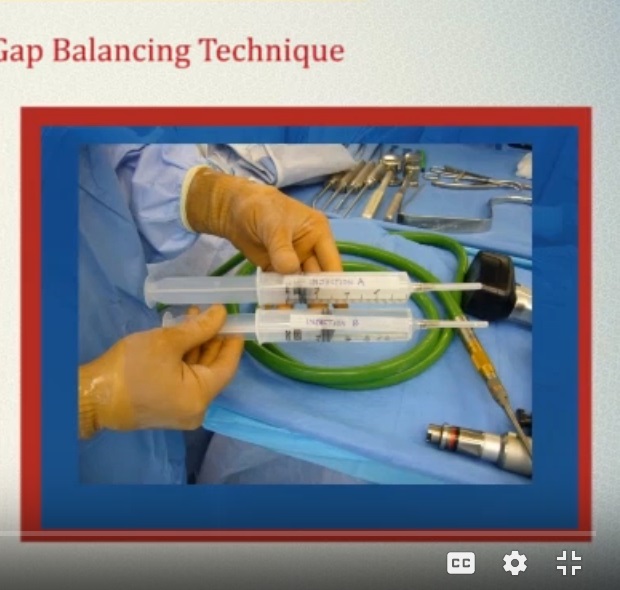
Periarticular Multimodal Injections (The Ranawat Cocktail)
-
Pioneered by Dr. Chitranjan Ranawat over 20 years ago; local infiltration targets periosteum, posterior capsule, and surrounding capsular sleeves.
-
Safety of Steroids in the Cocktail: Inclusion of methylprednisolone acetate (Depo-Medrol) in hundreds of thousands of cases has shown no increased risk of periprosthetic joint infection (PJI).
-
Non-Steroidal Alternatives: Ketorolac is widely used as a substitute for corticosteroid agents.
-
Liposomal Bupivacaine (Exparel): Clinical utility has leveled off; studies demonstrate high cost without superior analgesia compared to traditional bupivacaine mixtures. Modern research is evaluating extended-release bupivacaine combined with meloxicam.
-
Anatomical Safety Warning:
-
Exercise extreme caution during infiltration of the posterolateral corner of the knee.
-
Deep extravasation around the fibular neck risks transient common peroneal nerve palsy.
-
While typically non-permanent, it causes an acute postoperative foot drop that creates significant clinical anxiety over the first 24 hours.
-
Peripheral Regional Nerve Blocks
-
Femoral Nerve Block (FNB) Obsolescence: Previously standard of care at Hospital for Special Surgery (HSS), FNBs cause extensive quadriceps motor block, increasing the incidence of postoperative patient falls.
-
Adductor Canal Block (ACB):
-
Ultrasound-guided block within the subsartorial (Hunter’s) canal targeting the saphenous nerve and branches of the anterior femoral cutaneous nerve.
-
Provides dense sensory analgesia to the anterior and medial knee while sparing quadriceps motor function.
-
Achieves equivalent pain relief to femoral nerve blocks with superior early ambulatory capacity.
-
-
Combined ACB and Periarticular Cocktail: HSS clinical trials confirm that combining an adductor canal block with intraoperative periarticular injection yields superior analgesia compared to either technique alone.
-
IPAC Block (Infiltration between Popliteal Artery and Capsule of the Knee):
-
Targets sensory articular branches supplying the posterior knee capsule without motor block of the tibial or peroneal nerves.
-
Combining ACB + IPAC + Periarticular Injection provides complete 360-degree pain coverage (anterior, medial, and posterior joint compartments).
-
Pharmacological Adjuncts, Cryotherapy, and Early Rehabilitation
-
Duloxetine (Cymbalta) Protocol:
-
Dose: Once-daily oral administration for 2 weeks postoperatively.
-
Trial outcomes (160 patients): Reduced total postoperative narcotic consumption by nearly 50%.
-
Precaution: Monitor baseline serum sodium; duloxetine can induce or exacerbate hyponatremia.
-
-
Cold Therapy (Cryotherapy):
-
Protocol: Apply ice for 20 minutes at least 4 times daily (up to 10 times daily as needed).
-
Safe, non-pharmacologic modality that effectively reduces postoperative edema and secondary hyperalgesia.
-
-
Evolution of Early Physical Therapy:
-
High-intensity, aggressive early passive range-of-motion protocols have been abandoned.
-
Current practice focuses on gentle mobilization, unassisted gait re-education, and protected functional movement during the first postoperative week, preventing arthrogenic muscle flare-ups.
-
Summary Protocol: The Modern Multimodal Pathway
-
Anesthesia: Neuraxial spinal or epidural block.
-
Regional Blocks: Combined ultrasound-guided Adductor Canal Block (ACB) + IPAC block.
-
Intraoperative Infiltration: Wide periarticular cocktail (avoiding the deep posterolateral corner).
-
Systemic Non-Opioid Adjuncts: Oral duloxetine for 14 days; pre-existing hyponatremia screening.
-
Physical Modalities: Regular scheduled cryotherapy (20-minute sessions) and gentle, non-aggressive functional mobilization during week one.
 Courtesy:
Leave a Reply