
Courtesy: Prof Nabil Ebraheim, University of Toledo, Ohio, USA
Introduction
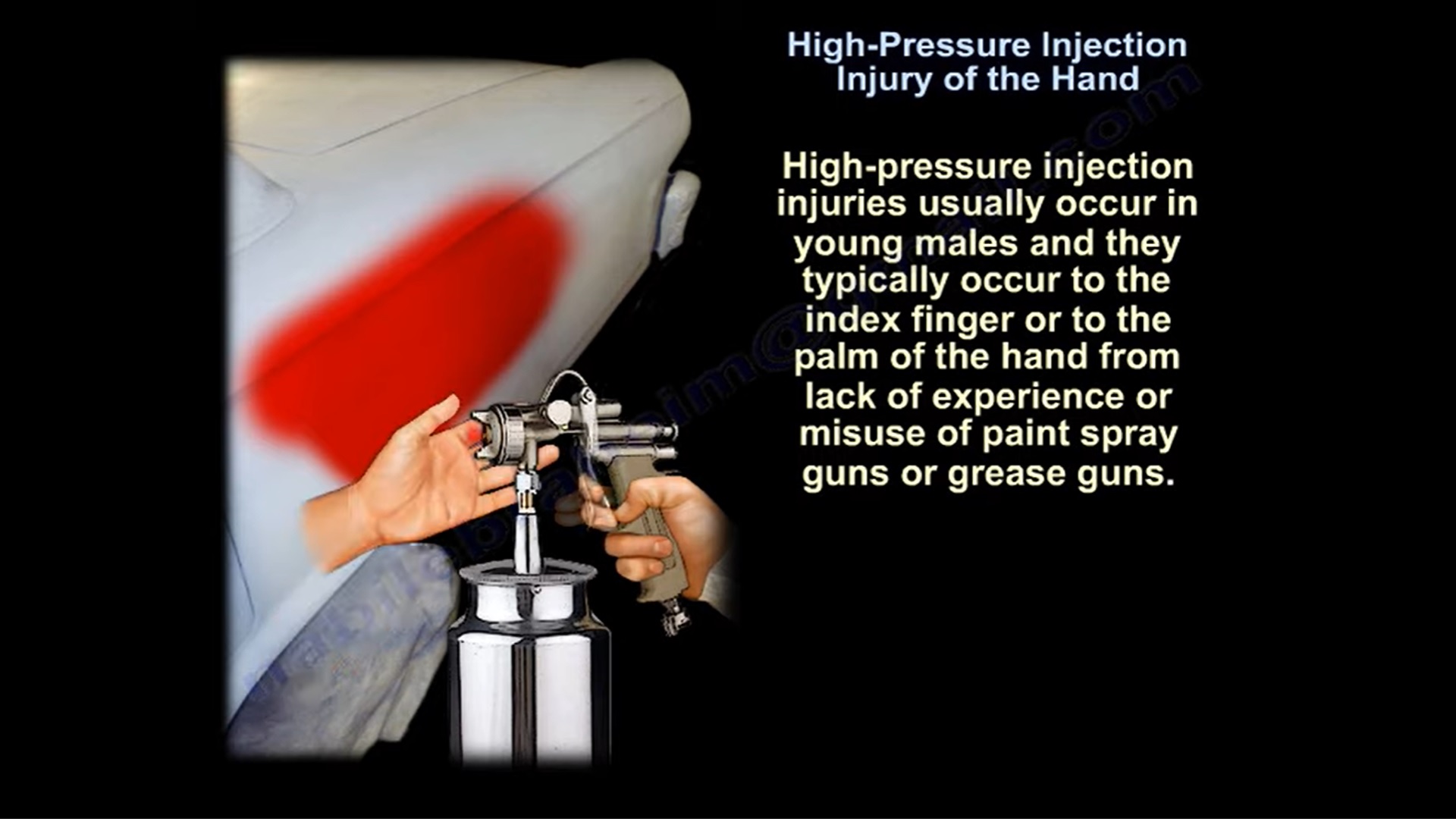
High-pressure injection injuries are severe hand injuries caused by accidental injection of material under high pressure into soft tissues.
Common Causes
- Paint spray guns
- Grease guns
- Industrial high-pressure equipment
Key Clinical Insight
These injuries may appear minor externally but are true surgical emergencies due to extensive deep tissue damage.
Epidemiology
Typical Patient Profile
- Young male workers
- Occupational exposure
Commonly Affected Areas
- Non-dominant hand
- Index finger (?50% of cases)
Risk Factors
- Inexperience
- Improper equipment handling
- Industrial work environments
Mechanism of Injury
High-Pressure Injection
- Pressures often exceed 7,000 psi
Effect on Tissue
- Material enters through a small puncture wound
- Rapid spread along tissue planes
Spread of Injected Material
Injected substances may track through:
- Flexor tendon sheath
- Thenar space
- Midpalmar space
- Parona’s space (proximal forearm extension)
Pathophysiology
Damage occurs via three mechanisms:
1. Mechanical Injury
- High-pressure force disrupts tissues
2. Chemical Toxicity
- Certain materials cause inflammation and necrosis
3. Compartment Effect
- Increased pressure — ischemia and tissue necrosis
Toxicity of Injected Materials
Least Destructive
- Water
- Latex-based paint
Intermediate Toxicity
- Grease
Most Destructive
- Oil-based paint
- Organic solvents
Clinical Impact of Oil-Based Paint
- Severe inflammation
- Extensive tissue necrosis
- High amputation rates
Clinical Features
External Appearance
- Small puncture wound
- Minimal early swelling
Important: Injury often appears deceptively mild
Symptoms
- Pain
- Swelling
- Progressive tissue tension
- Reduced finger movement
Examination Findings
- Small entry wound
- Increasing swelling
- Tenderness
- Possible neurovascular compromise
- Signs of compartment syndrome
Diagnosis
History
- Use of high-pressure equipment
- Injection of industrial materials
Clinical Examination
- Assess swelling and tissue tension
- Evaluate neurovascular status
Imaging
- X-ray
- May show radiopaque material
- Demonstrates spread along tissue planes
Prognostic Factors
1. Type of Injected Material
Worst Prognosis
- Oil-based paint
- Organic solvents
Amputation rates may exceed 60%
2. Delay in Treatment
- Delay > 10 hours ? significantly increased amputation risk
3. Location of Injury
Digits
- Worse prognosis
- Higher amputation rates
Palm
- Better prognosis
- More space for pressure dissipation
Management
Emergency Nature
This is a surgical emergency
Initial Management
- Broad-spectrum antibiotics
- Tetanus prophylaxis
- Limb elevation
Important Precautions
- Avoid digital nerve blocks
- Avoid tight dressings
May increase compartment pressure
Definitive Treatment
Urgent Surgical Exploration
Key Principles
- Early decompression
- Irrigation and debridement
- Removal of injected material
- Excision of necrotic tissue
Timing
- Surgery within 6 hours significantly reduces amputation risk
Complications
- Tissue necrosis
- Compartment syndrome
- Infection
- Stiffness
- Chronic pain
- Amputation
Amputation may still occur despite early treatment, especially with toxic substances
Key Take-Home Points
- Small wound – minor injury
- Most commonly affects non-dominant index finger
- Type of material and treatment delay determine prognosis
- Oil-based paint injuries have the worst outcomes
- Urgent surgical debridement (within 6 hours) is critical for limb salvage
Leave a Reply