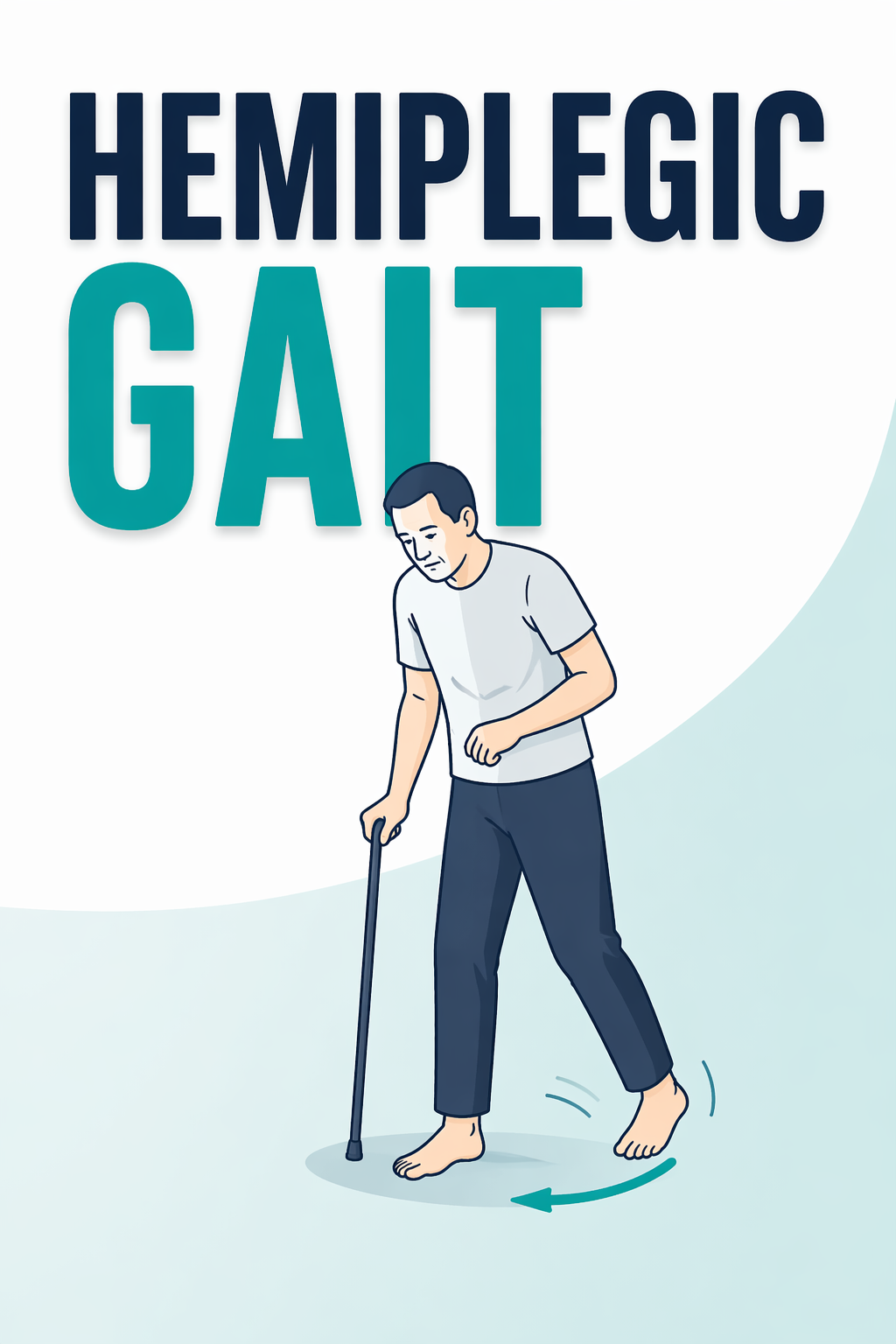
Hemiplegic gait is a characteristic walking pattern typically seen in individuals who have experienced a stroke, traumatic brain injury, or other conditions causing hemiplegia (paralysis on one side of the body).
Key Features
-
Circumduction: Because the affected leg is often physically “longer” due to muscle spasticity and an inability to flex the hip or knee properly, the patient swings the leg out to the side in a semi-circle to clear the ground.
-
Equinovarus Foot Position: The foot on the affected side is often inverted and pointed downward (plantarflexed), which can cause the toes to drag during the swing phase.
-
Upper Limb Posture: The arm on the affected side is typically carried in a fixed, “guarded” position—flexed at the elbow, adducted (held close to the body), and with the wrist and fingers curled.
-
Weight Shifting: There is a noticeable lack of weight-shifting onto the affected side, leading to a shorter step length and a slower, asymmetrical pace.


Leave a Reply