
Courtesy: Kaye Wilkins and Global Health
www.global-help.org
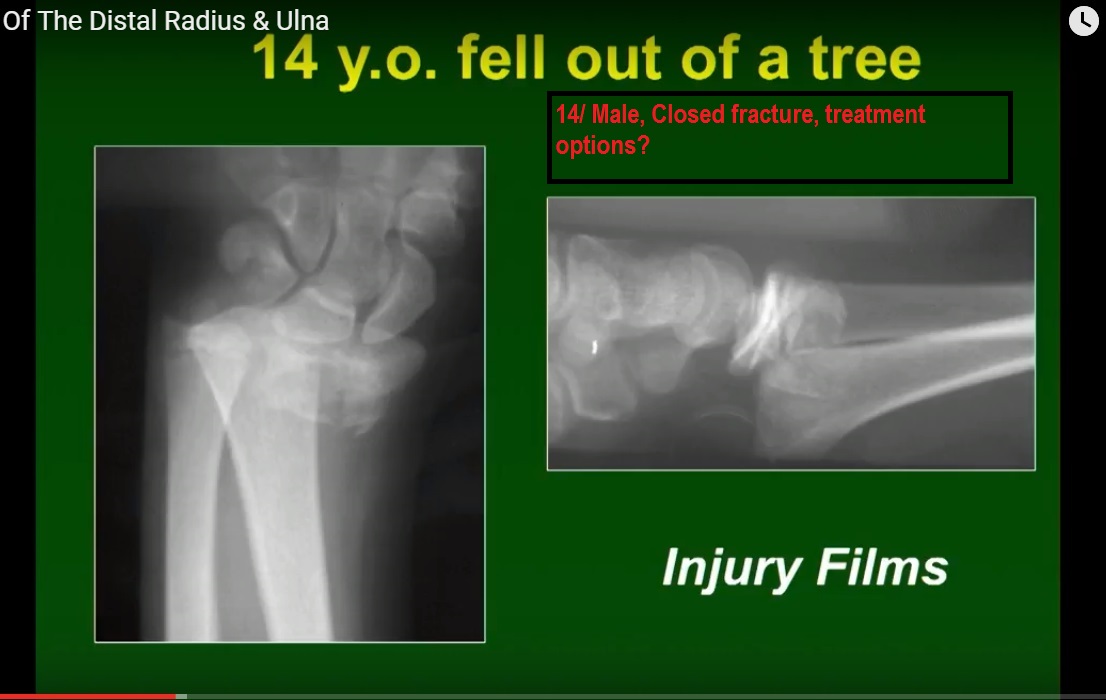
Distal Radius & Ulna Fractures in Children
Epidemiology
- Account for ~25–30% of all pediatric fractures
- Most common fracture in children
Peak Age
- Boys: 13–14 years
- Girls: ~10 years
Growth Contribution
- Distal radial physis:
- ~75–80% of radial growth
Risk
- Growth arrest:
- ~4%
Key Clinical Principle
Always Assess Entire Limb
- Examine:
- Wrist – Elbow – Shoulder
Look for Associated Injuries
- Radial neck fracture
- Forearm injuries
Classification
1. Based on Anatomical Site
A. Physeal Fractures
- Classified using:
- Salter–Harris
Common Types
- Type I
- Type II
Rare
- Type III
- Type IV
B. Metaphyseal Fractures (Most Common)
Based on Biomechanics
| Type | Description | Stability |
|---|---|---|
| Torus (Buckle) | Compression | Stable |
| Greenstick | One cortex breaks | Variable |
| Complete | Both cortices broken | Unstable |
2. Based on Displacement
Type A (Dorsal Displacement)
- Most common
- Easier to reduce
- Easier to maintain
Type B (Volar Displacement)
- Rare
- Difficult to maintain reduction
- Often requires fixation
Clinical Differences
| Feature | Metaphyseal | Physeal |
|---|---|---|
| Pain | Less | More |
| Neurovascular risk | Low | Higher |
| Carpal tunnel risk | Rare | Possible |
Important Point
- Physeal fractures:
- Require urgent reduction
Reduction Principles
Preferred Technique
- Finger trap traction
- Gentle manipulation
Avoid
- Shearing forces
Reason
- Can damage physis – growth arrest
Casting Principles
Ideal Cast
- Short arm cast (if well applied)
Cast Index
- Ideal:
- 0.7 (AP / lateral width)
Key Characteristics
- Elliptical shape
- Well molded
- Three-point fixation
Practical Tips
- Include thumb initially
- Remove thumb later after swelling reduces
Three-Point Molding
- Essential for:
- Maintaining reduction
Mechanism
- Uses intact periosteum as:
- Hinge
Remodeling Potential
Excellent in Children
- Especially if:
-
1 year growth remaining
- Fracture near physis
-
Clinical Implication
- Mild deformity often acceptable
Important Rule
- Avoid re-manipulation after 10–14 days
Reason
- Increased risk of:
- Growth arrest
Operative Indications
- Near skeletal maturity
- Irreducible fracture
- Neurovascular compromise
- Carpal tunnel syndrome
- Comminution
- Unstable fracture (especially Type B)
Fixation Options
1. K-wire Fixation
- Prefer:
- Metaphyseal pinning
Key Point
- Avoid crossing physis when possible
2. Plate Fixation (Rare)
- Used as:
- Buttress plate
- Avoid distal screws across physis
Special Situations
Type B Fractures
- Difficult to cast
- High failure rate
Management
- Low threshold for:
- Pin fixation
Volar (Reverse) Fractures
- Reduction forces reversed
- Difficult casting
Management
- Often require fixation
Distal Ulna Injuries
Common Types
- Ulnar styloid fracture
- Usually insignificant
- Physeal injury
Important Point
- Distal ulna physeal injury:
- ~50% risk of growth arrest
Follow-Up
Monitor For
- Harris growth arrest lines
- Symmetry of growth
Warning Sign
- Asymmetry – suspect growth arrest
Complications
- Malunion (often remodels)
- Growth arrest
- Re-displacement
- Median nerve compression
Galeazzi Equivalent (Pediatric)
Definition
- Distal radius fracture + DRUJ injury
Types
- Apex dorsal
- Apex volar
Management
- Greenstick – Casting
- Complete – Often fixation
High-Yield Exam Pearls
- Most fractures:
- Metaphyseal
- Remodeling:
- Greatest near physis
- Cast quality:
- More important than fracture type
- Type B fractures:
- Unstable – Fix early
- Avoid:
- Late manipulation
Golden Rule
- Always examine the entire limb
Final Message
- Successful management depends on:
- Gentle reduction
- Proper casting technique
- Awareness of growth plate risks

Leave a Reply