
Courtesy: Prof Nabil Ebraheim, University of Toledo, Ohio, USA
Female Athlete Triad
Overview
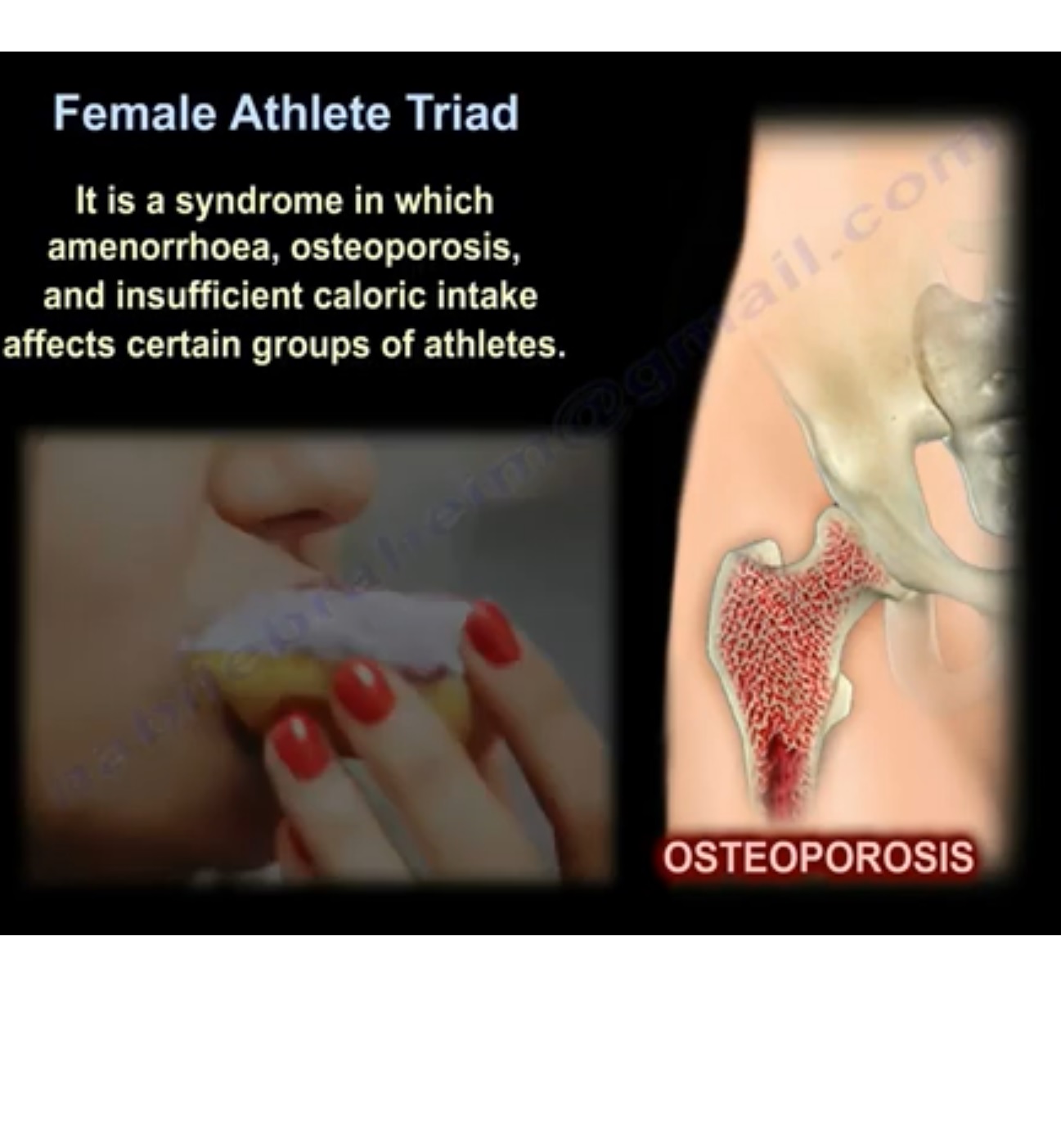
The Female Athlete Triad is a clinical condition seen in physically active females, especially in sports that emphasize:
- Low body weight
- Aesthetic appearance
- Endurance performance
Commonly Affected Athletes
- Gymnastics
- Ballet and dance
- Endurance runners
- Weight-category sports (e.g., bodybuilding, wrestling)
Definition
The triad consists of three interrelated components:
- Low energy availability (± disordered eating)
- Menstrual dysfunction (amenorrhea)
- Low bone mineral density (osteopenia/osteoporosis)
Key Concepts
- Each component exists on a spectrum (mild — severe)
- All three components need not be present
- Presence of one component should prompt evaluation for others
Clinical Insight
- A stress fracture in a young female athlete should always trigger:
- Nutritional assessment
- Menstrual history evaluation
Components of the Female Athlete Triad
1. Low Energy Availability / Disordered Eating
Definition
- Energy intake insufficient to meet:
- Exercise demands
- Normal physiological functions
Causes
- Intentional calorie restriction
- Desire to maintain low body weight or body fat
- May occur with or without a formal eating disorder
Consequences
- Negative energy balance
- Hormonal disruption
- Impaired metabolic function
2. Menstrual Dysfunction (Amenorrhea)
Cause
- Energy deficit— hypothalamic suppression
Mechanism
- Reduced GnRH— decreased estrogen production
- Leads to functional hypothalamic amenorrhea
Clinical Features
- Common in:
- Runners
- Ballet dancers
- Lean athletes
Types of Amenorrhea
Primary Amenorrhea
- No menstruation by age 15–16 years
Secondary Amenorrhea
- Absence of menstruation for:
- >/=3 consecutive cycles
- OR ?6 months
3. Low Bone Mineral Density
Cause
- Reduced estrogen levels
Results
- Osteopenia
- Osteoporosis
Clinical Consequences
- Bone fragility
- Increased risk of:
- Stress fractures
Important Fact
- 90% of peak bone mass achieved by:
- End of adolescence
Critical period for bone health
Management and Treatment
Treatment Goals
- Early recognition
- Correction of energy imbalance
- Restoration of normal menstruation
- Preservation/improvement of bone density
Management Strategies
Nutritional Management
- Increase caloric intake
- Optimize overall nutrition
- Adequate:
- Calcium
- Vitamin D
Activity Modification
- Reduce training intensity or volume if required
Education
- Counseling regarding:
- Nutrition
- Long-term health risks
Multidisciplinary Approach
Management should involve:
- Physician
- Athletic trainer
- Sports nutritionist / dietitian
- Psychologist or mental health professional
Clinical Evaluation
When to Suspect
- Female athlete with:
- Stress fractures
- Menstrual irregularities
- Low body weight
Assessment Should Include
History
- Menstrual history
- Dietary habits
Investigations
- Bone mineral density (DXA scan)
Screening
- Eating disorders
- Psychological factors
Key Takeaways
- Female Athlete Triad is a spectrum disorder, not always a complete triad
- Early identification prevents:
- Osteoporosis
- Recurrent stress fractures
- Energy deficiency is the root cause
- Requires multidisciplinary management

Leave a Reply