
Courtesy: Prof Nabil Ebraheim, University of Toledo, Ohio, USA
De Quervain’s Syndrome (De Quervain’s Tenosynovitis)
Definition
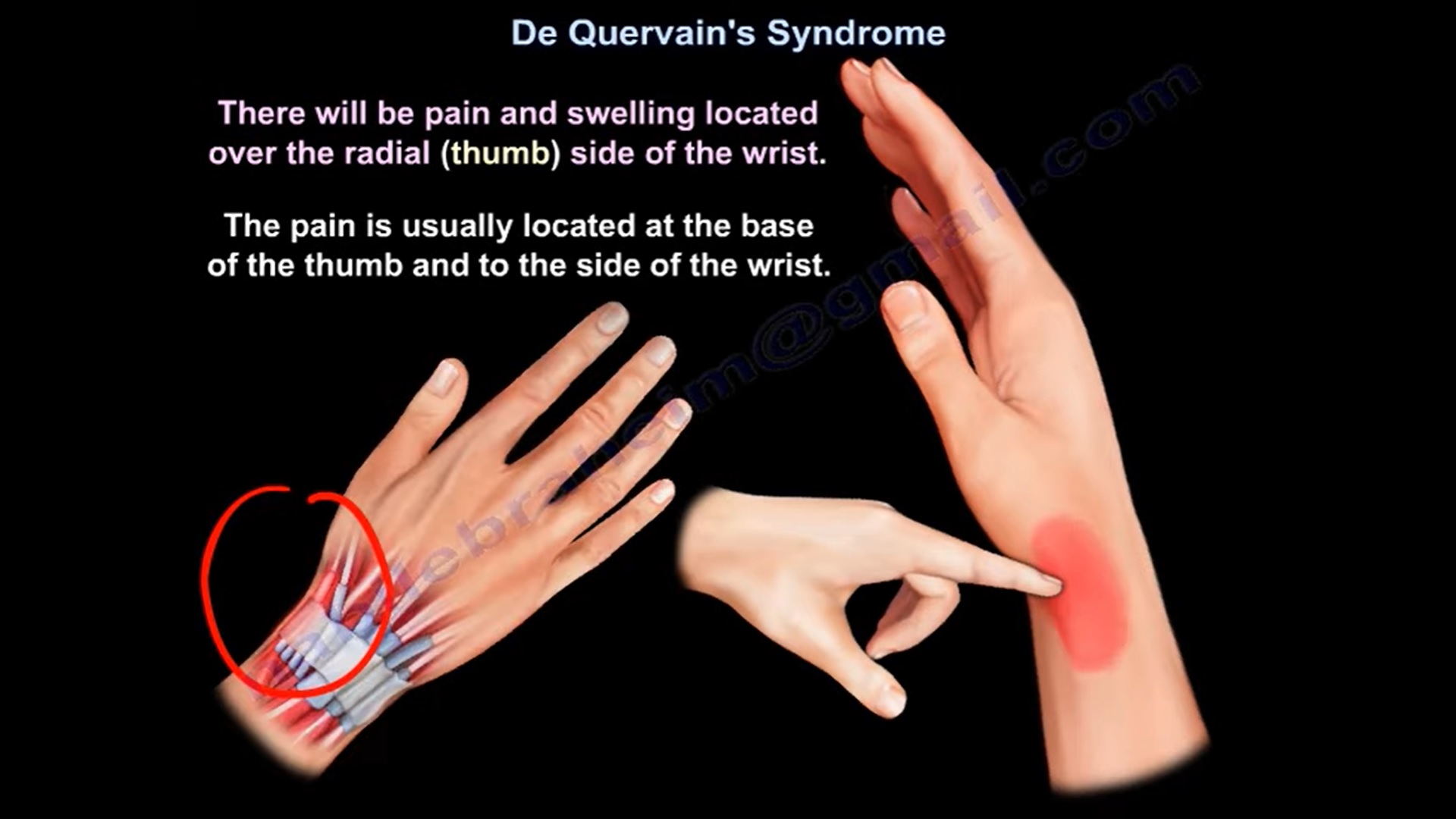
De Quervain’s syndrome is a stenosing tenosynovitis involving the first dorsal compartment of the wrist.
The condition affects the tendons of:
- Abductor Pollicis Longus (APL)
- Extensor Pollicis Brevis (EPB)
It commonly affects the dominant hand and is frequently seen in women, particularly during the postpartum period.
Anatomy
First Dorsal Compartment
The first dorsal compartment contains:
- Abductor Pollicis Longus (APL)
- Often has multiple tendon slips
- Extensor Pollicis Brevis (EPB)
- May lie within a separate sub-compartment
Anatomically:
- EPB lies more dorsally than APL
Related Extensor Compartments
Second Dorsal Compartment
Contains:
- Extensor Carpi Radialis Longus (ECRL)
- Extensor Carpi Radialis Brevis (ECRB)
Third Dorsal Compartment
Contains:
- Extensor Pollicis Longus (EPL)
Clinical Correlation
- First dorsal compartment pathology causes De Quervain’s syndrome
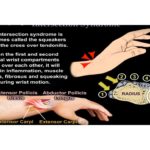
- Pathology at the intersection of the first and second compartments produces Intersection syndrome
Pathophysiology
Inflammation within the tendon sheath leads to:
- Thickening of the sheath
- Stenosis of the compartment
- Restricted tendon gliding
This results in:
- Pain
- Swelling
- Functional limitation
Clinical Features
Symptoms
Patients commonly complain of:
- Pain along the radial side of the wrist
- Pain at the base of the thumb
Pain is worsened by:
- Thumb movement
- Wrist movement
- Gripping activities
Signs
Examination may reveal:
- Swelling over the radial styloid
- Localized tenderness over the first dorsal compartment
Risk Factors and Causes
Common contributing factors include repetitive wrist and thumb activities such as:
- Wringing clothes
- Hammering
- Racquet sports
- Playing musical instruments
- Lifting heavy objects
Other associations include:
- Postpartum state
- Trauma
Differential Diagnosis
First Carpometacarpal (CMC) Joint Arthritis
Features
- Pain localized at the thumb base
Diagnostic Test
- Positive grind test
Intersection Syndrome
Features
- Pain approximately 4 cm proximal to the wrist joint
Pathology
Occurs where:
- APL and EPB cross over ECRL and ECRB
Wartenberg’s Syndrome
Cause
Compression of the superficial radial nerve
Clinical Features
- Pain over dorsum of the hand
- Paresthesia
- Positive Tinel’s sign
Pain is typically located approximately 8 cm proximal to the radial styloid.
Clinical Tests
Finkelstein Test
Technique
- Patient places thumb inside a clenched fist
- Examiner ulnar deviates the wrist
Positive Test
- Sharp pain over the radial styloid
Important point:
- The maneuver can be very painful and patients should be warned beforehand.
Grind Test
Used to evaluate for thumb CMC arthritis.
Technique
- Axial compression combined with rotation of the thumb metacarpal
Positive Test
- Pain
- Crepitus at the CMC joint
Investigations
X-ray
Routine radiographs are usually not necessary.
However, X-rays may help exclude:
- First CMC joint arthritis
Management
Conservative Treatment
Initial treatment includes:
- Rest
- NSAIDs
- Thumb spica splint
- Activity modification
Steroid Injection
Indications
Used when conservative management fails.
Technique
- Injection into the first dorsal compartment
Outcome
- High success rate in symptom relief
Surgical Treatment
Indications
Surgery is considered when symptoms persist despite prolonged non-operative treatment, typically after approximately 6 months.
Procedure
First Dorsal Compartment Release
Key surgical steps include:
- Dorsal incision over the wrist
- Protection of the superficial radial nerve
- Identification and release of:
- APL tendon slips
- EPB tendon
- Any separate EPB sub-compartments
Complications
Potential complications include:
- Recurrence
- Incomplete release
- Tendon subluxation
- Neuroma involving the superficial radial nerve
- Painful scar formation
Related Posts
 Scapho-trapezio-trapezoid Osteoarthritis
Management of Scapho-trapezio-trapezoid Osteoarthritis Core Review: The scaphotrapeziotrapezoid (STT) joint is a common location of…
 Intersection Syndrome
Courtesy: Prof Nabil Ebraheim, University of TOledo, Ohio, USA
- Pronator Teres Syndrome
Courtesy : Prof Nabile Ebraheim, University of Toledo, Ohio, USA Definition: Pronator teres syndrome…
Leave a Reply