
Courtesy: Dr Terrence Jose Jerome, Editor, Journal of Hand and MicroSurgery
Congenital Hand Differences
Introduction
Congenital hand differences represent a diverse group of upper limb anomalies that affect hand appearance, function, and development. Management requires a careful understanding of anatomy, classification systems, associated syndromes, and patient-specific functional goals.
This review summarizes key concepts discussed in a webinar on congenital hand differences, including radial longitudinal deficiency, hypoplastic thumb, syndactyly reconstruction, and conditions associated with absent digits.
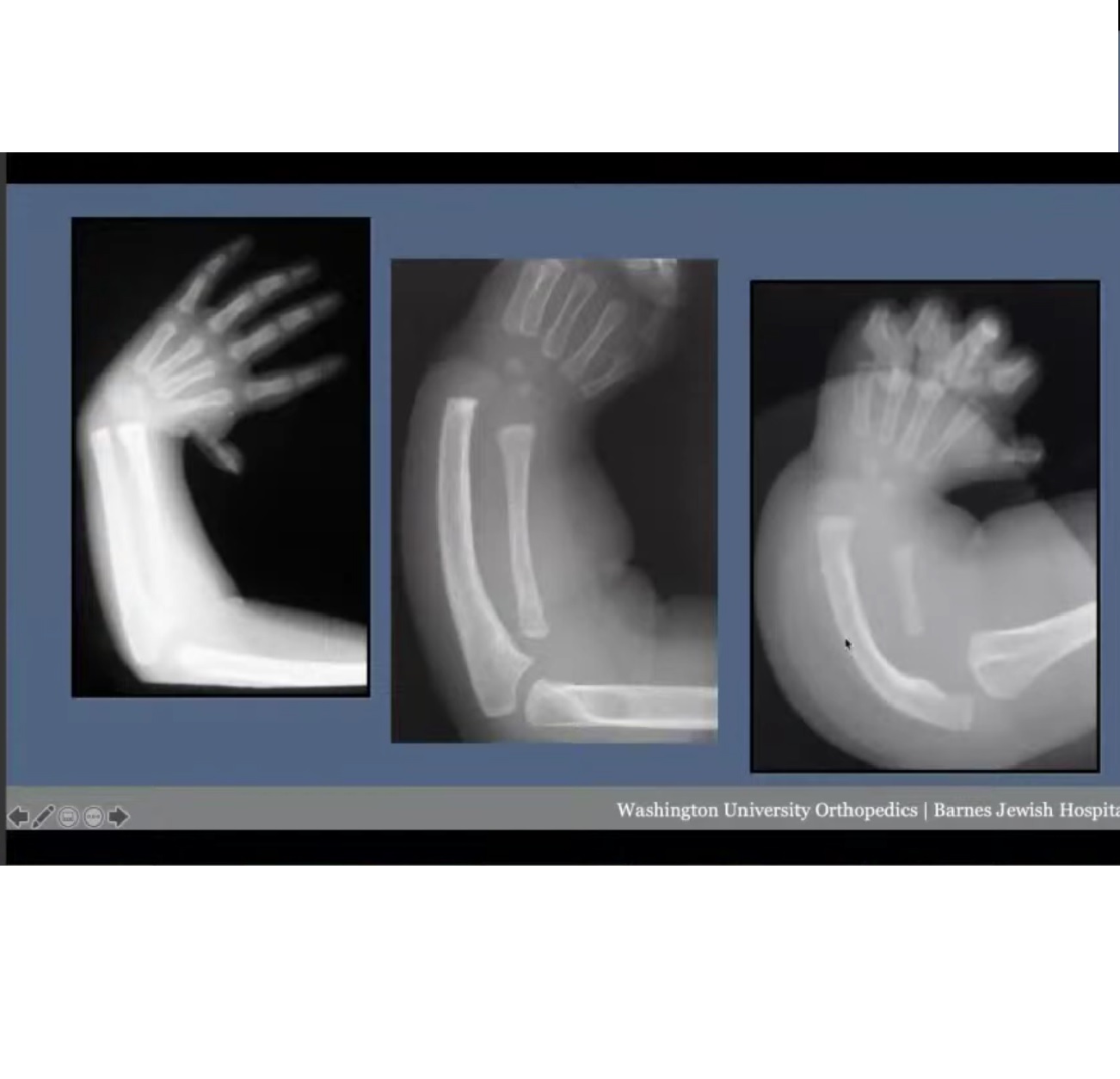
Radial Longitudinal Deficiency (Radial Deficiency)
Overview
Radial longitudinal deficiency may occur:
- As an isolated condition
- As part of a syndrome
Most patients have associated systemic anomalies and therefore require comprehensive evaluation.
Associated Evaluations
Recommended investigations include:
- Detailed clinical examination
- Echocardiography
- Renal ultrasound
- Radiographs
- Complete blood count
- Chromosomal testing (especially for Fanconi anemia)
Bayne Classification
Type 0
- Normal radius
- Wrist deviation present
Type 1–2
- Short or hypoplastic radius
Type 3–4
- Partial or complete absence of radius
Type 5
- Associated humeral deficiency
Treatment Principles
Management should be individualized and patient-centered.
Goals include:
- Improving function
- Improving appearance
- Achieving wrist stability
- Facilitating pollicization
- Improving finger motion
Management According to Severity
Type 0
Features
- Normal radius
- Wrist deviation
Treatment
- Release of tight radial structures
- Tendon balancing using extensor carpi radialis centralization
Outcome
- Excellent correction is often possible
Type 1 and Type 2
Features
- Short radius
Treatment Options
- Tendon balancing
- Gradual lengthening with external fixation
Important Point
Avoid excessive lengthening to prevent cartilage injury.
Type 3 and Type 4
There is no universal treatment protocol.
Management Options
- Observation
- Centralization with or without distraction
- Bilobed flap procedures
- Rarely toe transfer
Preferred Strategy
Pre-centralization distraction followed by centralization provides:
- Easier correction
- Better soft tissue balance
- Reduced physeal damage
Surgical Considerations
Important technical points include:
- Avoiding pressure on the distal ulnar physis
- Gradual soft tissue distraction
- Ulnar osteotomy for alignment correction
Postoperative Protocol
Pin Fixation
- Usually maintained for approximately 6 months
Splinting
- Full-time splinting for 6 months
- Night splinting until skeletal maturity
Additional Surgical Options
Bilobed Flap
Useful in patients with ulnar prehension because it preserves function.
Wrist Fusion
A reasonable option near skeletal maturity, usually around 11 years of age.
Ulnar Lengthening
Reserved for adolescents because of high complication rates.
Key Clinical Insights
- Good function may exist despite significant deformity
- Centralization generally improves function compared with non-operative care
- No single treatment is ideal for all patients
Important factors influencing management include:
- Severity
- Wrist mobility
- Unilateral versus bilateral involvement
- Functional hand use
Five Causes of Less Than Five Digits
Importance of Accurate Diagnosis
Correct diagnosis helps:
- Identify life-threatening syndromes
- Provide genetic counseling
- Guide treatment planning
- Reduce parental anxiety and guilt
Classification Systems
Commonly used systems include:
- Swanson classification
- IFSSH classification
- Oberg-Manske-Tonkin (OMT) classification
These classify anomalies into:
- Malformations
- Deformations
- Dysplasias
Major Conditions Associated With Fewer Than Five Digits
1. Radial Longitudinal Deficiency
Incidence
Approximately 1 in 100,000 births.
Associated Syndromes
- VACTERL association
- TAR syndrome
- Holt-Oram syndrome
- Fanconi anemia
Fanconi anemia is particularly important because it may be life-threatening.
2. Ulnar Longitudinal Deficiency
Features
- Less common
- Usually sporadic
- Thumb generally present
- Often associated with good hand function
Associated Conditions
- Musculoskeletal anomalies
- Fibular deficiency
Treatment
Mostly non-operative, though osteotomy may occasionally be required.
3. Cleft Hand (Central Deficiency)
Characteristics
- Absence of central digits
- Ulnar digits usually preserved
- Foot involvement occurs in approximately 30%
Clinical Description
Often described as:
“Functional triumph, social disaster.”
Treatment Goals
- Narrowing the cleft
- Widening the first web space
- Improving appearance while preserving function
4. Symbrachydactyly
Features
- Usually unilateral
- Typically non-genetic
- Believed to result from vascular disruption
Types
- Short finger type
- Central deficiency type
- Monodactylous type
- Peromelic type
Treatment
Depends on functional requirements and may include:
- Toe transfer
- Lengthening
- Web reconstruction
5. Amniotic Constriction Band Syndrome
Pathogenesis
Caused by fibrous bands constricting developing limbs.
Clinical Features
- Constriction rings
- Syndactyly
- Amputations
Treatment
- Band release with Z-plasty
- Syndactyly correction
Hypoplastic Thumb
Evaluation
Assessment should include:
- Thumb size
- Stability
- First web space
- Muscle function
- Associated anomalies
Classification
Type 1
- Mild hypoplasia
Type 2
- Web narrowing
- Instability
Type 3A
- Stable carpometacarpal joint
Type 3B
- Unstable carpometacarpal joint
Type 4
- Floating thumb
Type 5
- Absent thumb
Treatment Options
Observation
Suitable for:
- Mild deformities
- Older adapted patients
Reconstruction (Type 2 and 3A)
Procedures
- First web space deepening with Z-plasty
- Opponensplasty using FDS transfer
- UCL reconstruction
Pollicization (Type 3B–5)
Principle
The index finger is converted into a thumb.
Key Surgical Steps
- Skin flap design
- Metacarpal osteotomy
- Tendon balancing
- Muscle repositioning
Outcome
- Excellent function
- Good cosmetic appearance
Cultural Considerations
Treatment preferences vary between populations.
- Some cultures prioritize maintaining five digits
- Western approaches often prioritize function over digit number
Syndactyly Reconstruction
Introduction
Syndactyly reconstruction literature is predominantly based on:
- Case series
- Technique descriptions
High-quality comparative studies remain limited.
Types of Syndactyly
Based on Extent
- Complete
- Incomplete
Based on Tissue Involvement
- Simple (skin only)
- Complex (bony involvement)
Complicated Syndactyly
Associated with additional syndromes or anomalies.
Goals of Surgery
Objectives include:
- Reconstructing a normal web space
- Functional separation of digits
- Good cosmetic outcome
- Prevention of web creep
Normal web slope is approximately 40–45 degrees from dorsal to volar.
Surgical Principles
Incisions
Standard Technique
- Zigzag incisions to prevent contracture
Exception
In Apert syndrome:
- Straight incisions may be acceptable because PIP motion is limited
Commissure Reconstruction
Common Flap Techniques
- Two triangular flaps
- Dorsal rectangular flap
The dorsal rectangular flap described by Bunnell and popularized by Flatt remains widely preferred.
Prevention of Web Creep
Important Principles
Avoid:
- Straight-line scars at the web base
Preferred techniques include:
- Irregular incision patterns
- Indented closure designs
These reduce tension and minimize web creep.
Skin Grafting
Full-Thickness Skin Grafts
Used to reduce contraction.
Limitations
- Discoloration
- Hair growth if groin graft used
Preferred Donor Site
Antecubital fossa provides:
- Better color match
- Less hair-bearing skin
- Same-limb convenience
Graftless Techniques
Principles
- Introduce additional skin
- Reduce digit circumference
- Achieve loose closure
Sharif Flap
Advantages
- Avoids skin grafting
Limitations
- Dorsal migration
- Cosmetic concerns
Hyaluronic Acid Scaffold
Concept
Used as a dermal substitute instead of skin grafting.
Advantages
- Reduced operative time
- Cost-effectiveness
- Good cosmetic results
Reported Outcomes
- Minimal web creep
- Rare hypertrophic granulation tissue
- No secondary grafting required
Nail Reconstruction in Syndactyly
Problem
Conjoined nails (synonychia).
Technique
Flag or pennant flaps are used to:
- Create lateral nail folds
- Improve nail appearance and support
This is often the most technically demanding portion of reconstruction.
Preferred Surgical Protocol
Common modern approach includes:
- Dorsal commissural flap
- Avoidance of straight-line closure
- Dermal substitute use
- Minimal absorbable suturing
- Dressing for approximately 3 weeks
- Early mobilization
- Night splinting to reduce web creep
Special Conditions
Amniotic Band Syndrome With Vascular Compromise
Emergency Management
- Immediate bedside release of constricting band
Delayed Cases
- Staged excision with Z-plasty
Apert Hand Syndactyly
Goals
- Preserve thumb and all four digits
Management Strategy
- Avoid index ray amputation
- Staged reconstruction
- Thumb realignment
- Correction of delta phalanx when present
Leave a Reply